Vitiforestry, the deliberate integration of trees into and around vineyards, is moving from research trials into working European wine estates. After two decades of treating vineyards as monocultures swept clean of everything but vines, a growing number of growers in France, Germany, Portugal and beyond are putting trees back: in scattered standards among the rows, in alley systems, and in restored hedgerows along the headlands. This guide explains what vitiforestry is, why it is gaining ground, and how to protect the young trees and vines that a mixed planting depends on.
What vitiforestry actually means
Vitiforestry, sometimes called viticultural agroforestry, is the application of agroforestry principles to the vineyard. Rather than clearing land down to bare vine rows, trees are introduced as a structural part of the system: widely spaced standards rising above the canopy, lines of trees between vine blocks, or species-rich field margins and windbreaks framing the plot. It is not a return to neglected, overgrown vineyards; it is a designed combination, with tree species, spacing and orientation chosen to work alongside the vines rather than compete with them.
The idea is old, vines were historically grown up trees across the Mediterranean, but the modern evidence base is recent. Long-running trials by France’s INRAE and coordination through bodies such as the European Agroforestry Federation have given growers something earlier generations lacked: measured data on how trees and vines interact in a commercial setting.
Why European vineyards are planting trees
The strongest driver is climate resilience. As heatwaves intensify across southern Europe, unshaded vines are increasingly exposed to sunburn, accelerated sugar accumulation and heat stress that compresses harvest windows and distorts balance in the fruit. Carefully spaced trees moderate the vineyard microclimate: softening peak temperatures, slowing wind and reducing evaporative water loss from the soil. In cooler, frost-prone regions the same structure can buffer late spring frosts that devastate a vintage.
Beyond the climate case, growers report benefits that line up with wider agroforestry outcomes: deeper-rooting trees cycle nutrients and improve soil structure, hedgerows and tree cover support the predatory insects and birds that help keep vineyard pests in check, and the added biodiversity increasingly matters for certification, estate storytelling and the expectations of the wine trade. A vineyard with trees is also simply more pleasant to work in and visit, no small thing for estates built on cellar-door and tourism revenue.
How trees are integrated into the vineyard
Three patterns cover most vitiforestry layouts:
- Scattered standards. Individual trees placed at low density within or between rows, grown on as full-canopy standards to cast dappled shade, the most flexible option for an existing vineyard.
- Alley systems. Tree lines planted between blocks of vines, oriented to control wind and shade without overshadowing the fruiting zone. This is the layout most studied in formal trials.
- Margins and windbreaks. Species-rich hedgerows and shelterbelts along headlands and boundaries, delivering biodiversity and wind protection with no competition for the producing vines themselves.
Species choice leans towards deep-rooting, light-canopy trees that compete less with vines for water and light, and in margins towards native mixes chosen for blossom, berry and habitat value rather than timber.
Protecting a mixed planting: trees and vines
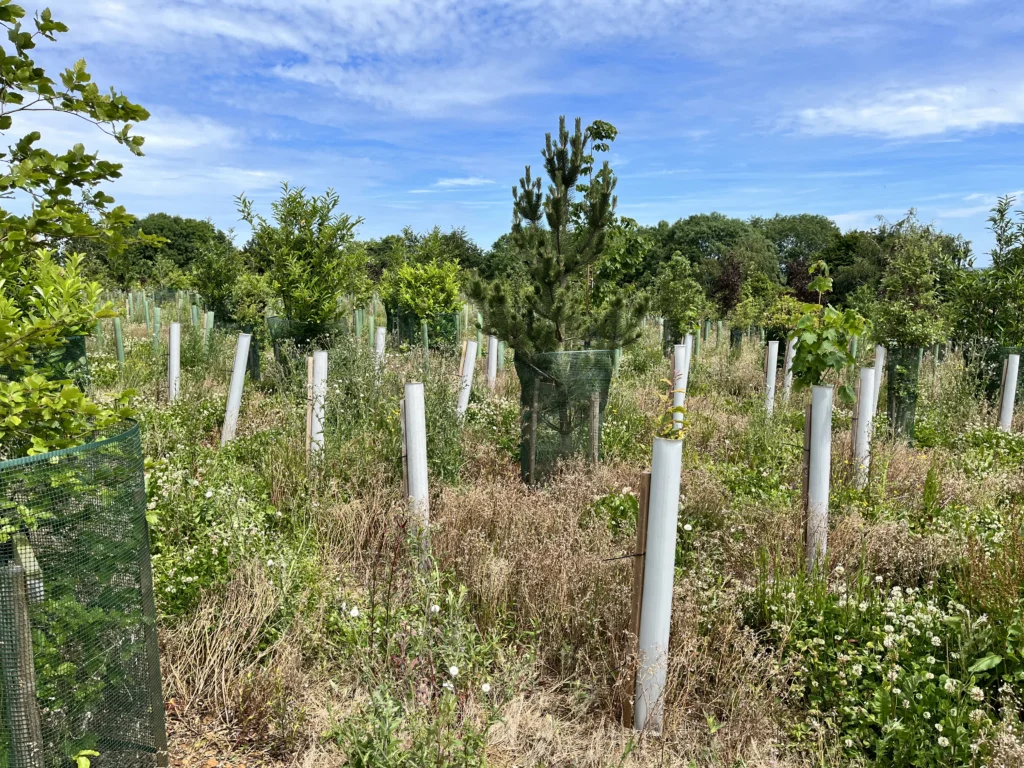
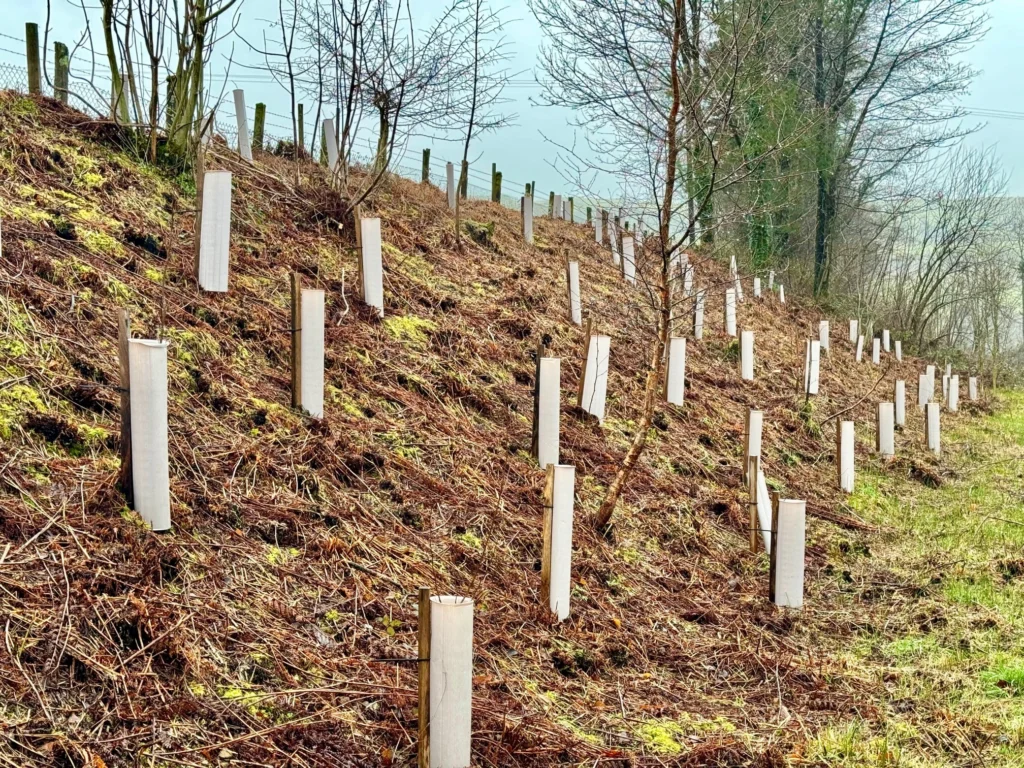
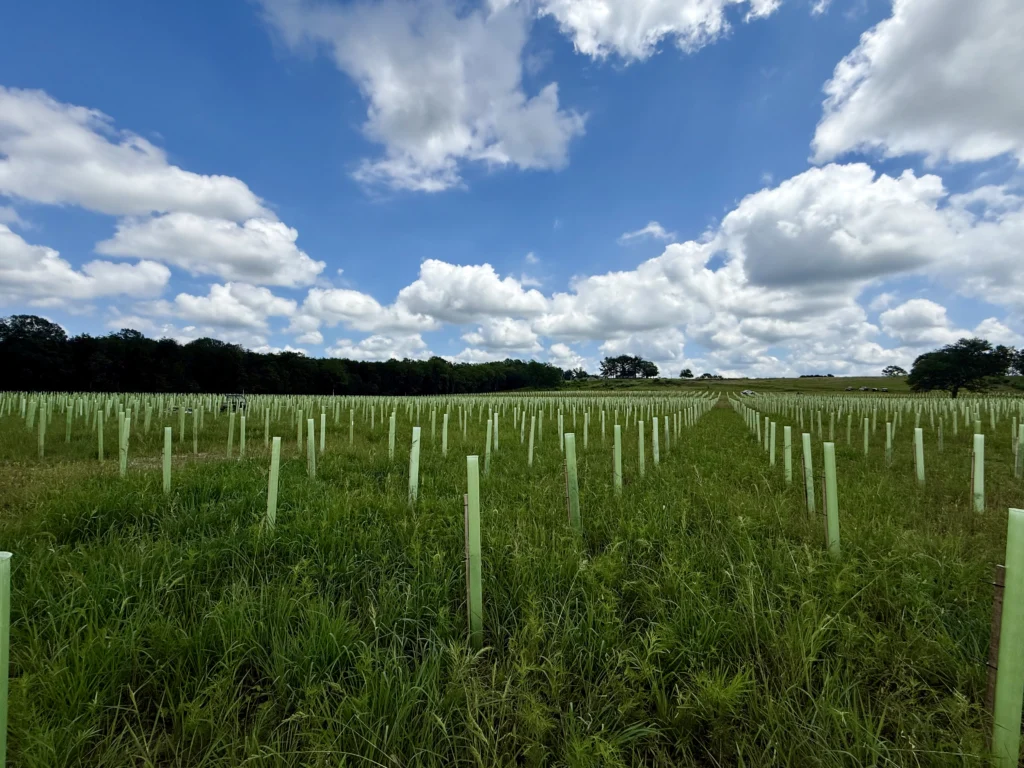
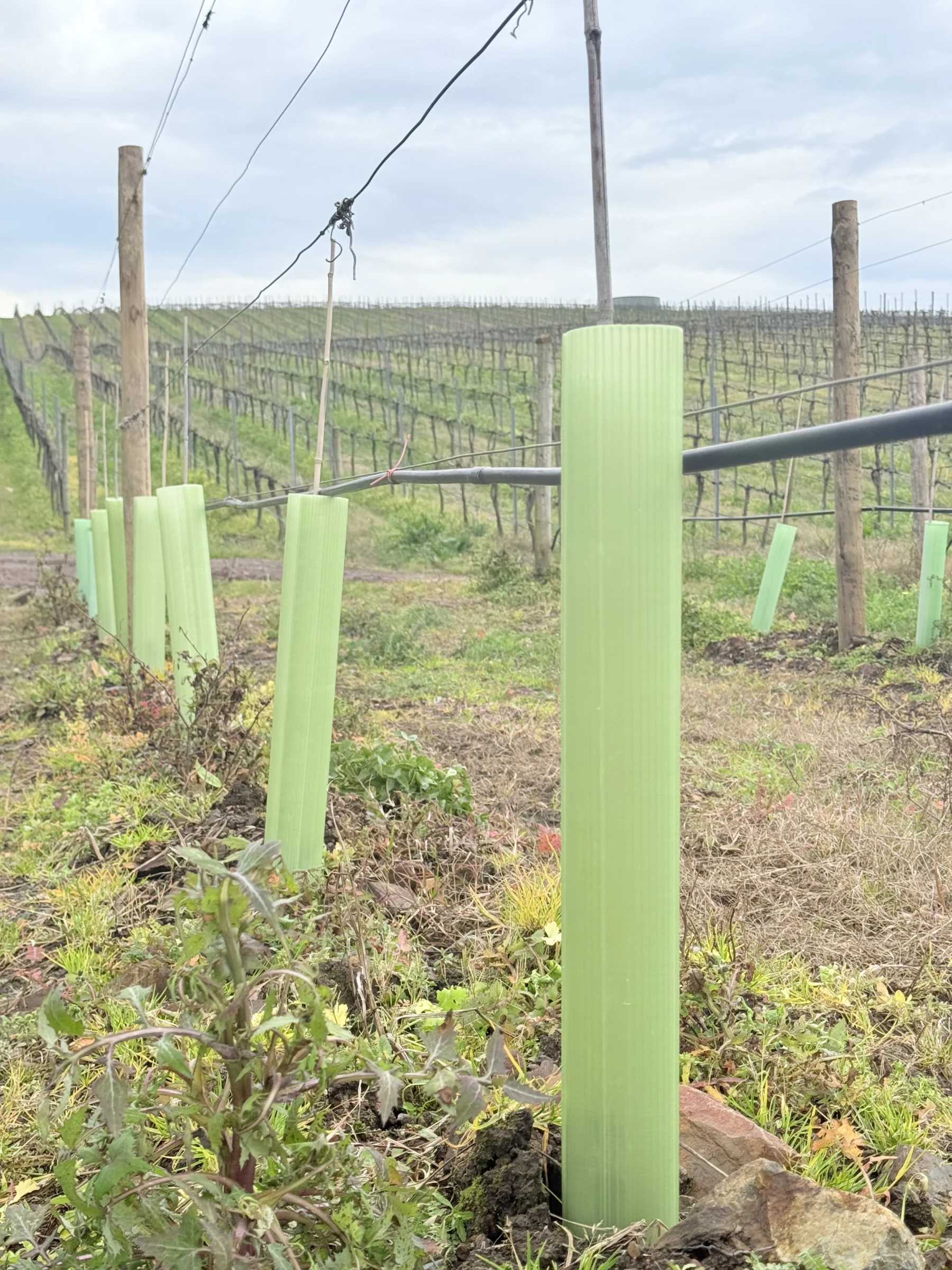
A vitiforestry planting has two distinct protection needs, and getting both right in the first seasons decides whether the system establishes. The young trees face exactly the pressures any new woodland or hedge planting does: browsing from deer, rabbits and hares, plus a real risk of spray drift and strimmer damage in a worked vineyard. They need tree shelters or guards sized to the species and the threat. The vines, meanwhile, need vine guards through their own establishment phase, exactly as they would in any new planting.
This is where sourcing both from one supplier helps. Vigilis manufactures protection across the full mix: vine guards for the vines, and tree and shrub protection for the agroforestry trees and margins. Material choice deserves thought: across a multi-thousand-tree planting spread through a working vineyard, retrieving spent guards by hand is slow and often skipped, which makes soil-biodegradable formats such as the Vigilis Bio tree shelter a practical fit, it protects the tree through establishment and then breaks down in place. Where guards can be recovered easily, recyclable formats remain a sound choice.
Getting started
Vitiforestry rewards planning over improvisation: start with orientation and species, plant trees and vines into the protection they need, and treat the first three seasons as the establishment phase that makes or breaks the system. For help specifying protection across a mixed vineyard planting, see our viticulture applications page or find your local Vigilis distributor.