Native woodland creation in Scotland is some of the most ambitious in Europe. From the remnants of the ancient Caledonian Forest to vast landscape-scale rewilding in the Highlands, Scotland is working to restore native pinewood, birch and montane scrub across ground that has been bare for centuries. The vision is expansive, but the practical battle is fought tree by tree, against deer, weather and altitude. This guide looks at what Scotland is restoring, the lessons emerging from its flagship projects, and how tree protection fits a Scottish planting.
The Caledonian Forest: what’s being restored
The Caledonian Forest once covered much of the Highlands: a wild mosaic of Scots pine, birch, rowan, aspen and juniper. Today only fragments survive, many of them ageing stands with little natural regeneration because grazing pressure removes seedlings before they can establish. Restoration aims to expand and reconnect these remnants, letting native pinewood spread back up the glens and, in places, climb towards the treeline with montane willow and dwarf birch.
This is slow, generational work. Scots pine grows unhurried at altitude, and the goal is not a plantation but a functioning wild forest with a full range of species and ages. That long horizon shapes every establishment decision, including how young trees are protected in their first vulnerable years.
Rewilding at landscape scale
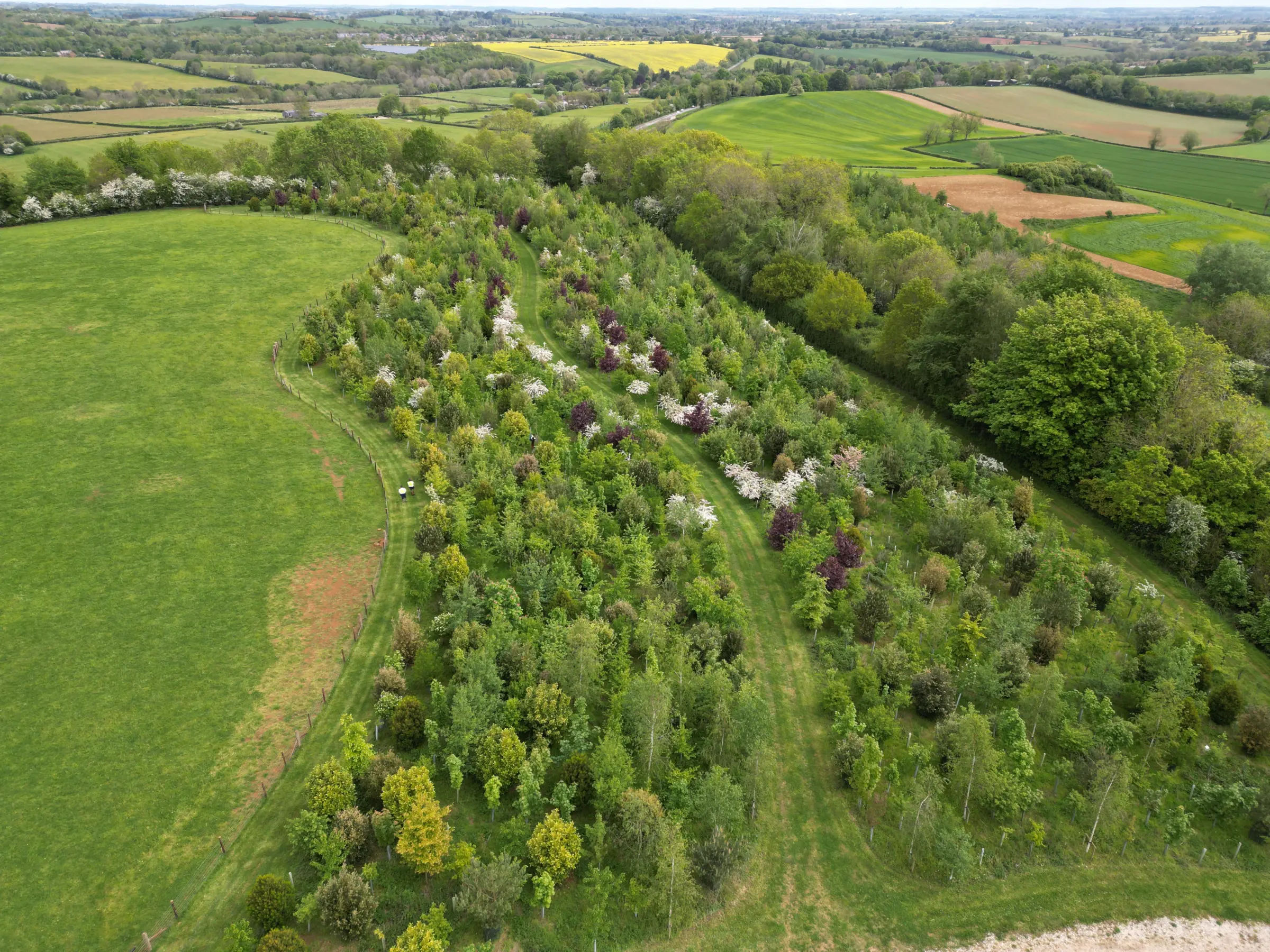
Scotland’s flagship projects operate at a scale rarely seen elsewhere in Britain. Partnerships such as Cairngorms Connect and the restoration work led by Trees for Life in Glen Affric span tens of thousands of hectares, combining natural regeneration with targeted planting where seed sources have been lost. The emphasis is increasingly on letting the forest establish itself once deer numbers are brought under control. Planting is used to fill the gaps, not to blanket the hill.
The lesson from these projects is consistent: get the grazing pressure right and native woodland will often return on its own. Where it can’t (because there is no nearby seed, or a particular species needs a head start), planting with good protection bridges the gap.
Deer: Scotland’s defining challenge
No factor shapes Scottish woodland creation more than deer. High populations of red and roe deer browse young trees to the ground, and without control even well-funded plantings fail. Large projects invest heavily in deer management and, in some cases, landscape-scale fencing, but fencing is expensive, needs maintaining, and can trap or kill woodland grouse such as capercaillie that fly into it.
That trade-off pushes many schemes towards individual tree protection instead of, or alongside, fencing. Voles are a second, quieter threat: in rank grass on ungrazed ground they can ring-bark young trees at the base over winter. A Scottish planting has to answer both the deer above and the voles below.
Protecting young trees where fencing isn’t enough
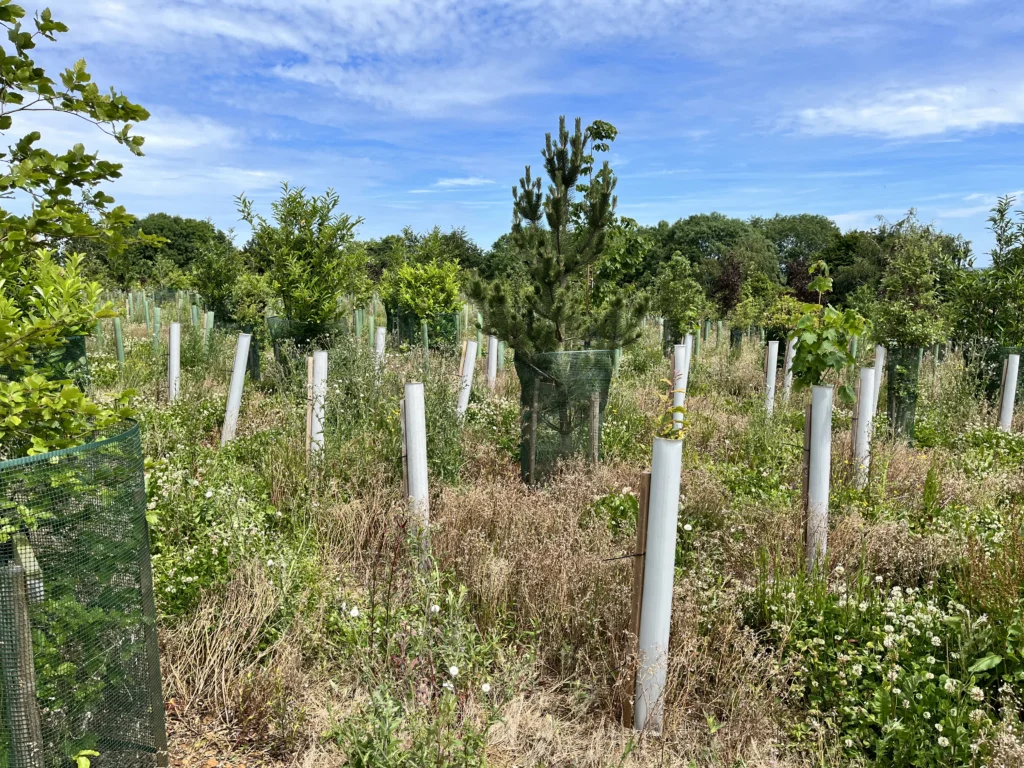
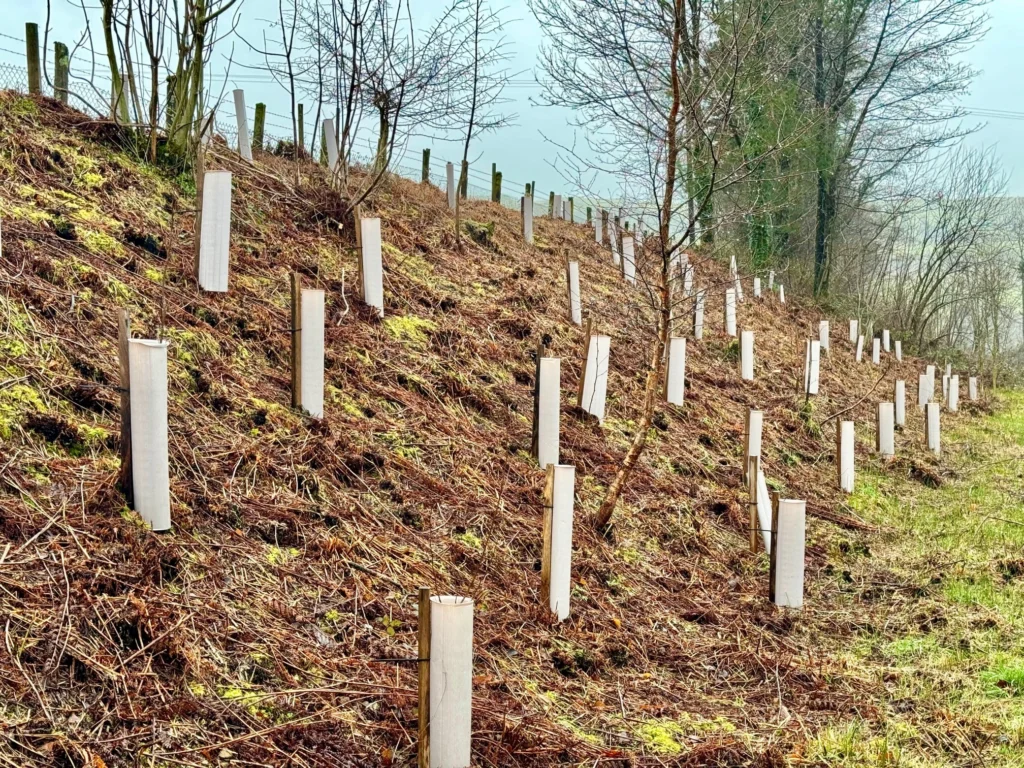
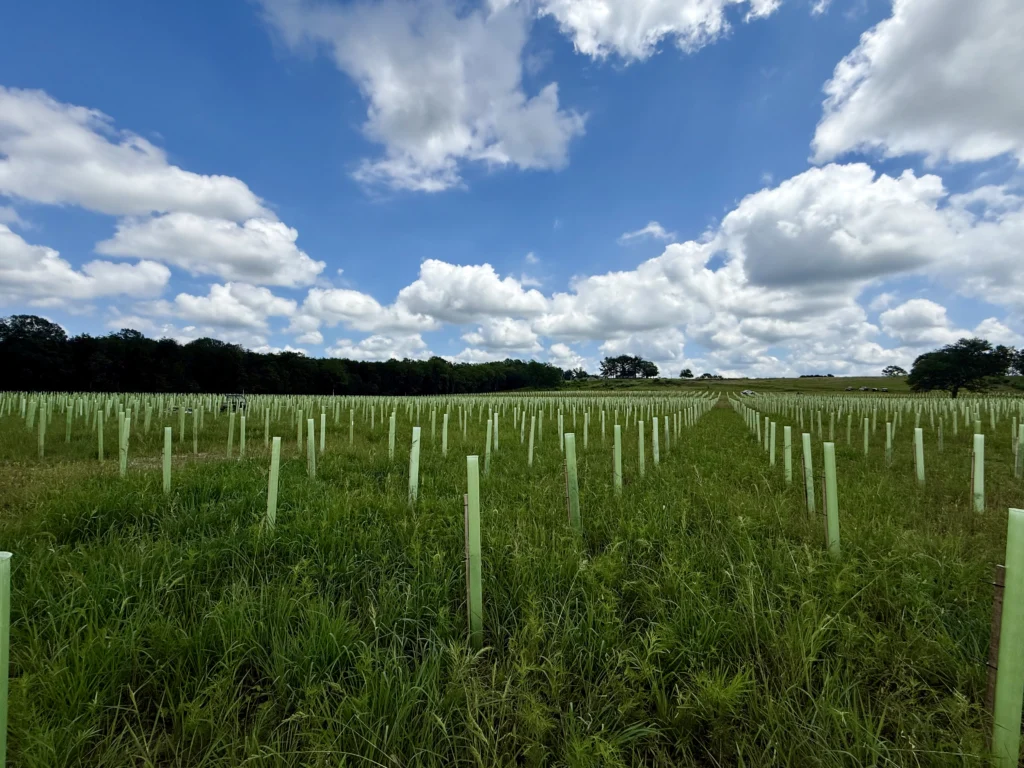
Individual protection lets managers establish trees across broken terrain without the cost and wildlife risk of stock fencing. For exposed upland sites, breathability matters as much as strength, a shelter that bakes a Scots pine in a rare warm spell is as much a problem as one that lets a deer reach it. Mesh shelters suit these conditions well, giving airflow and deer protection without the greenhouse effect, while tree guards shield broadleaves on more sheltered ground. Against voles, voleguards protect the base of the stem where the winter damage happens.
End-of-life is a particular concern in wild Scottish landscapes, where retrieving guards from remote hillsides years later is barely feasible. Soil-biodegradable shelters break down in place once the tree is away, leaving no plastic littering a restored glen, the right fit for projects whose whole purpose is wildness. Our rewilding guidance covers matching protection to native species in more detail.
Native woodland creation in Scotland is a long game measured in decades, not seasons. Whether you are restoring Caledonian pinewood or creating new native woodland from scratch, the establishment principle is the same: control the grazing, protect the trees through their vulnerable years, and choose materials that leave no trace behind. To specify protection for a Scottish planting, talk to your local Vigilis distributor.