Protecting seedlings from deer and other browsing wildlife is one of the biggest factors deciding whether a North American planting succeeds or quietly fails in its first few seasons. Across the United States and Canada, foresters contend with white-tailed and mule deer, elk, rabbits and hares, and root-gnawing voles, each capable of stunting or killing young trees before they ever establish. This guide breaks down the animal pressures US foresters face and how to match tree protection to the threat, the species and the site.
The animal pressures US foresters face
Seedling losses in North America rarely come from a single source. The pressures stack up, and they vary by region and habitat:
- Deer and elk browse. The headline threat. Deer strip terminal buds and new growth, repeatedly setting back height and deforming the leader. In much of the eastern US, white-tailed deer densities are high enough to halt natural regeneration entirely.
- Rabbits and hares. They clip stems cleanly near the base and browse low foliage, doing most of their damage in winter when other food is scarce.
- Voles and rodents. Often underestimated, voles girdle stems and gnaw roots under cover of grass and snow: a leading cause of tree-planting failure, and able to kill trees several inches across.
- Livestock and other wildlife. On grazed or mixed-use land, cattle, gophers and beaver add further pressure depending on the site.
How US foresters protect seedlings from deer and browse
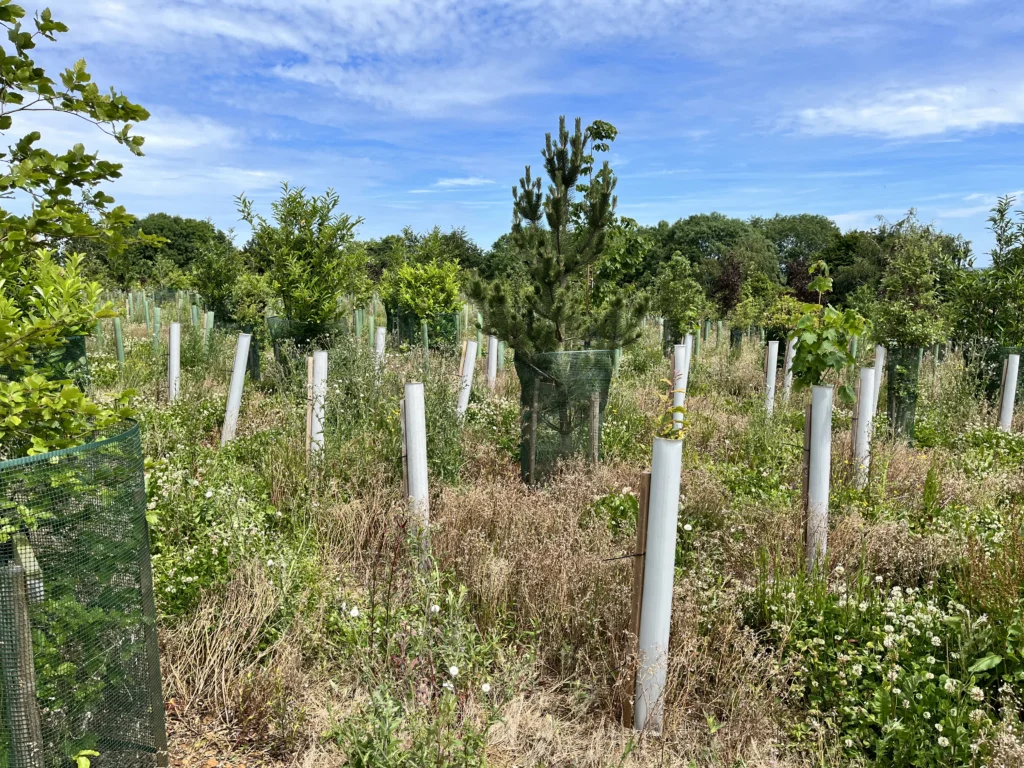
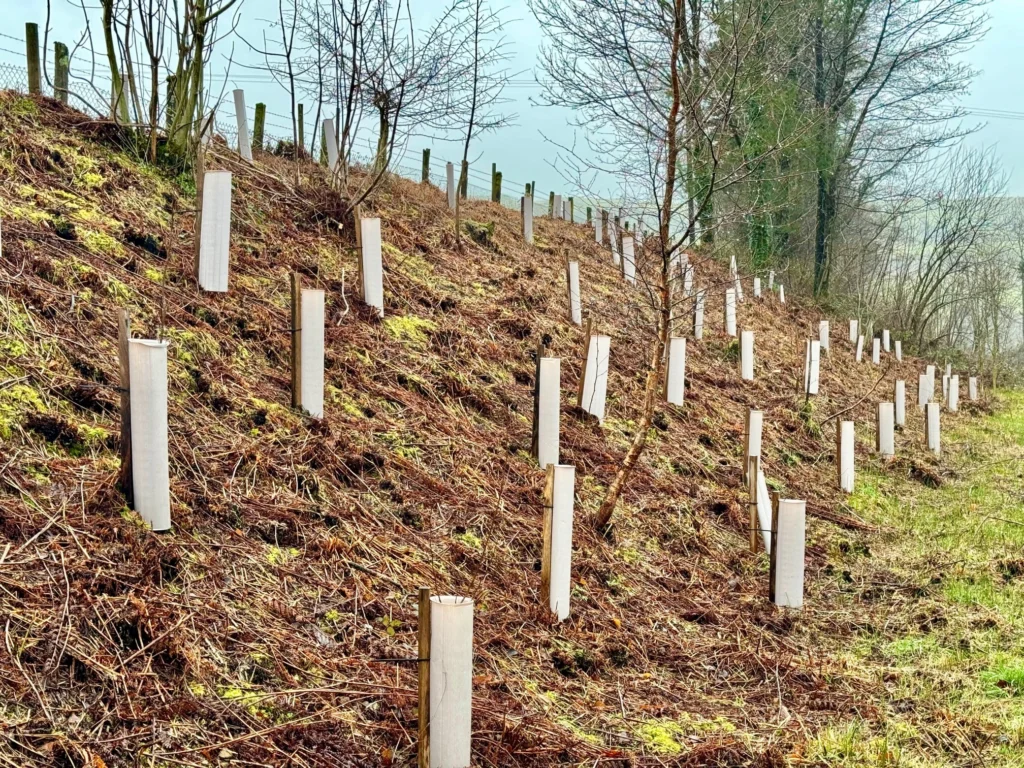
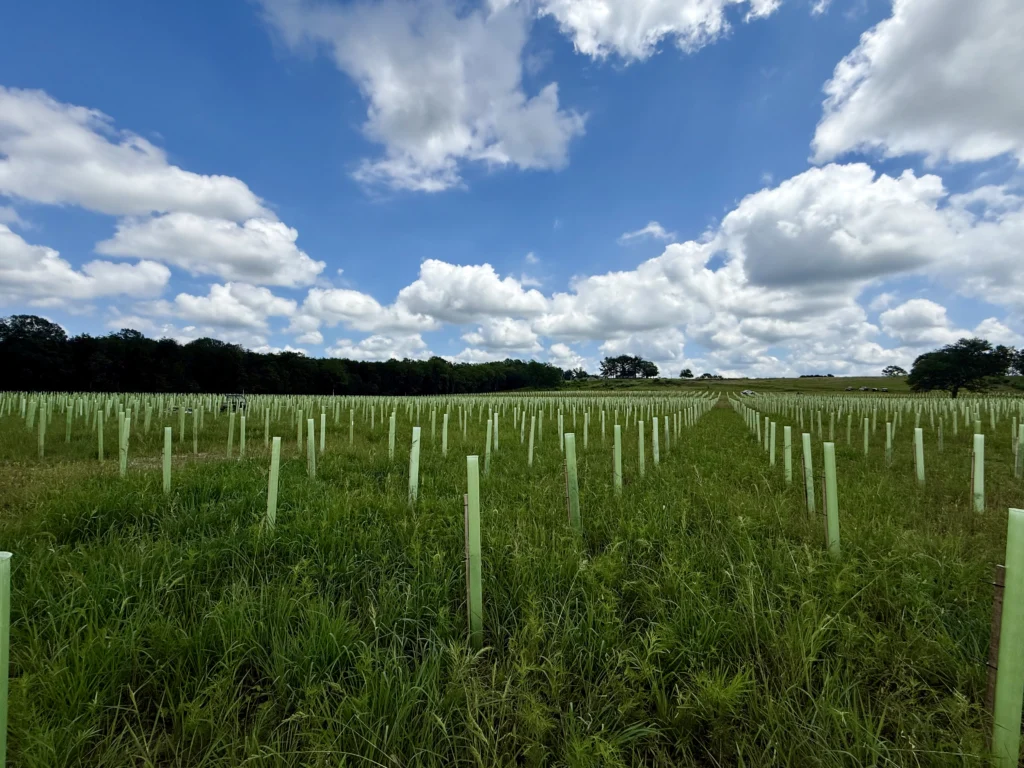
Tree shelters and tubes remain the most reliable per-tree defense. A solid-walled shelter does two jobs at once: it physically blocks browsing and it creates a warm, humid microclimate that accelerates early growth. Research summarized by the USDA Forest Service and university extension programs consistently shows seedlings in solid tubes growing markedly faster in their first two years than unprotected controls. To stop deer reaching over the top, shelters intended for deer country generally need to stand at least 4 to 5 feet tall.
Where the priority is airflow and the planting stock is larger or the climate hotter, mesh shelters ventilate freely while still excluding deer and rabbits. For dense rabbit or hare pressure on smaller stock, shorter tree guards may be enough. The vole problem is separate and easy to miss: a shelter only stops voles if it is secured tightly to the ground so they cannot slip underneath, which is exactly what a base-sealing voleguard is designed to do.
Matching protection to species and site
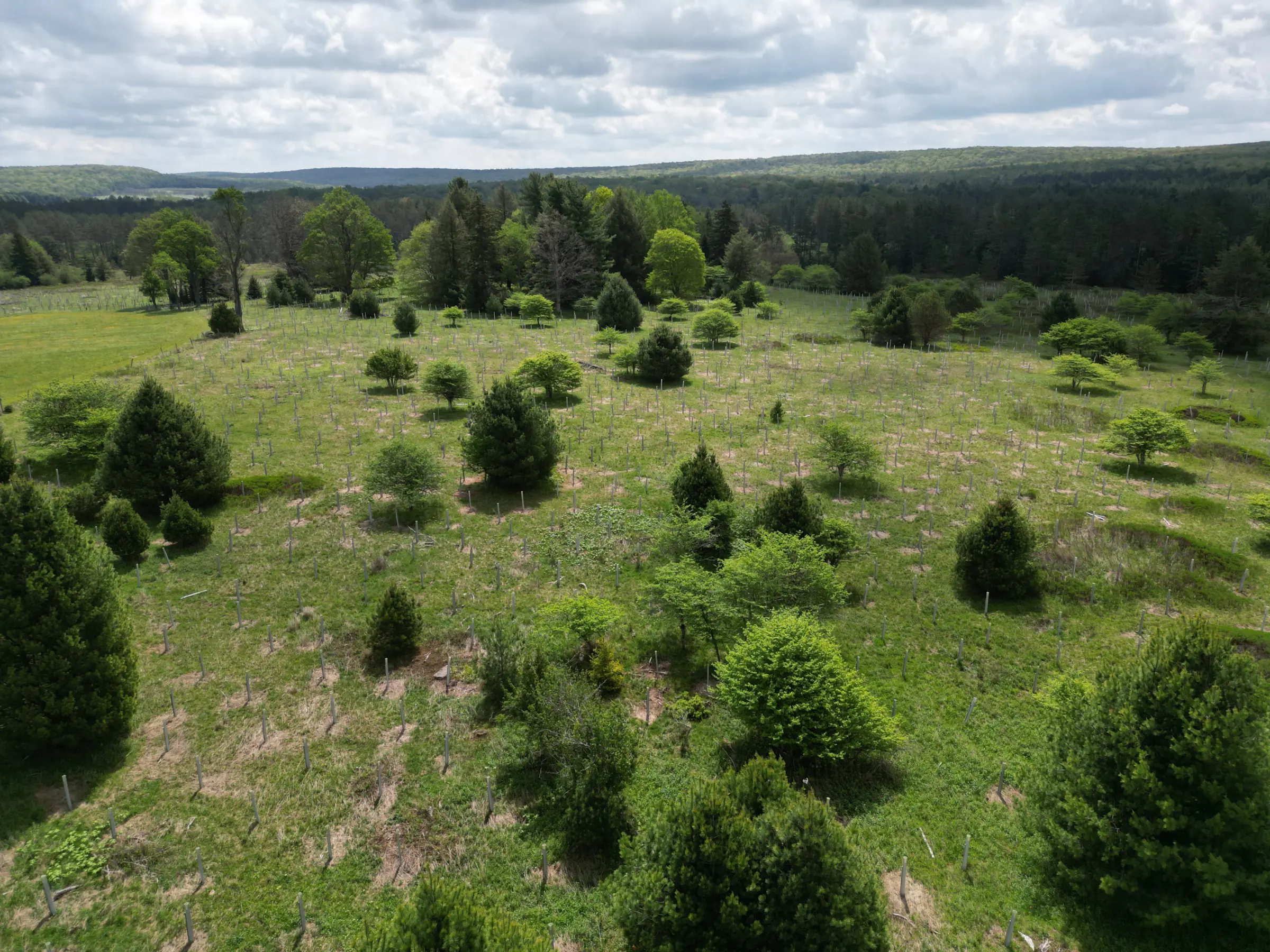
There is no single right answer, the threat profile of the site should drive the spec. High deer density calls for taller shelters; heavy vole or rabbit pressure calls for a sealed base and the right mesh aperture; hot, exposed sites favor ventilated designs over solid tubes that can overheat. Conifers and hardwoods behave differently inside shelters, so stock type matters too. The practical rule for any large reforestation project is to match the protection to the dominant threat rather than over-specifying one heavy product across the whole site.
Planning for the full life of the planting
Protection is not only about the first season. Conventional plastic shelters have to be collected and removed once the trees outgrow them: slow, costly work across thousands of stems on rough terrain, and frequently left undone. Soil-biodegradable options such as the Vigilis Bio tree shelter protect through establishment and then break down in place, while recyclable formats keep the material in circulation where guards can be recovered. For US reforestation programs planting at scale, that end-of-life decision matters as much as the initial spec.
Whatever the site, the principle holds across North American forestry: identify the real animal pressures, protect against them properly for the establishment years, and choose materials that won’t leave a cleanup problem behind. To specify seedling protection for a US planting, talk to your local Vigilis distributor.