Windbreaks and shelterbelts are among the oldest conservation practices on American farmland and among the most quietly valuable. Across the Midwest and Great Plains, rows of trees and shrubs planted along field edges cut wind speed, hold soil in place, shelter livestock and buildings, and buffer crops from desiccation. This guide covers how they work, how they are funded, and why establishment protection determines whether a shelterbelt ever reaches the height it was designed for.
What a windbreak does
A windbreak is a single or multiple row of trees or shrubs in a linear or curvilinear configuration, planted to provide shelter from wind and to protect against soil erosion. The physics are straightforward: the barrier slows wind on its leeward side for a distance of roughly ten to fifteen times its height, and the protection extends upwind as well.
The consequences are not small. Reduced wind speed cuts soil loss on light and cultivated ground, lowers evapotranspiration so crops hold moisture longer, protects young plants from mechanical damage, reduces winter stress on livestock, and cuts heating loads on farmsteads. Field windbreaks, livestock shelterbelts and farmstead plantings are designed differently because they are solving different versions of the same problem.
The Dust Bowl inheritance
Much of the Midwest’s existing shelterbelt network dates to the response to the Dust Bowl of the 1930s, when large-scale planting programs put hundreds of millions of trees across the Plains. Those plantings are now at or beyond the end of their designed life. Rows have gaps, species have aged out, and a windbreak with holes in it can be worse than none at all, because wind funnels through the gaps at increased velocity.
That is why renovation, rather than new planting, is much of the current work: filling gaps, adding rows, and replacing failed species in structures that already exist.
How the work gets funded
The main federal route is the Environmental Quality Incentives Program (EQIP), administered by the USDA Natural Resources Conservation Service, which provides financial and technical assistance to farmers, ranchers and forest landowners. Windbreak and shelterbelt establishment and renovation is a defined conservation practice standard, practice code 380, and windbreak/shelterbelt renovation is available for use in fiscal year 2026.
Available practices and payment rates vary by state, and states run their own signup periods and ranking pools, so the practical first step is contacting a local NRCS field office rather than working from national guidance. State forestry agencies and conservation districts often run complementary programs, including seedling supply at cost. Details of the practice and program are on the NRCS windbreaks and shelterbelts pages.
Why establishment is the hard part
A windbreak only works when it reaches height, and the years between planting and function are where schemes fail. A newly planted shelterbelt sits in the most exposed position on the farm by definition (that is the point of it), with no canopy, no shelter and full wind exposure on young stems.
The pressures stack up. Deer browse the leaders, which is particularly damaging in a linear planting where every tree is edge habitat and none is buffered. Rabbits and voles strip bark at ground level, often under winter snow cover where the damage is invisible until spring. Herbicide drift and mower damage take a steady toll along field margins. And desiccation on exposed ground stresses whips through their first summers.
Protecting a linear planting
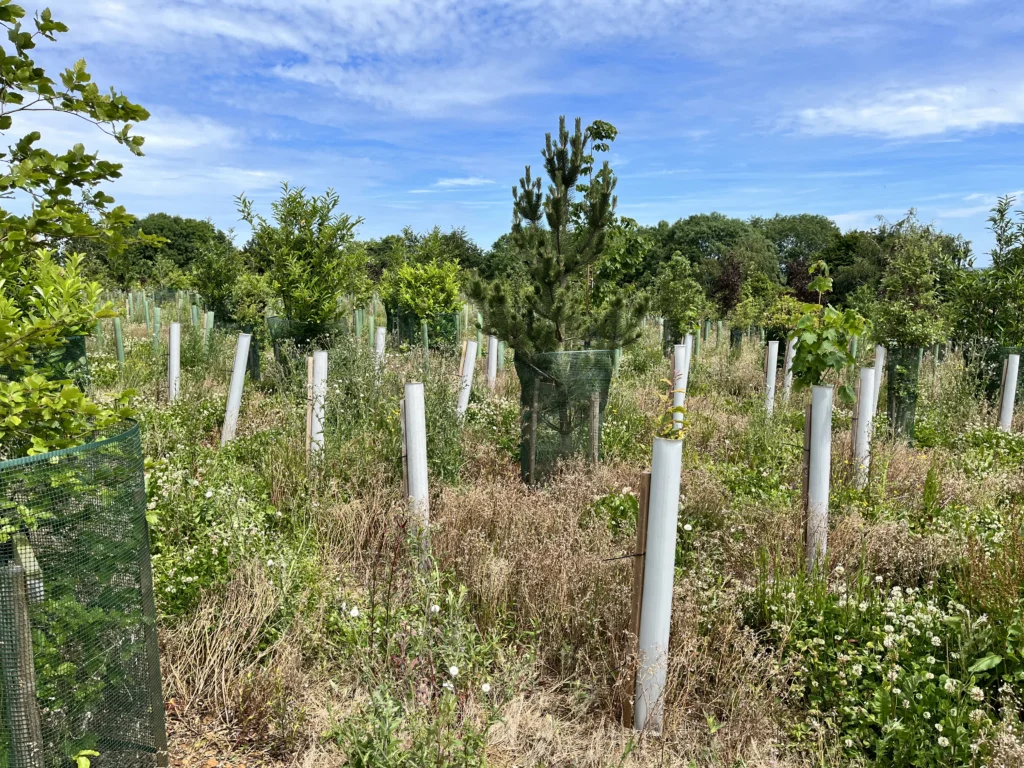
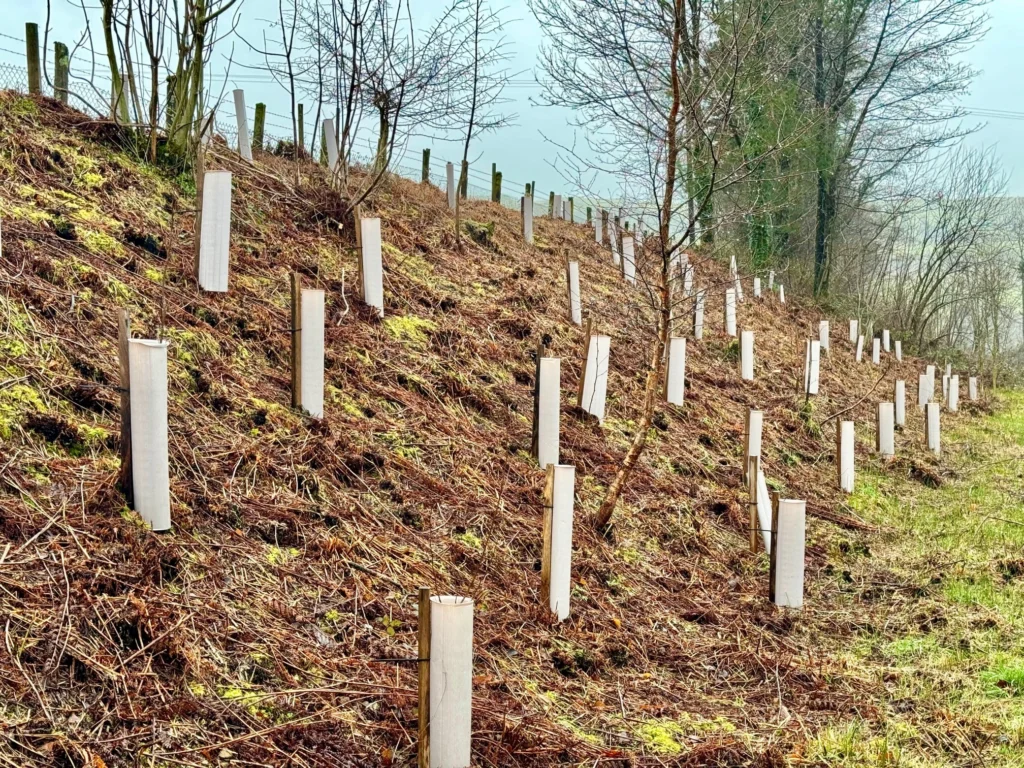
Tree shelters address several of these at once. A shelter shields the stem from browsing and mechanical damage, creates a humid microclimate that reduces moisture stress in the first seasons, and makes each tree visible to machinery operators working the field edge, which alone prevents a meaningful share of losses.
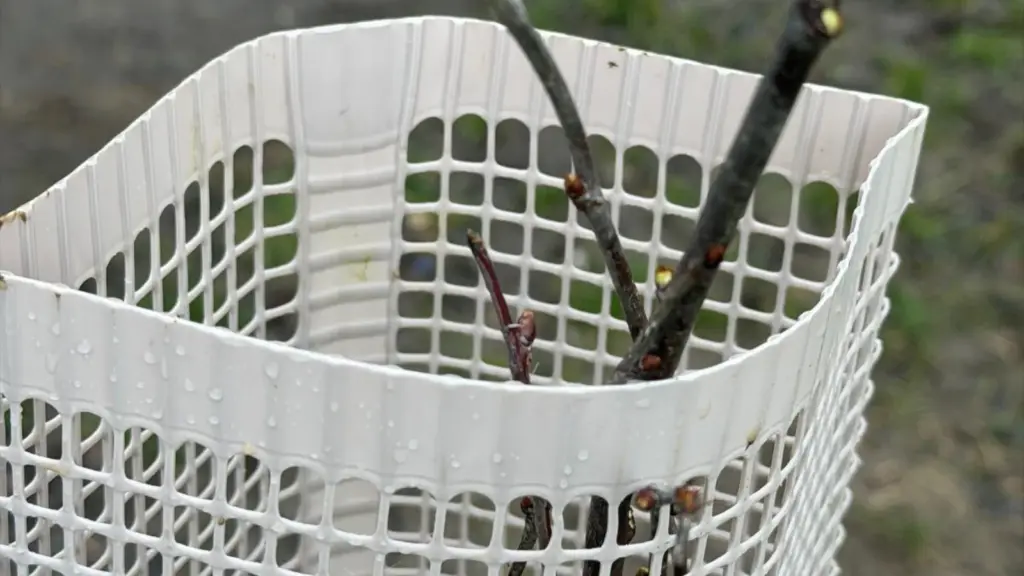
Specification should follow the local pressure. Where deer are the main threat, height matters and should be matched to the browse height of the species present. Where voles and rabbits dominate, ground-level protection such as voleguards matters more than height. Mixed-species belts often need mixed specification, since the shrub rows and the tall tree rows face different risks. Our tree guards and mesh shelters cover the range.
Planning for what comes off
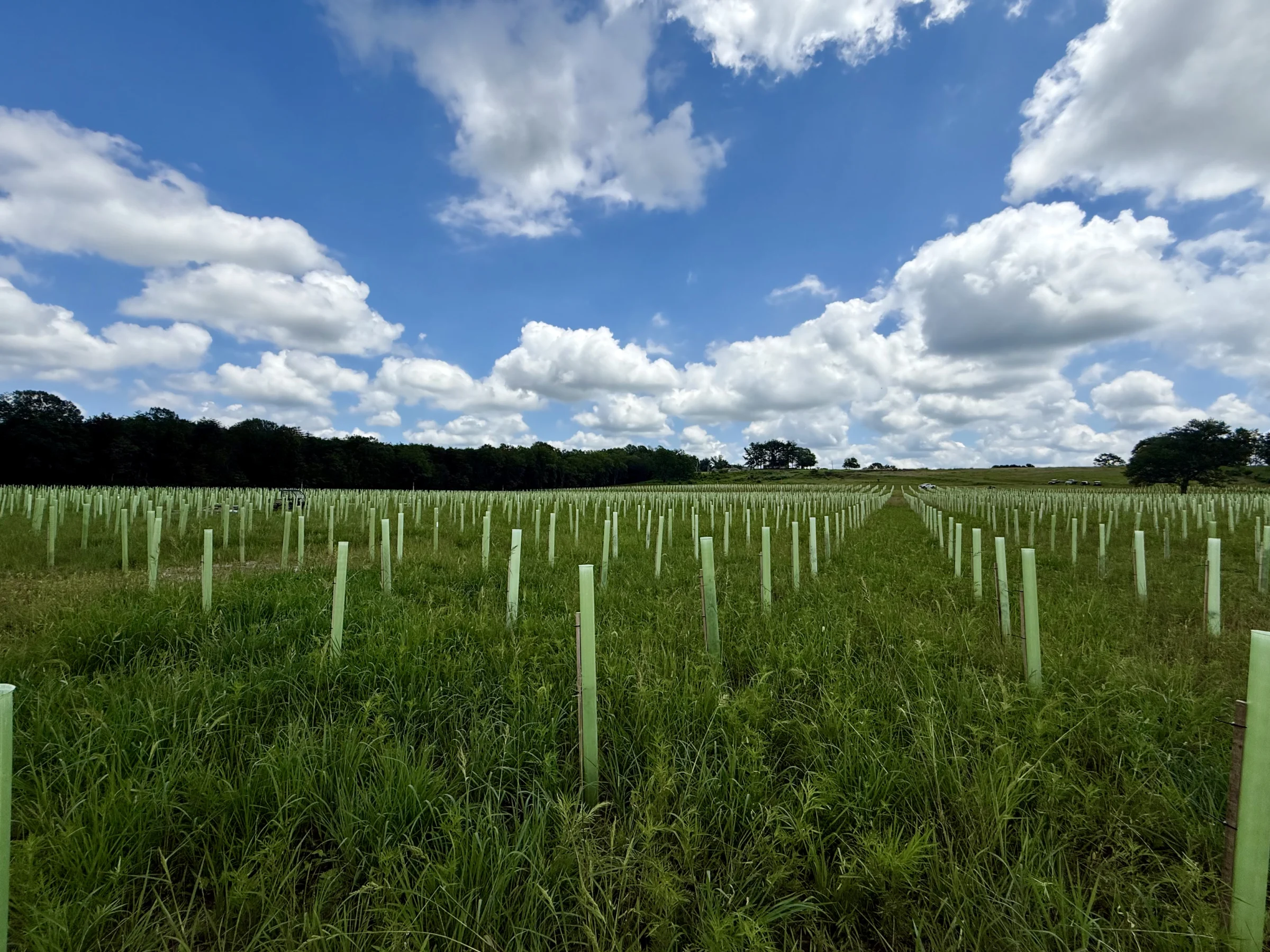
A shelterbelt is a long, thin structure that may run for miles across a property. That geometry makes retrieval of spent guards a genuinely expensive job, with a lot of ground covered for a small number of trees per acre. Soil-biodegradable protection such as Vigilis Bio removes that trip entirely, which on linear plantings is a larger saving than the unit price difference suggests.
Windbreaks are long-term infrastructure. Specified properly, they work for fifty years. Our agroforestry pages cover protection for working farmland, and our distributor network can advise on North American supply.