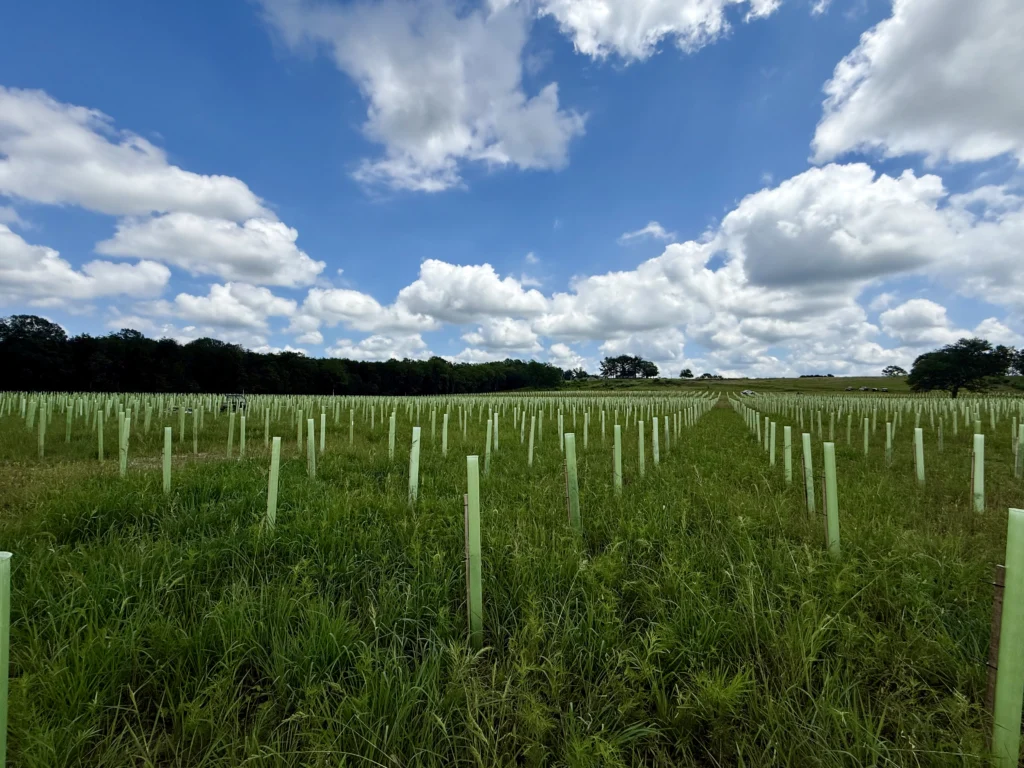
The 2026/27 tree planting season starts when the trees go dormant and the ground is workable, realistically November through to March, with the best planting window often narrower than people plan for. September is when the season is won or lost, because almost everything that derails a planting scheme is a decision that should have been made now. This is a pre-autumn checklist for anyone with trees to get in the ground this winter.
Confirm your funding route before you order
The UK funding landscape has shifted this year, so check which door you are going through. Capital Grants 2026 closed on 1 September after its £225m budget was fully allocated across around 17,000 applications. Agroforestry items and the woodland condition assessment were deliberately kept out of that offer and sit instead in Higher Tier Capital Grants, which are available year-round, so the shelter-relevant route is still open even though the headline scheme has shut.
Elsewhere: SFI26 Window 2 opens on 22 September, open to all farmers and land managers. The England Woodland Creation Offer runs year-round, with up to £10,200 per hectare to create woodland plus up to £12,700 in additional payments, and applications accepted from 1 hectare total. The Woodland Trust’s MOREwoods scheme is taking applications for November 2026 to March 2027 planting with subsidies up to 75%. The Trees Outside Woodland Fund is open until 31 October or until fully allocated. Check current terms on the Forestry Commission’s pages before you commit.
Order stock and protection together
Nursery stock for the 2026/27 season is being allocated now, and the species and provenances in demand go first. Order late and you take what is left, which is how schemes end up planting a species mix nobody designed.
Order protection at the same time, not afterwards. Trees that arrive before their guards either sit heeled in losing condition or go in unprotected on the promise that someone will come back, and nobody comes back. Getting both deliveries onto the same schedule is the single cheapest thing you can do to protect establishment rates.
Survey the actual pressure on your site
Specification should follow the browsing pressure you have, not the pressure you assume. Walk the site now, while vegetation is still up, and look for what is actually there: deer species and their browse height, rabbit runs and scrapes, hare activity, vole habitat in long grass, and livestock access if the site is grazed.
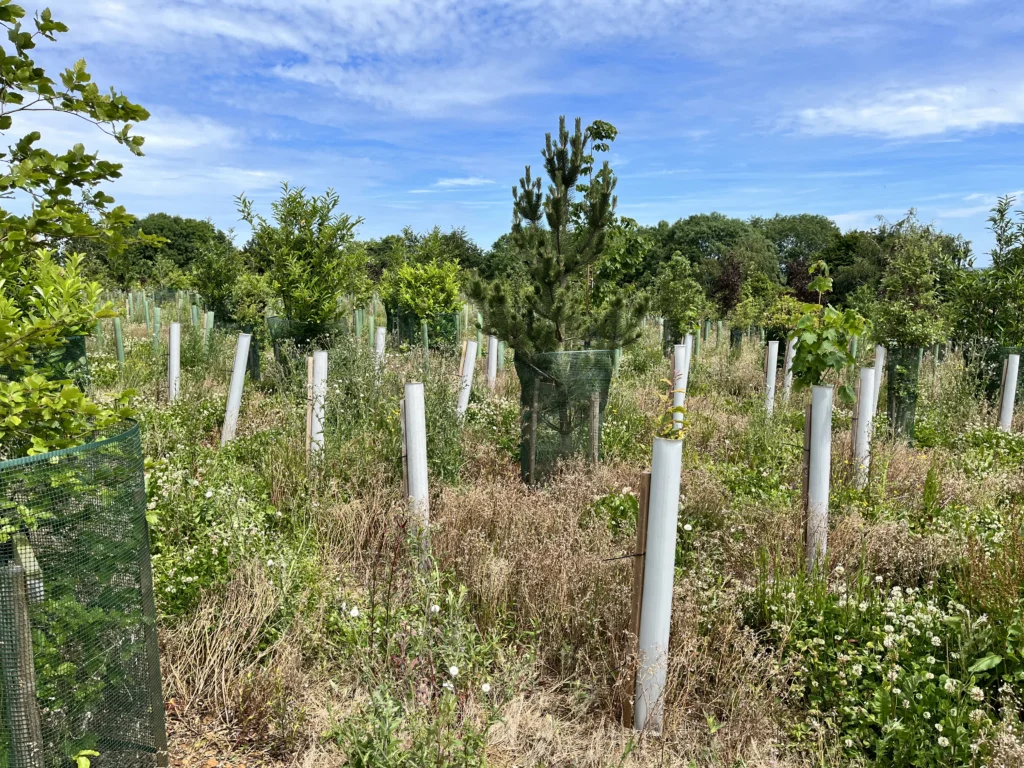
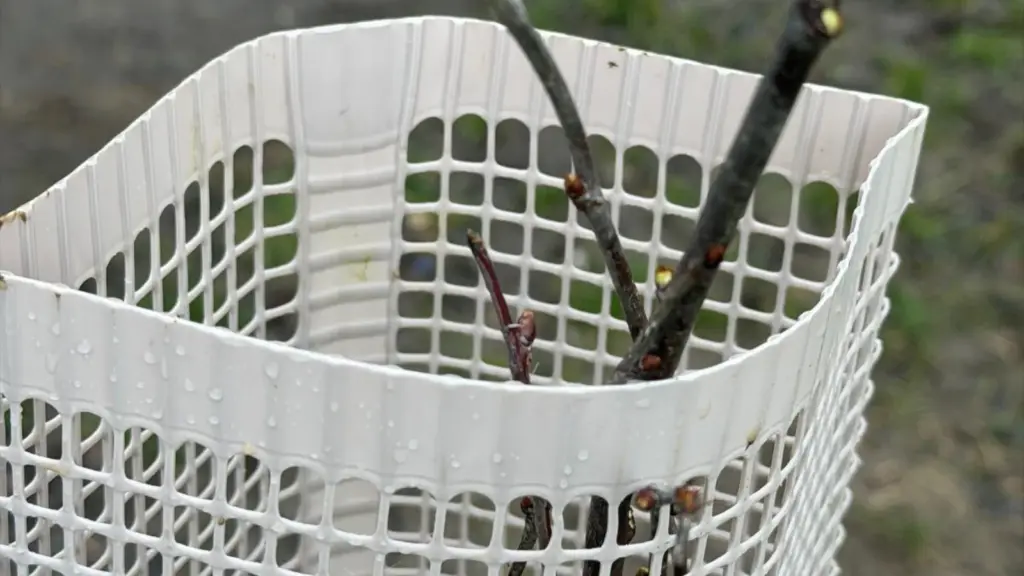
That survey drives real decisions. Roe and muntjac need different heights from red or fallow. Heavy vole pressure means ground-level protection as well as a shelter. Exposed sites need more attention to staking than sheltered ones. Our tree guards and mesh shelters cover different pressure profiles, and the choice is easier to make in September with the evidence in front of you than in January from memory.
Decide the end-of-life question now
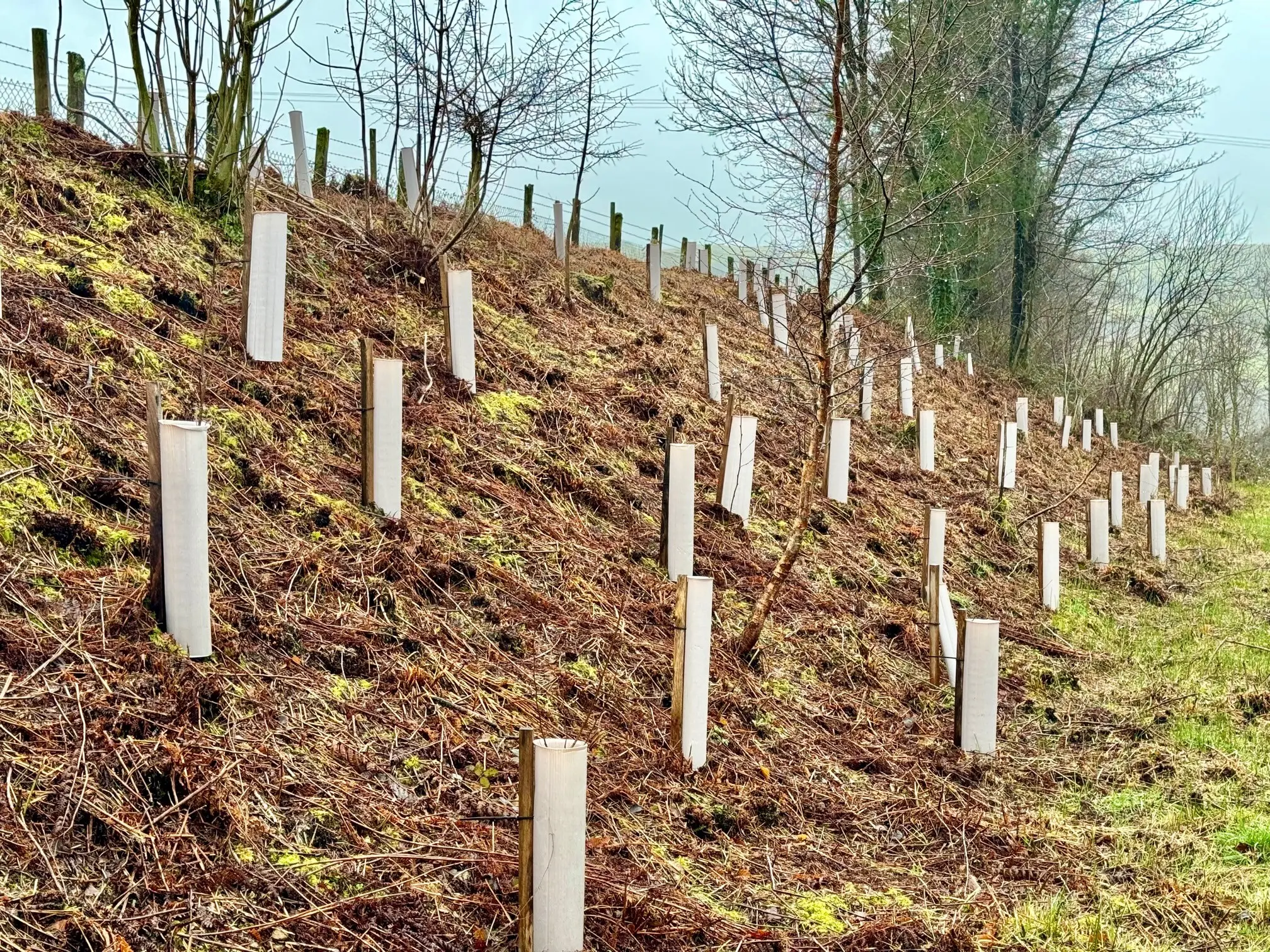
The cost of a guard includes getting it back off again. On a large or remote site, retrieval across steep ground five to eight years after planting is labour the original budget rarely carried, which is why so much abandoned plastic is still standing in maturing woodland.
Settle it at specification stage. A soil-biodegradable shelter such as Vigilis Bio removes the retrieval job entirely. A recyclable guard works if a genuine collection stream exists and someone is funded to use it. Either is a defensible answer. Leaving the question open is not, particularly on a scheme that will be audited.
Ground preparation and access
Weed competition kills more young trees than browsing does. Autumn is the moment to deal with dense grass sward and bramble, because a whip planted into thick vegetation is competing for water from its first day. Plan your ground preparation, screefing or mulching approach before the trees arrive.
Check access while the ground is still dry. Establish where you can get a vehicle in winter, where stock will be staged, and where the site becomes impassable after rain. Planting teams working in January will thank you, and a scheme that cannot be reached in February is a scheme that plants late.
Book the labour
Contract planting teams are booked months ahead, and the good ones fill first. If you are using contractors, confirm dates now and be specific about what is included: planting only, or planting plus protection installation, which is where scope disputes usually appear on site in the middle of a cold week.
Do these things in September and the winter becomes logistics rather than firefighting. Our rewilding and forestry pages cover specification in more detail, and our distributor network can quote for season quantities.