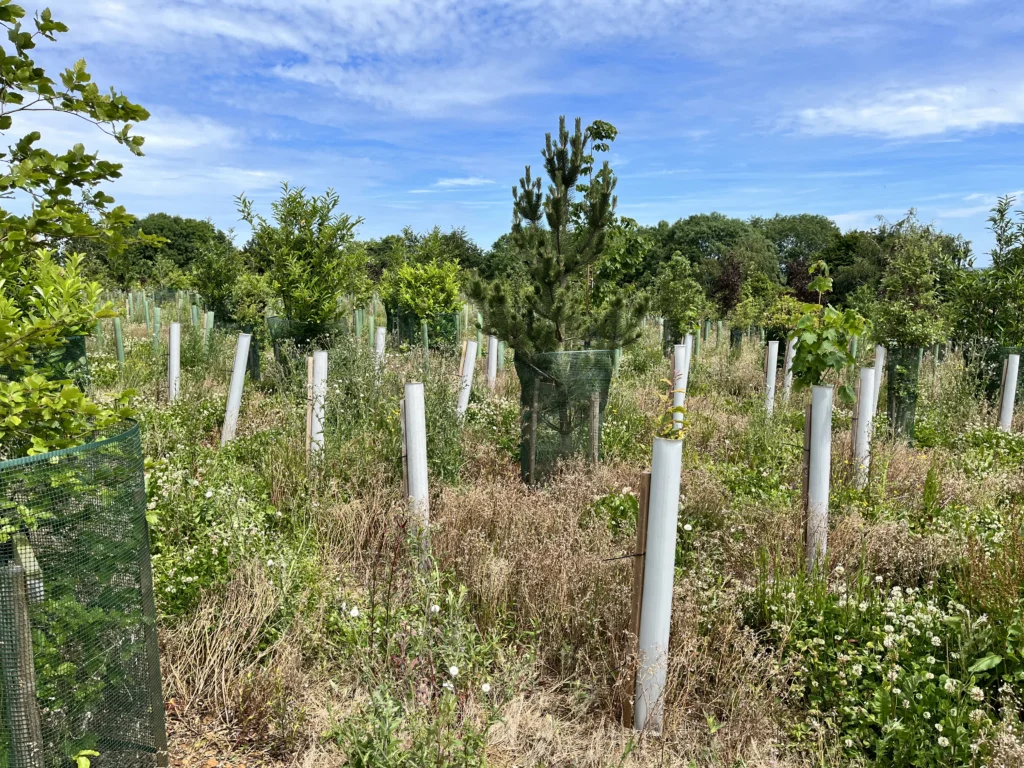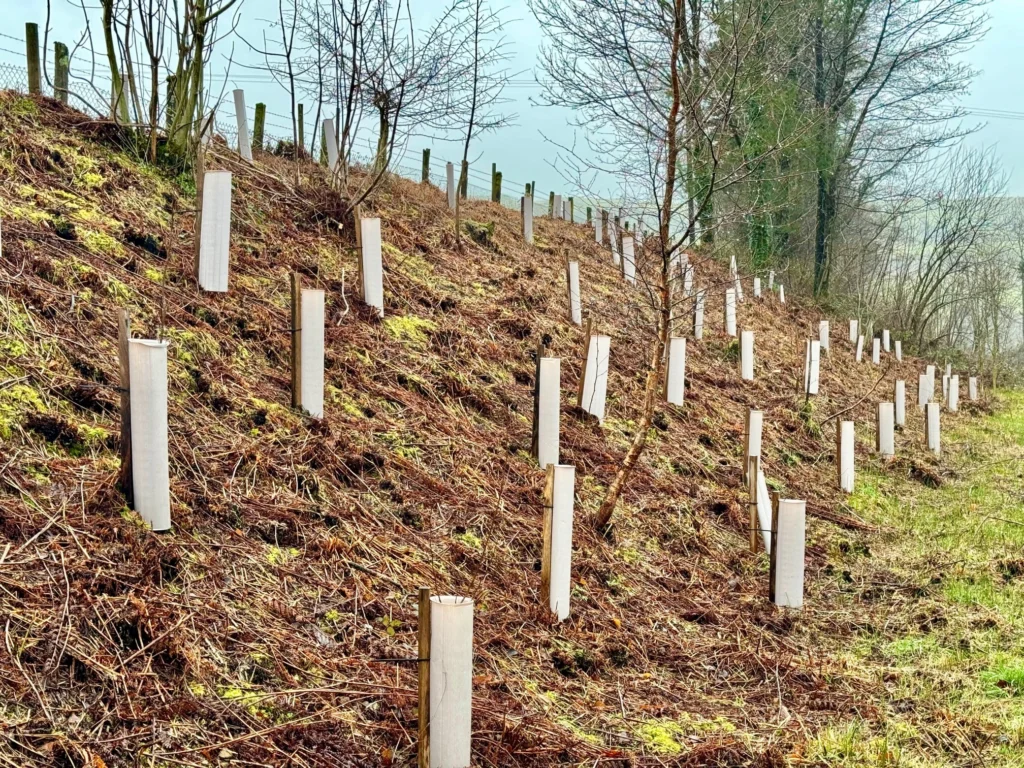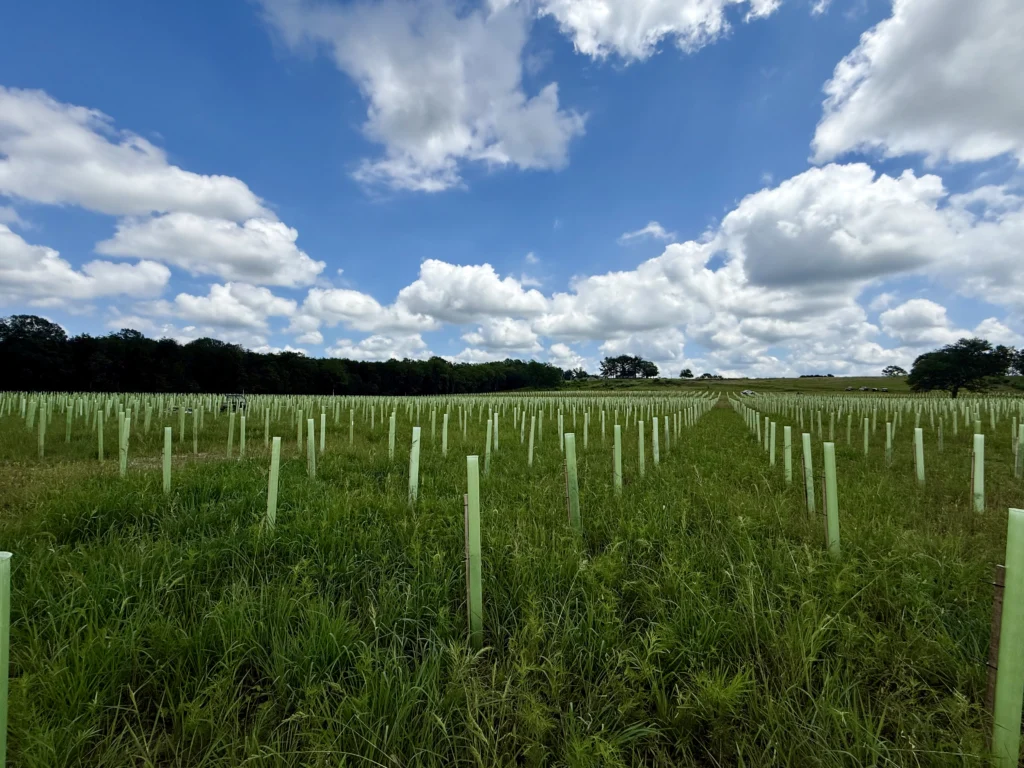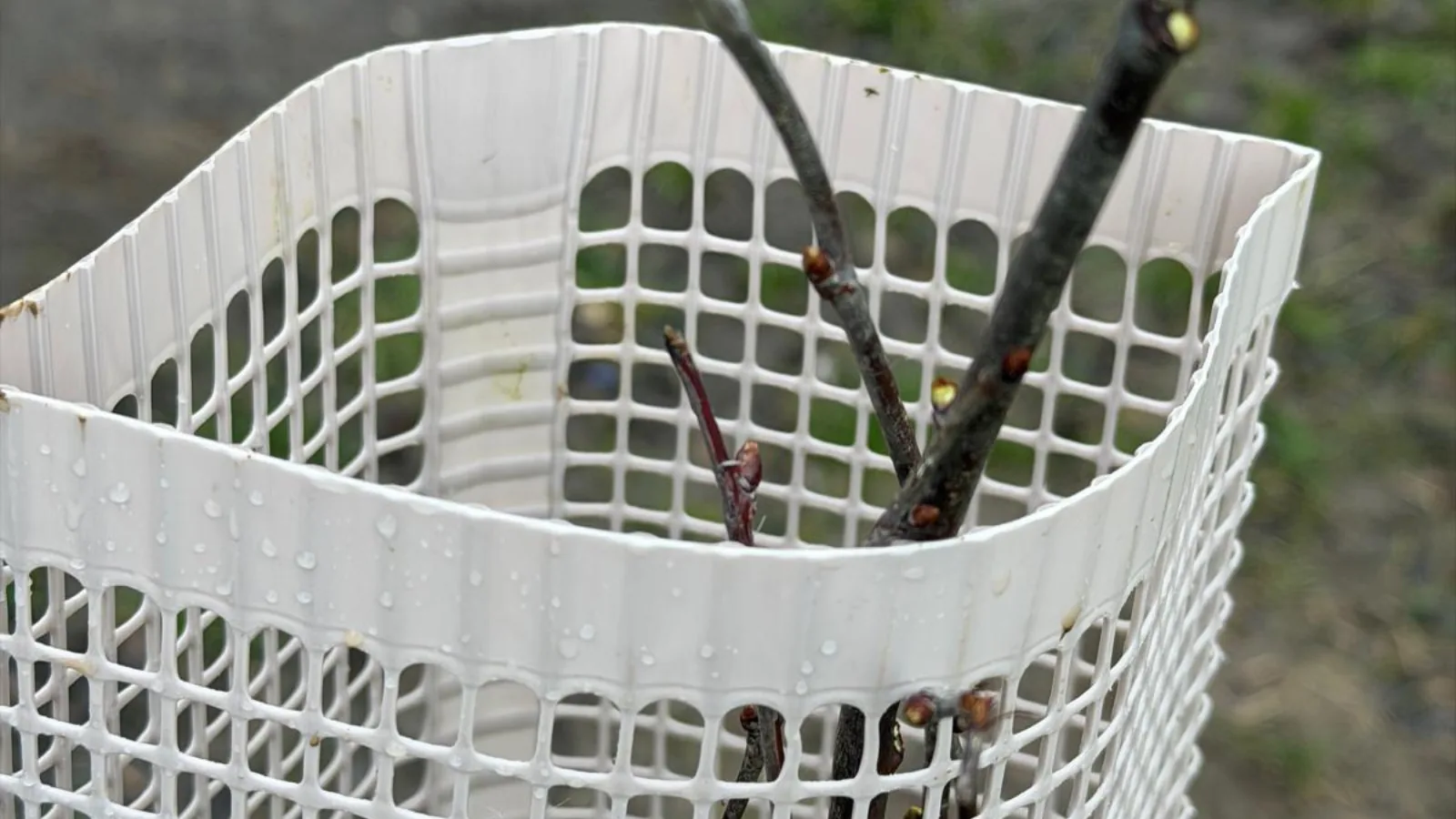
The biodegradable mesh guard has been the missing piece in plastic-free tree protection. Soil-biodegradable shelters have been available in the UK for several years, but almost entirely as solid-walled tubes. Mesh guards, where a planting needs airflow rather than a greenhouse, have stayed plastic. The Vigilis Bio Mesh Guard closes that gap. As far as Vigilis is aware, it is the first soil-biodegradable mesh guard on the UK market.
What a mesh guard is for
A solid tube and an open mesh do different jobs. A solid-walled shelter traps warmth and humidity around the stem, which drives fast early height growth. That is the right choice for many broadleaves on exposed sites, and it is why the tube has dominated British forestry for forty years.
Open mesh takes the opposite approach. It lets air move freely through the guard, so the young stem flexes in the wind and lays down the reaction wood that makes a tree self-supporting. The result is a shorter, sturdier, more wind-firm tree at the point the protection comes off, rather than a tall stem that has grown up leaning on its tube. Airflow also keeps foliage drier, which matters on humid lowland sites and with species prone to fungal problems.
That makes mesh the better specification for conifers, for hedgerow species, for anything planted in a damp or sheltered position, and for schemes where stem quality matters more than getting height on the tree quickly.
Why a biodegradable mesh guard is harder to make
A solid tube is a relatively forgiving thing to make from a biodegradable material. There is a continuous wall carrying the load, so the material can be comparatively soft and still hold its shape for the years the tree needs.
A mesh is not forgiving. The same structural job has to be done by a lattice of thin strands and the junctions between them, while staying open enough to ventilate and rigid enough not to collapse onto the plant. It then has to hold that geometry through several seasons of UV, frost and wind, and only afterwards begin to break down. Getting a plant-based material to do all of that at once is the reason the category has stayed plastic, and it is what the Vigilis-Bio research programme, supported by more than £360,000 of Innovate UK funding, was built to solve.
Specification
- Material: soil-biodegradable, plastic-free
- Mesh: 12 x 12mm square apertures with a selvedge edge
- Diameter: 130mm (5.1in)
- Heights: 60cm, 75cm, 120cm, 150cm and 180cm
- Colour: light brown
- Packing: flat-packed, packs of 50
The height range covers the full span of browsing pressure, from rabbit and hare protection at 60cm through to the taller guards needed where roe, fallow or red deer are present. Flat packing matters more than it sounds: mesh guards ship and store flat, then open on site, so a large planting takes far less lorry space and far less handling than the equivalent run of rigid tubes.
What it changes at end of life
Mesh has always had an awkward end of life. A spent plastic mesh guard is bulkier and more tangled to collect than a tube, it snags on the tree it was protecting, and it fragments into pieces that are close to impossible to gather from long grass. On a large or remote site, that retrieval visit is labour nobody budgeted for at planting.
A soil-biodegradable mesh removes the job. The guard protects the tree through establishment and then breaks down in the soil, leaving no plastic to collect and no fragments in the sward. For anyone reporting against a funding condition, a certification scheme or an ESG commitment, that is the difference between a clean answer and an open cost. Our Vigilis Bio pages set out the material basis and the field evidence behind the range.
Choosing between mesh and a solid tube
Neither is universally better. Specify a solid Vigilis Bio tree shelter where the site is exposed, the priority is fast establishment height, and weed competition or herbicide drift needs to be kept off the stem. Specify a mesh guard where airflow, stem quality and wind-firmness matter more, or where a solid tube would hold too much moisture around the foliage.
Plenty of schemes use both, tube on the exposed edges and mesh through the sheltered core. The point of a biodegradable version of each is that the choice no longer carries a plastic legacy either way. For guidance on the forestry and rewilding specifications we see most often, or to discuss a particular site, our distributor network covers the UK.
See it at APF 2026
The Vigilis Bio Mesh Guard will be on stand C8a at the APF Exhibition at Ragley Estate, 24 to 26 September, alongside field samples showing how the biodegradable range performs over time. It is worth handling the mesh before you specify it, and the show is the easiest place in the calendar to do that.