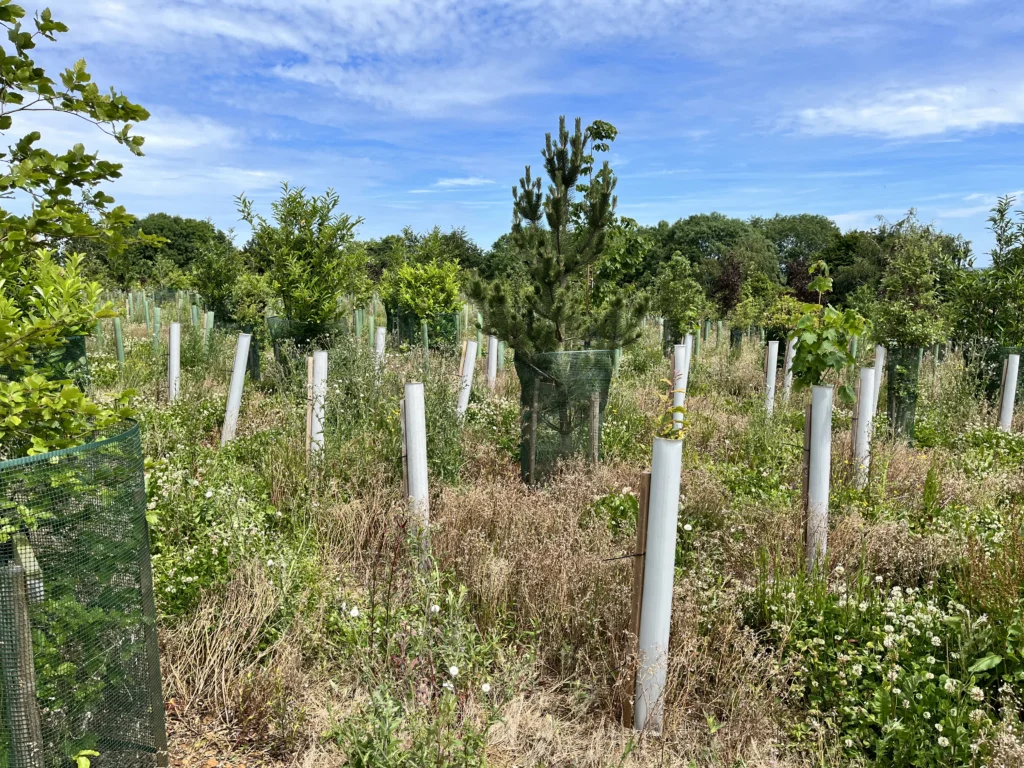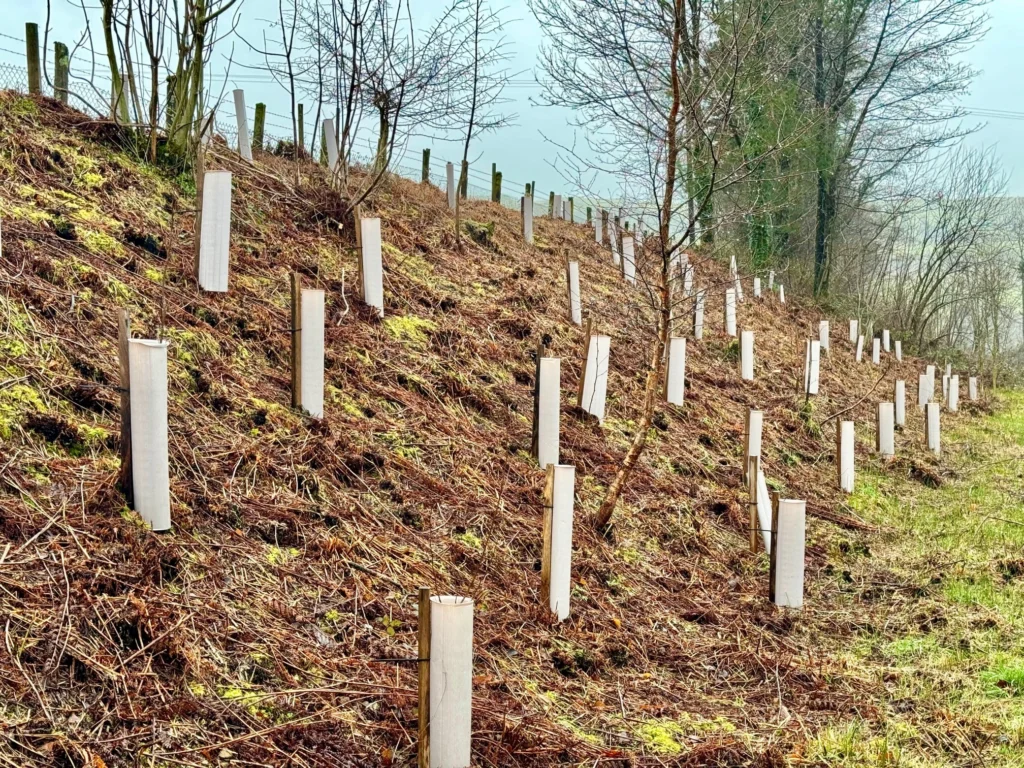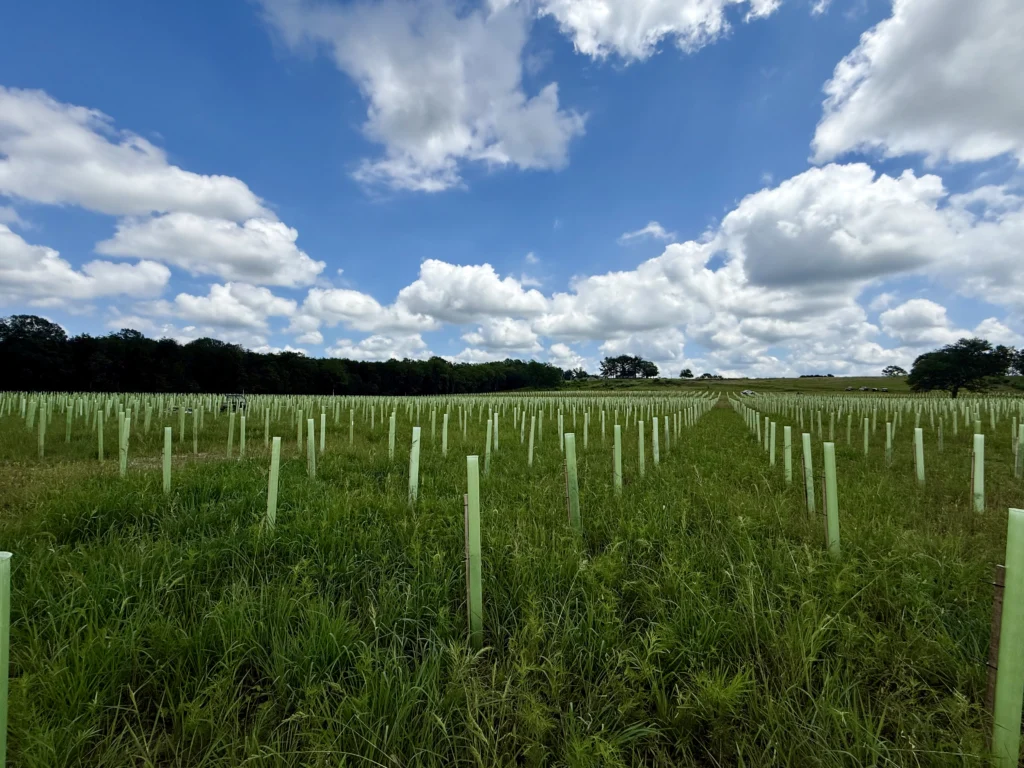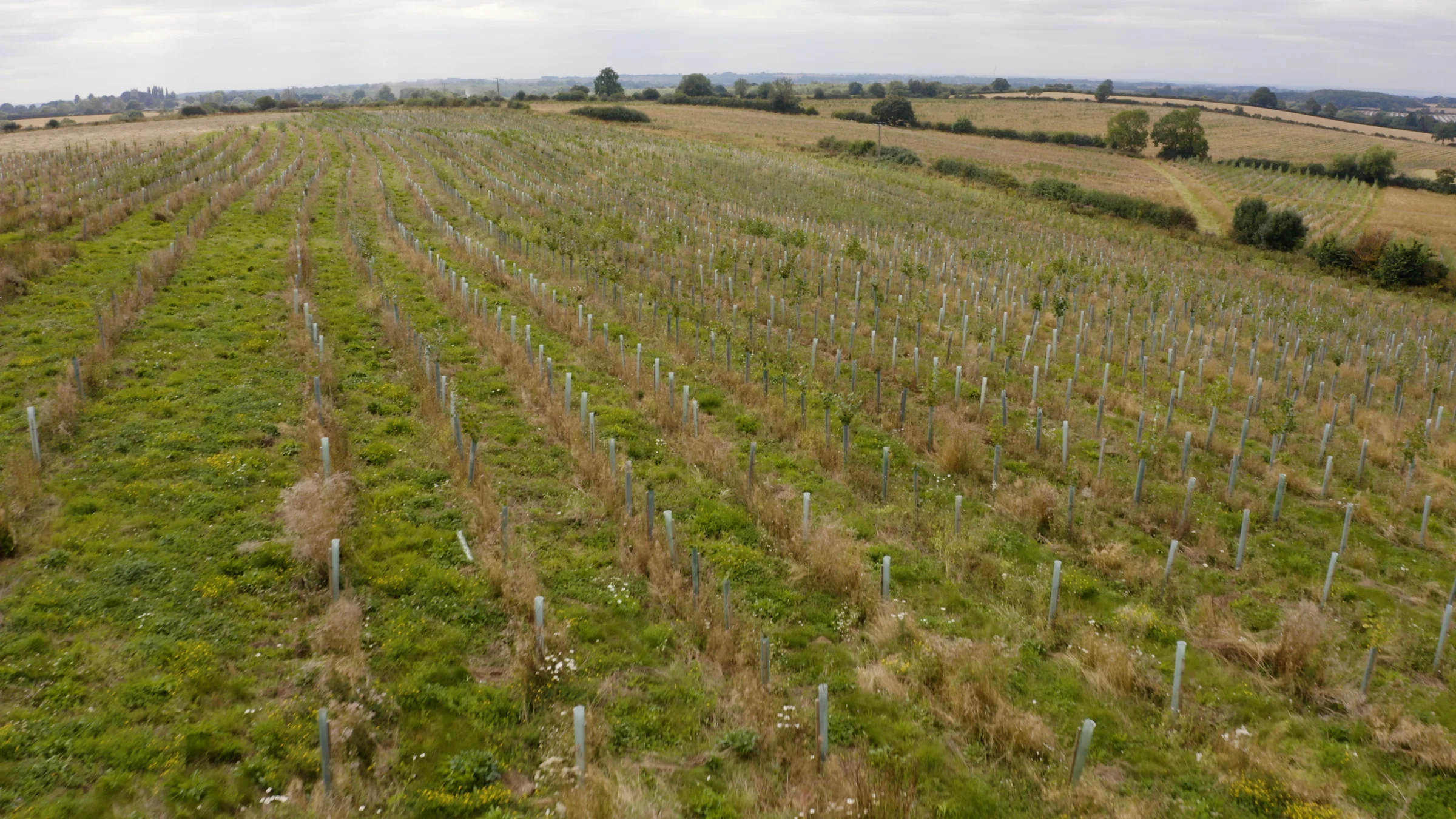
Agroforestry carbon farming moved from principle to paperwork this summer. In July 2026 the European Commission adopted the first certification methodologies under the Carbon Removals Certification Framework (CRCF), and one of the three covers agriculture and agroforestry on mineral soils. For anyone planting trees into farmland in the EU, that changes what a scheme has to prove, and it puts biodiversity co-benefits on the certificate rather than in the brochure.
What the CRCF actually is
The Carbon Removals Certification Framework, Regulation (EU) 2024/3012, is a voluntary, EU-wide system for certifying carbon removals. It came into force in December 2024 to solve a specific problem: a crowded voluntary carbon market in which buyers could not easily tell a rigorous project from a weak one. The framework sets common rules for what counts, how it is measured, and who verifies it, with a common EU registry due by late 2028.
Carbon farming is one of the framework’s three pillars, alongside permanent removals and carbon storage in products. The delegated act covers three carbon farming activity types: agriculture and agroforestry on mineral soils, the rewetting and restoration of peatlands and other organic soils, and afforestation. The July 2026 methodologies are the operational detail that makes those categories usable.
Why agroforestry sits well inside it
Agroforestry has an unusual advantage under a framework like this. Carbon is stored in standing biomass you can see, measure and re-measure, tree by tree and row by row, rather than only in soil organic carbon, which is slower to shift and harder to evidence. A silvopasture or alley-cropping layout has a known planting density, a known species mix and a known establishment date, which makes the monitoring burden tractable for a farm business rather than only for a large estate.
The Commission is explicit that these activities are expected to deliver more than tonnes. They help make landscapes more resilient to climate change, support biodiversity and other ecosystem services, and strengthen the long-term security of food and biomass supply. That framing matters commercially: it is what separates a certified agroforestry unit from a cheap offset, and it is what buyers are increasingly asked to demonstrate.
How biodiversity co-benefits change the specification
Once biodiversity is part of what you are certifying, the materials you leave in the ground stop being a footnote. A scheme that sequesters carbon for thirty years while shedding plastic fragments into the soil for the same period is arguing against itself. Verifiers and buyers both ask the obvious question: what happens to the guards?
This is where protection specification becomes a certification issue rather than a procurement one. A soil-biodegradable shelter such as Vigilis Bio protects the tree through establishment and then breaks down in the soil, leaving no plastic to retrieve and no fragments to explain. A recyclable guard achieves a similar end by a different route, provided a genuine collection and recycling stream exists. Either is defensible. A conventional tube abandoned in a hedgerow is not.
Permanence, monitoring and the long tail
Carbon farming certification depends on the trees surviving. Removal units are issued against measured, maintained carbon, not against the number of whips that went in the ground on planting day. That makes establishment survival the single most important variable in the economics of a scheme, and it is exactly the variable tree protection exists to control.
On an agroforestry site, browsing pressure, stock rubbing, strimmer damage and herbicide drift all sit between planting and a certifiable stand. Losing 20% of a planting in year two does not just cost the replacement whips; it reduces the removal units the scheme can claim for its entire crediting period, and it introduces a monitoring discrepancy someone has to account for. Protection that holds for the full establishment window is cheap insurance against that.
What to do before you apply
Three things are worth settling early. First, record your baseline properly (planting density, species, spacing and establishment date), because retrofitting that evidence later is painful. Second, decide your end-of-life position on guards at specification stage and write it into the scheme documentation, rather than leaving it as an open cost in year eight. Third, check how your national implementation is landing; the CRCF is an EU framework, but certification schemes and national advisory routes will vary between member states.
The direction of travel is clear enough. Certification is becoming the price of entry to the carbon farming market, and the standard of evidence is rising. Projects that specified for the whole lifecycle, including what comes off the tree at the end, will have less to unpick than those that treated protection as a line item. You can read the Commission’s own summary of the adopted methodologies on the EU Climate Action site.
If you are planning an agroforestry planting and want protection that will not become a certification problem later, our distributor network can advise on specification for your site and species.