Agroforestry, deliberately combining trees with grazing or cropping on the same land, is one of the fastest-growing land-use systems in UK and European farming. But the two most common designs, silvo-pasture and alley cropping, place very different demands on young trees. Getting agroforestry tree protection right is what separates a system that establishes cleanly from one that loses stems to livestock, machinery and browsing in its first three seasons. This guide explains how to match shelter type to each design.
Why agroforestry tree protection is different
In conventional woodland planting, the main threats are deer, rabbits and weed competition. Agroforestry adds two more: large livestock and farm machinery working close to the tree line. A shelter that copes with a roe deer will not necessarily survive a cow leaning in to scratch, or a tractor turning at the end of an alley. The right choice depends less on the species and more on what else is sharing the field. For a fuller picture of how trees and farming integrate, see our agroforestry applications page.
Silvo-pasture: protecting trees among livestock
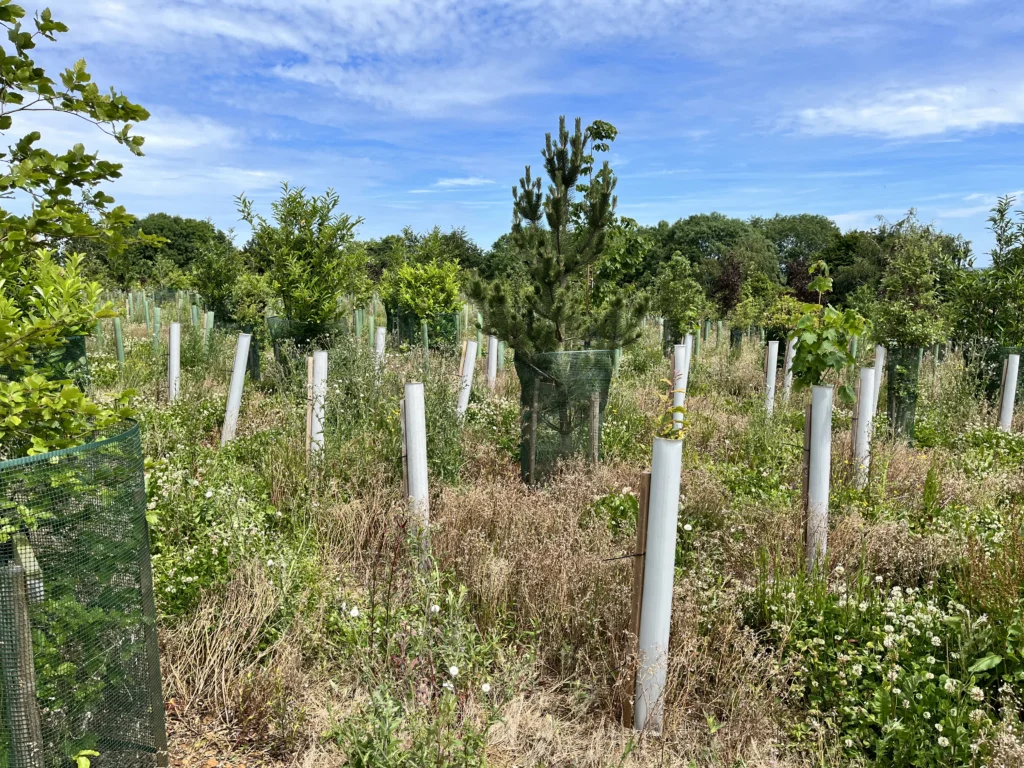
Silvo-pasture integrates trees into grazed pasture, so the dominant pressure is the animals themselves. Cattle and horses rub, push and browse; sheep are lighter but persistent. Protection here has to be physically robust and tall enough to keep foliage out of reach.
- Cattle and horses: a solid post-and-rail or mesh guard system is usually needed. A standard tube alone will be flattened. Tall mesh shelters allow airflow and let the animal see through, which reduces rubbing pressure.
- Sheep: a robust tube or mesh shelter of 1.2m or taller is normally enough, provided it is firmly staked against pushing.
- Staking: in pasture, double-staking or a stronger driven stake is worth the extra cost, livestock find weak points fast.
Alley cropping: protecting trees among machinery
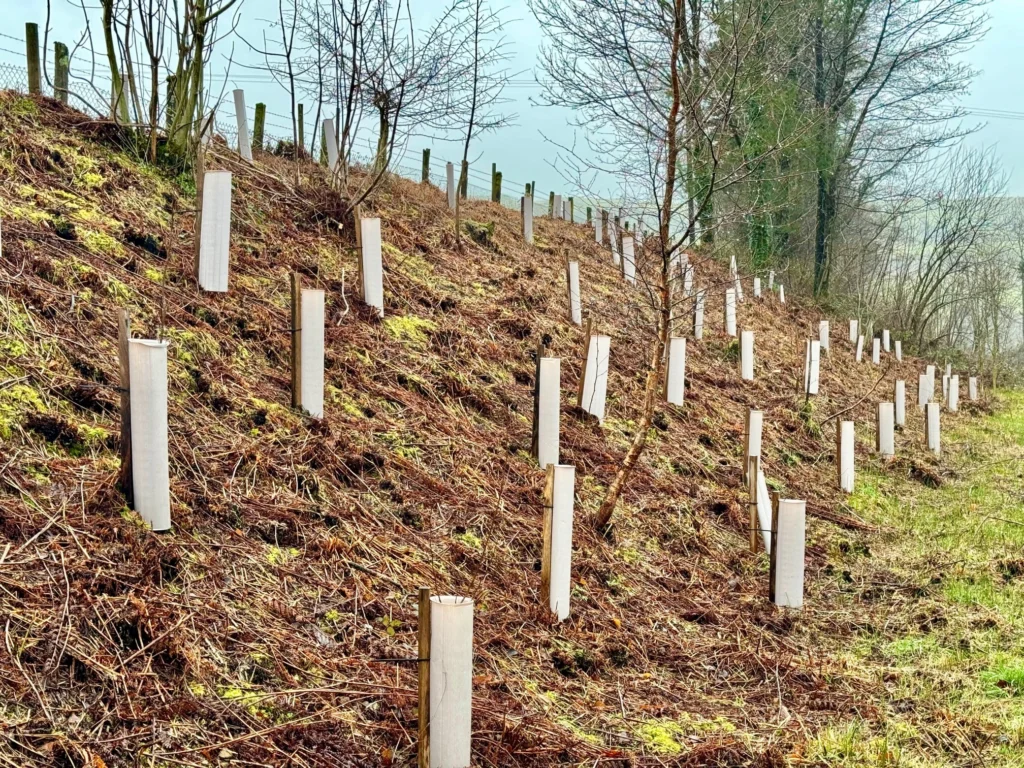
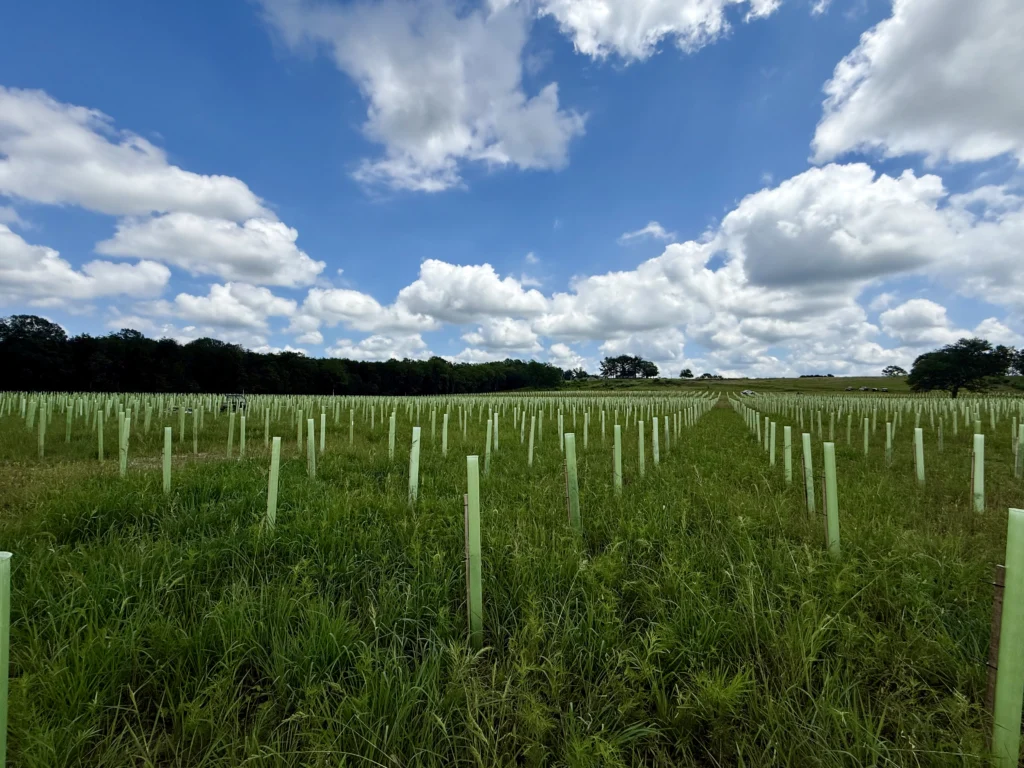
Alley cropping grows trees in rows with arable or horticultural crops cultivated in the alleys between. There are no livestock, so the threats shift to machinery clearance, spray drift and weed competition from the crop. Here a clean, well-anchored tree guard in the tree row does the job. The priority is a shelter that stands straight, resists herbicide contact and is easy for operators to see and avoid.
- Visibility: a shelter that contrasts with the crop helps machine operators keep clearance and avoid clipping the row.
- Weed control: the tube shields the stem from crop competition and from contact herbicide used in the alley.
- Row consistency: uniform height and spacing make mechanised maintenance of the alleys faster and safer.
The end-of-life question agroforestry raises
Agroforestry systems are designed to stay productive for decades, and returning to retrieve thousands of spent plastic shelters across a working farm is disruptive and costly. This is where a soil-biodegradable option earns its place: the Vigilis Bio tree shelter protects through the establishment phase and then breaks down in situ, with no retrieval visit interrupting grazing or cropping. For systems funded through agri-environment schemes with ESG or sustainability reporting attached, that clean end-of-life story also strengthens the paperwork.
Funding and standards
Much UK agroforestry planting is now supported through the Sustainable Farming Incentive and related schemes, several of which specify tree-protection standards as a condition of payment. It is worth confirming the current requirements before you specify shelters. Guidance is published on GOV.UK, and Forest Research provides technical detail on establishment and shelter performance. Matching your protection spec to the scheme rules up front avoids problems at inspection.
Choosing the right shelter for your system
The decision comes down to a short checklist: What is the main pressure, livestock or machinery? How tall must protection be to stay ahead of browsing? Will you retrieve shelters or let them break down? And what does your funding scheme require? Answer those four and the specification follows. Silvo-pasture leans towards tall, robust mesh systems; alley cropping towards clean, visible tubes; and both benefit from a biodegradable option where retrieval would disrupt the farm.
To talk through the right protection for your silvo-pasture or alley-cropping design, find your local Vigilis distributor.