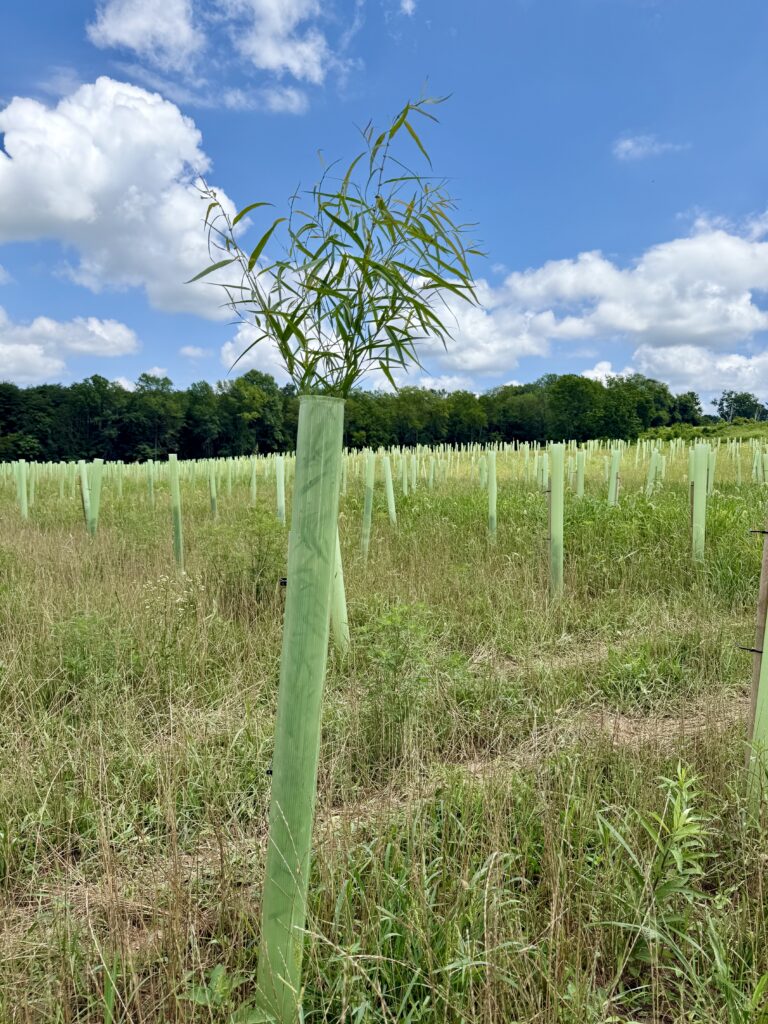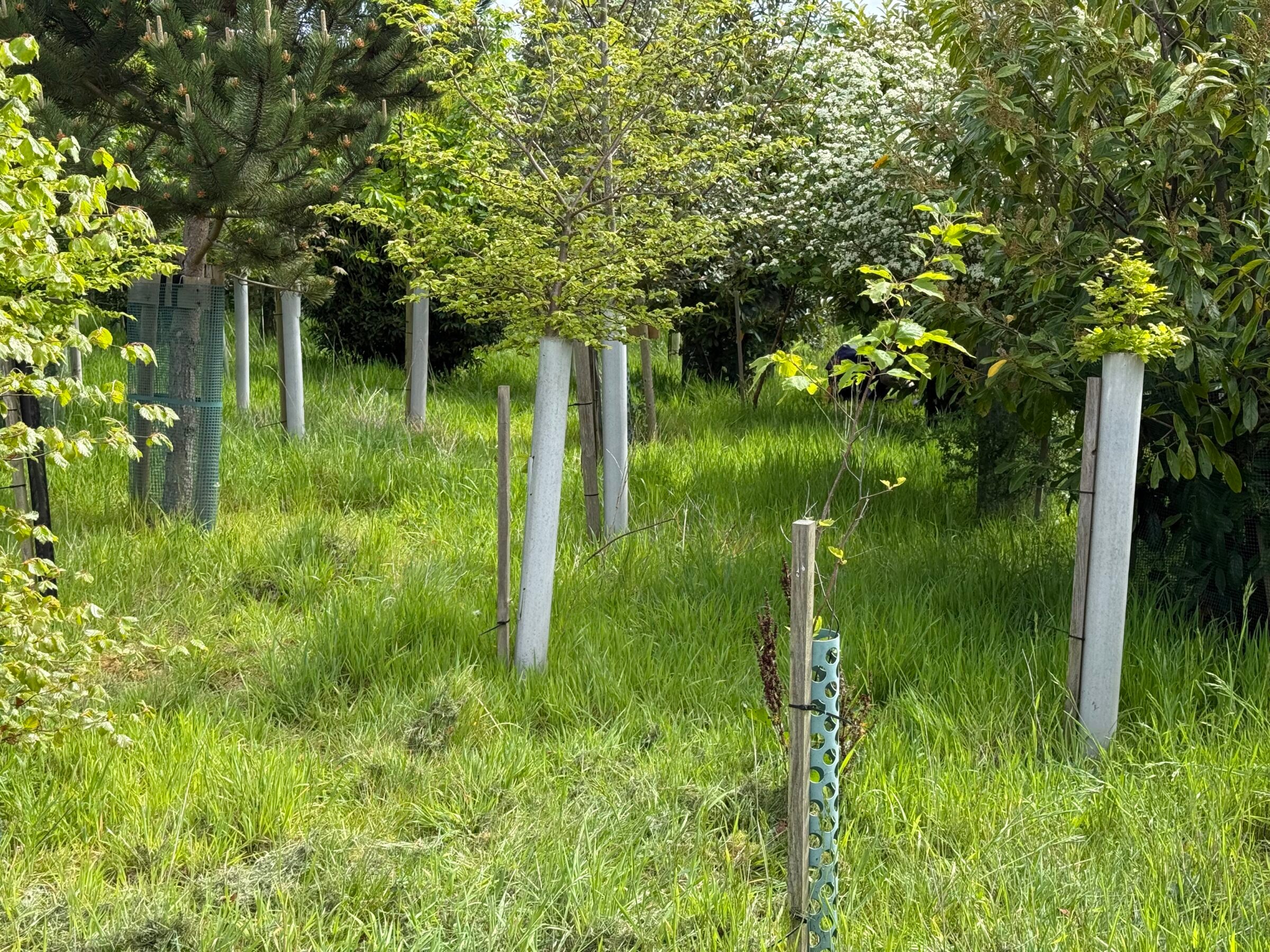
On 6 May 2026, Vigilis walked one of its longest-running UK trial sites at Nicholson Nurseries in Oxfordshire, alongside Dai Lewis of Nicholsons, to inspect Vigilis Bio shelters planted in January 2021. The visit marked five years in the field for one site in a 70-site UK Phase 2 monitoring programme, and confirmed that the Vigilis Bio field trial is performing exactly as designed: trees thriving, shelters quietly breaking down once their protective job is done.
Protection first, then biodegradation
The purpose of the trial has always been to prove the basic order of operations: the shelter must protect the young tree through its critical establishment period, then biodegrade naturally in the soil once that job is done. A soil-biodegradable shelter is only useful if the tree inside it survives. Vigilis Bio was developed in partnership with Biome Bioplastics specifically to achieve both halves of that brief: a strong, flexible guard for the first five years of a tree’s life, followed by clean biodegradation back into the soil. The Phase 2 UK trial, planted in January 2021 across 70 sites from the Hebrides to Cornwall, exists to test that promise in the real world.
“Here’s something I really believe: a tree shelter that biodegrades is no good if the tree inside it doesn’t make it. Protection has to come first. That’s the real job of a shelter. The good news is you don’t have to choose. Our field trials show Vigilis Bio shelters are built to do both, in the right order: remaining strong, flexible and protecting the tree through its first five years, then quietly biodegrade back into the soil once the work is done. It was great to visit a site we planted five years ago and see this happening exactly as it was designed to. The trees are thriving, and the shelters are going brittle and breaking down exactly as they should.”
Ben Warner, Vigilis Lda
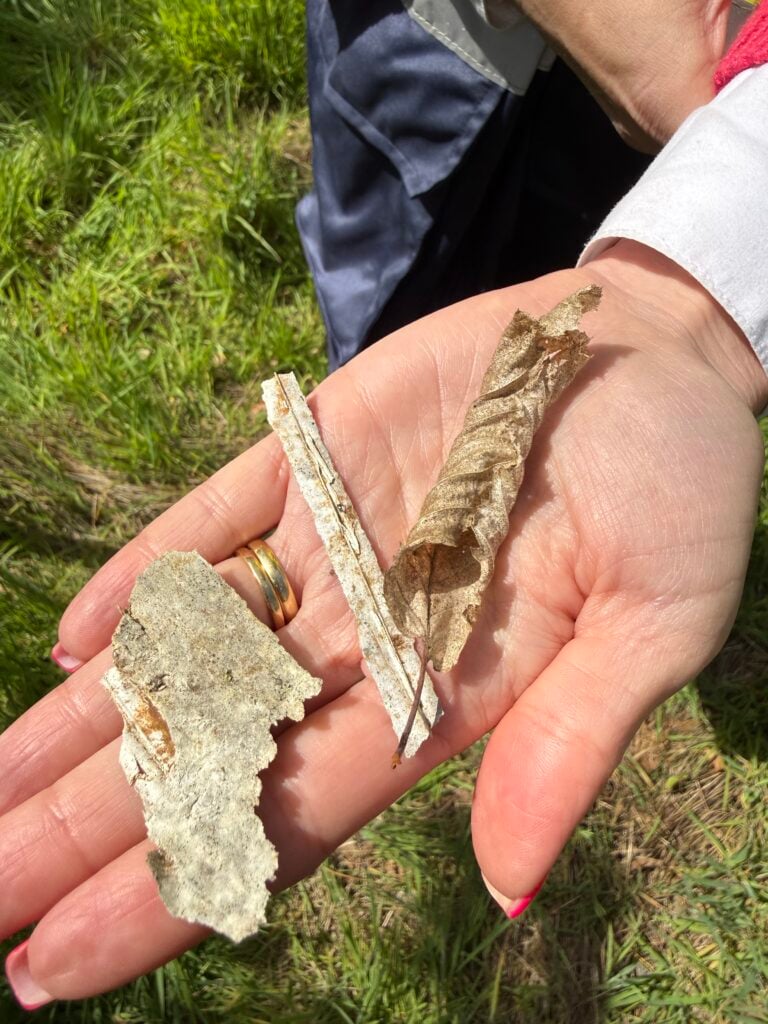
At the Nicholsons site in Oxfordshire
The Nicholsons site carries a broad mix of tree species, planted under Vigilis Bio shelters more than five years ago. Survival is very high and growth is strong. The shelters themselves, having now passed their five-year functional life, are doing exactly what they were designed to: breaking away from the trees, fragmenting on the ground, and visually blending into the leaf litter. Fragments read more as fallen plant matter than as litter, and the visual impact on the site is minimal.
“Not only do Vigilis shelters perform their primary function of protecting trees for planting projects, the shelters are also manufactured from materials which break down naturally in the soil, so they don’t have to be removed or recycled, making them a great choice for highway schemes, community planting or estate management.”
Dai Lewis, Nicholsons
Field data tracking lab predictions
Behind the site walk, the underlying data is hitting its marks. Mechanical strain-at-break measurements taken from field samples are tracking the controlled decay curve produced in the laboratory: 9.7% at the 1.5-year inspection, 2.78% at the 3.5-year inspection, transitioning cleanly through the 2.5% projected at five years. The mechanical strain-at-break measurements allow us to test the physical strength of the material, ensuring that the shelter is robust enough to last the required 5 years of the functional life. Soil-biodegradation testing under ISO 17556, the standard originally written for agricultural mulch film, is on a clean linear trajectory, with non-weathered material projected to reach 90% biodegradation in three to four years. The lab work and the field work are saying the same thing.
What the Vigilis Bio field trial means for your planting
For foresters, land managers and conservation projects choosing protection for autumn planting, the practical takeaway from five years in the field is straightforward. The Vigilis Bio tree shelter protects the tree through its full establishment period, then biodegrades in situ: no retrieval visit, no microplastic legacy, and minimal visual impact as the material breaks down. More on the science behind Vigilis Bio, or find your local distributor for quantities and lead times.