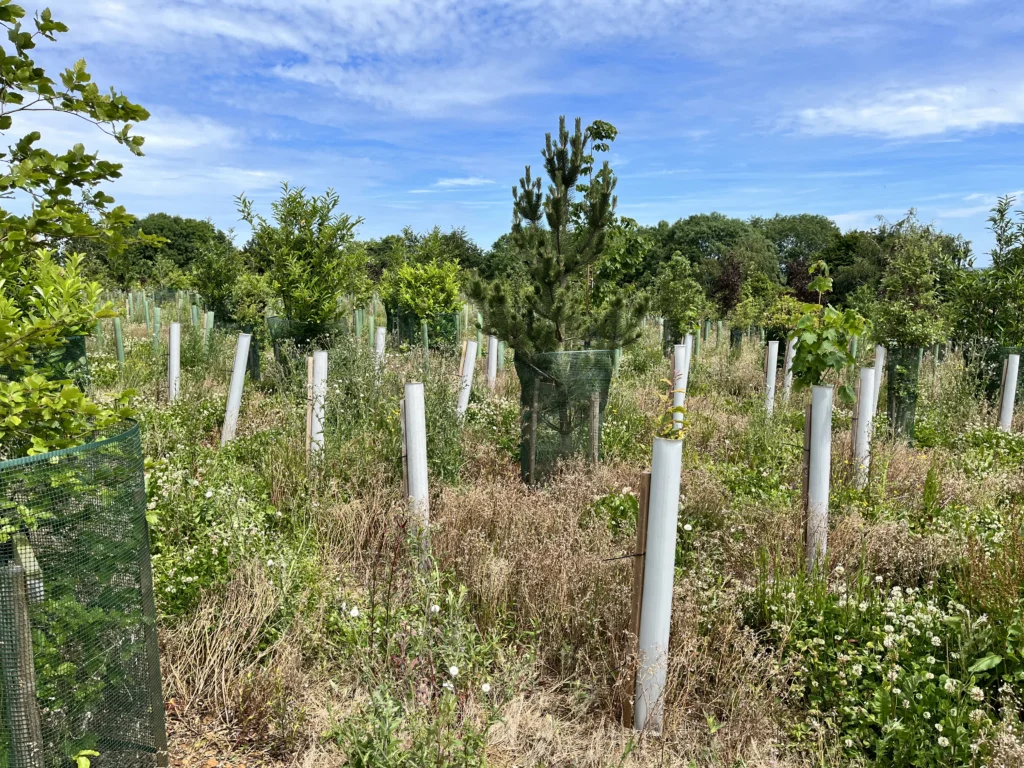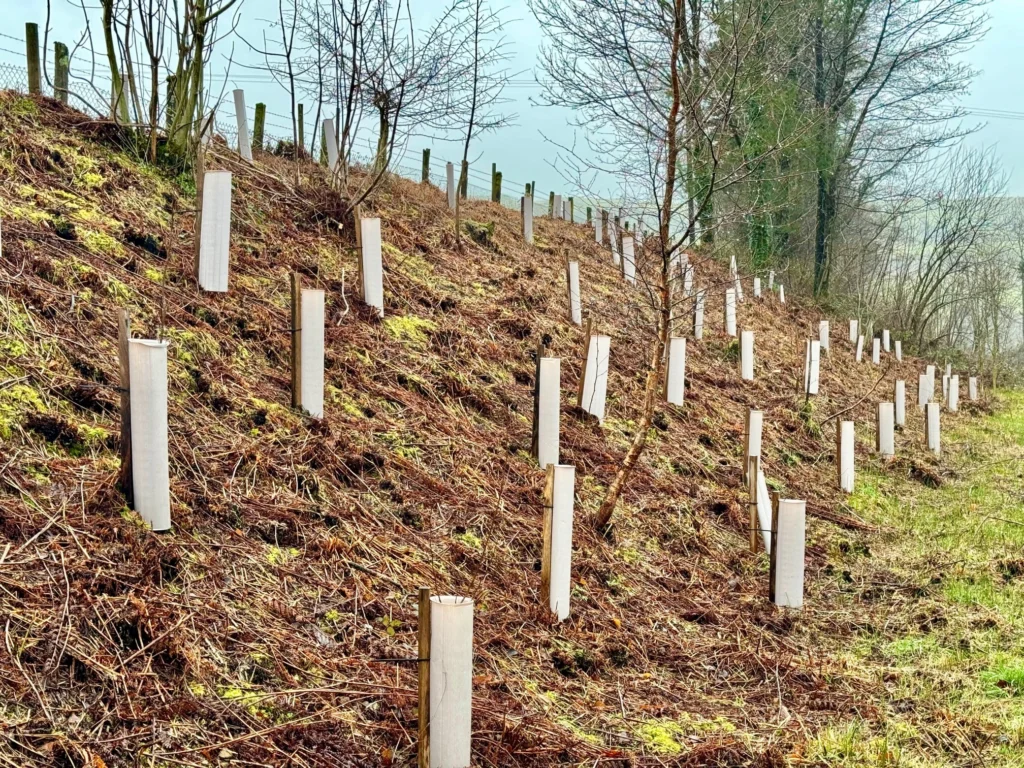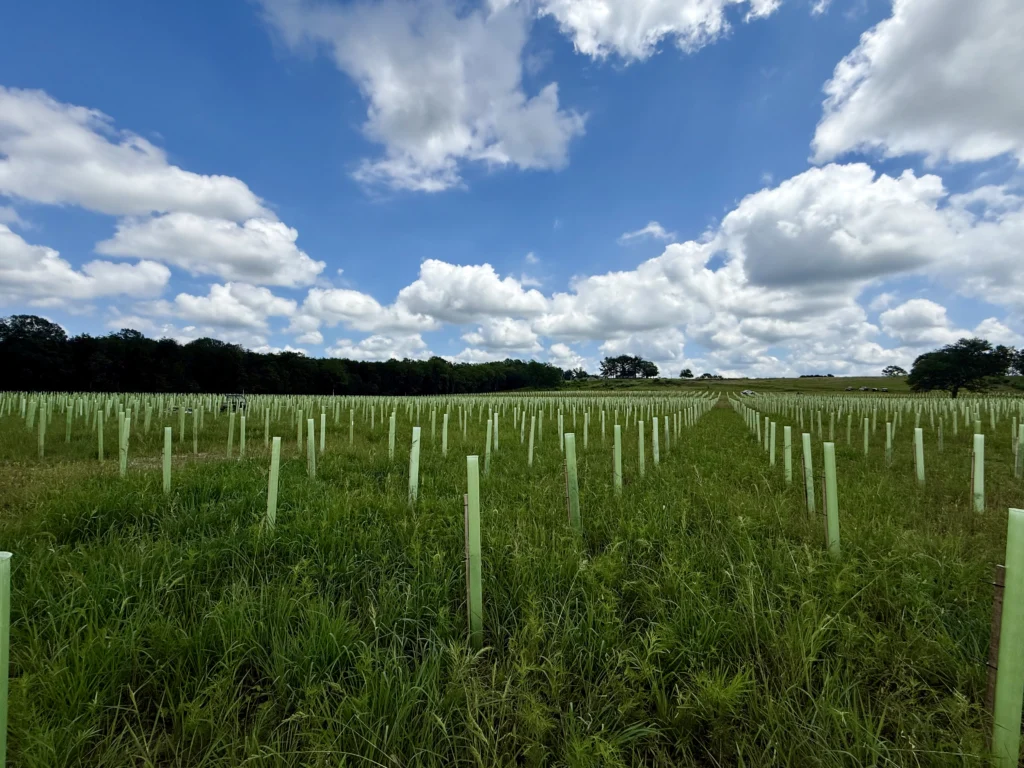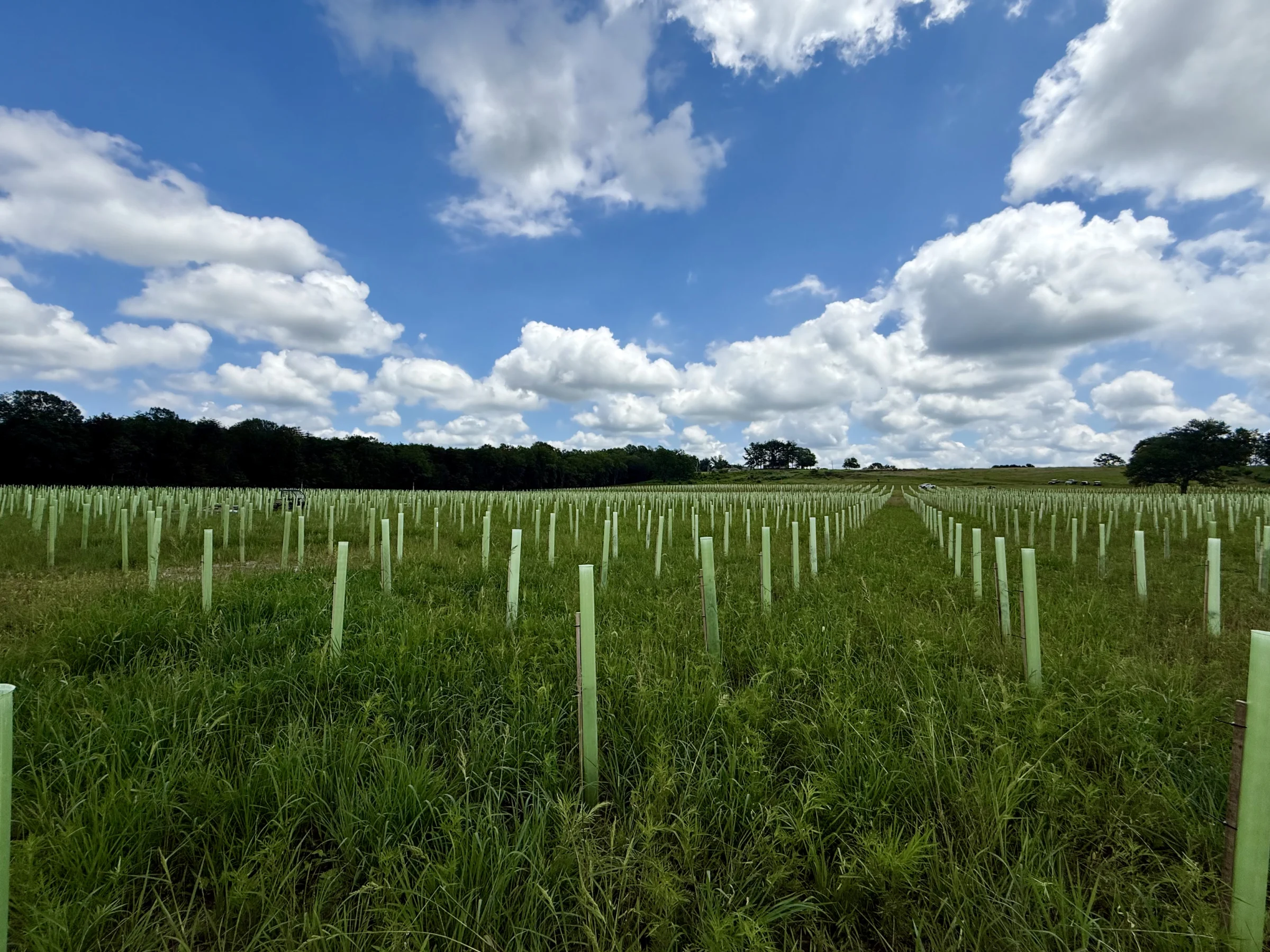
The reforestation challenge in North America is significant. The USDA Forest Service estimates more than four million acres of potential reforestation need on National Forest System lands alone: the majority driven by wildfire, with over 2.5 million acres burned at high severity in 2020 and 2021. As replanting programmes expand in scale, tree protection is becoming a more critical part of project planning.
This guide explains how US and Canadian reforestation projects approach tree shelter selection, what drives those decisions, and how Vigilis tree guards can support programmes of any scale.
The Scale of the Reforestation Challenge
Reforestation in North America faces a distinct set of pressures compared to the UK and Europe. Wildfire is the dominant cause of replanting need on federal lands, but deer browse pressure is a significant secondary challenge, particularly across eastern and mid-western states where white-tailed deer populations have grown well beyond historical levels in many regions.
Without adequate protection, newly planted seedlings face severe browse damage in the first one to three growing seasons. Research from reforestation projects in deer-heavy regions shows tree shelters can improve seedling survival from around 40% without protection to over 80% where tubes of adequate height are used. For programmes funded through state or federal cost-share schemes, that improvement in survival rate directly affects project viability and audit outcomes.
Why US Projects Rely on Tree Shelters
Tree shelters serve multiple functions in North American planting projects:
- Deer browse protection: The primary driver for tube use in many eastern states. Shelters at 1.2m (4ft) or above provide effective exclusion from white-tailed deer.
- Frost and desiccation protection: Critical for bare-root seedlings in the first growing season, particularly in continental climates with late frosts or dry spring conditions.
- Weed competition reduction: The microclimate inside a shelter reduces competing vegetation during the critical establishment phase, lowering maintenance requirements.
- Marking and monitoring: Visible shelters make it easier to locate and assess individual seedlings during monitoring visits on large, remote sites.
The USDA Forest Service provides guidance on reforestation best practice, including the role of protective tubing on high-risk planting sites.
Choosing the Right Tree Shelter for North American Conditions
When specifying tree shelters for a US or Canadian project, the main factors to consider are:
Height: 1.2m (4ft) is the standard for effective deer protection across most broadleaf species. For sites with aggressive browse pressure or taller species, 1.5m (5ft) provides an additional margin.
Diameter and handling: Vigilis tree guards offer a 76–110mm (3–4¼in) internal diameter range and nest in fives, keeping transport and storage costs manageable at volume. US bundles are supplied in 60s, matched to container and warehouse handling in the North American market.
Ventilation: Vented shelters (the VentAir range) moderate temperature extremes inside the tube and are preferred for sites with high summer heat or species sensitive to humidity. Where airflow is a priority, vented shelters reduce the risk of tip scorch and fungal issues.
Biodegradability: For projects on public land, conservation easements, or those with environmental conditions attached to funding, soil-biodegradable shelters eliminate the retrieval obligation and simplify long-term site management.
The Case for Biodegradable Shelters in US Reforestation
Conventional plastic shelters present an end-of-life challenge in remote or large-scale settings. Returning to site to collect spent tubes across thousands of acres adds cost and labour that is often underestimated at project planning stage.
The Vigilis Bio tree shelter breaks down in soil over a total cycle of six-plus years: three-plus years of full protection, followed by two to three years of complete biodegradation. No microplastics remain. No retrieval visit is required.
For large-scale public land reforestation or projects funded through federal or state programmes, this removes an ongoing management commitment and simplifies compliance at end-of-grant reporting.
Working with Vigilis in North America
Vigilis supplies tree shelters into the North American market directly from our manufacturing facility in Portugal. Products are bundled for container and warehouse handling, with consistent quality across large orders.
Whether you are specifying for a single planting programme or building a long-term supply relationship, our team can discuss volumes, lead times, and product selection. Start at our forestry applications page or use the distributor locator to find a contact in your region.