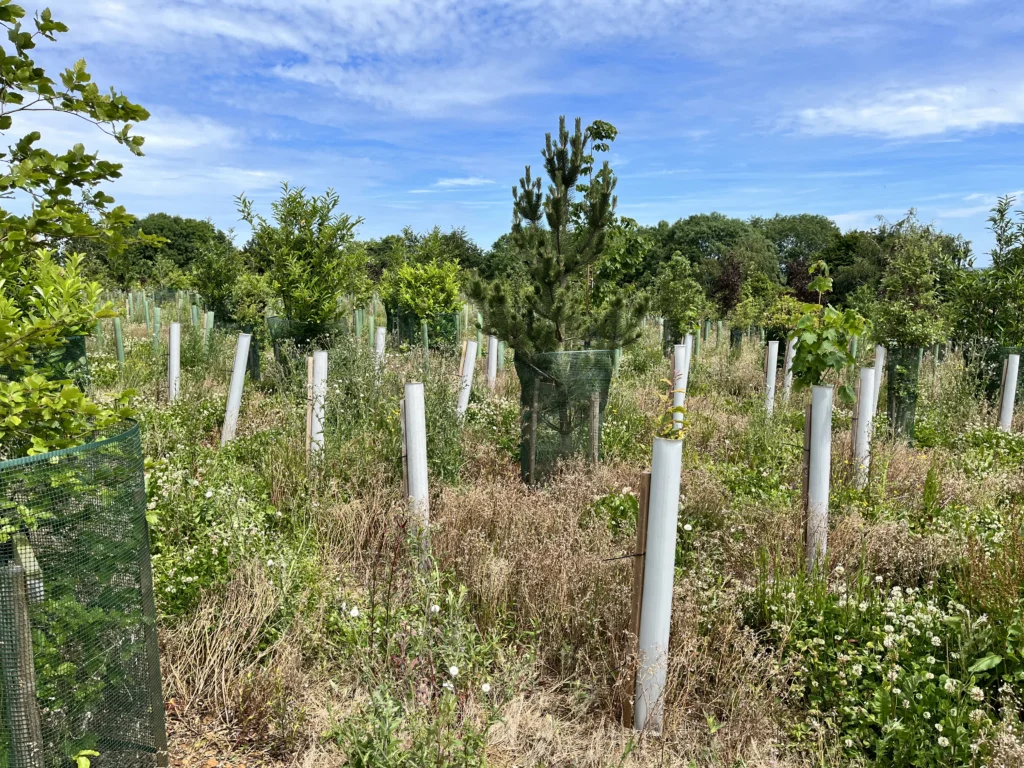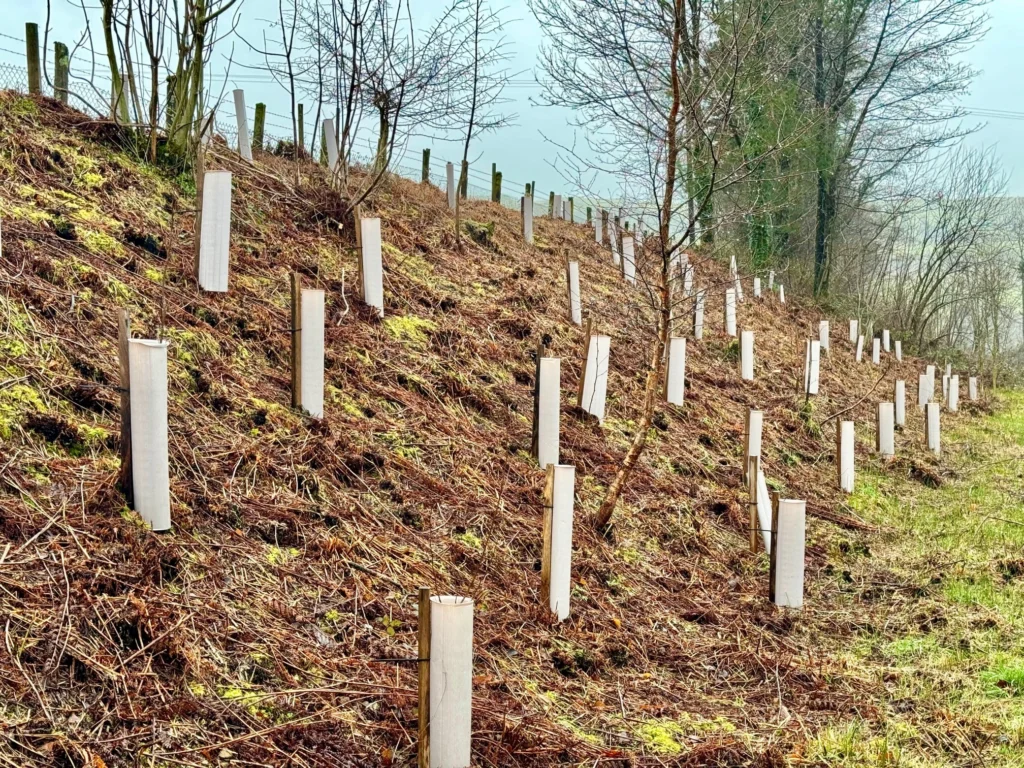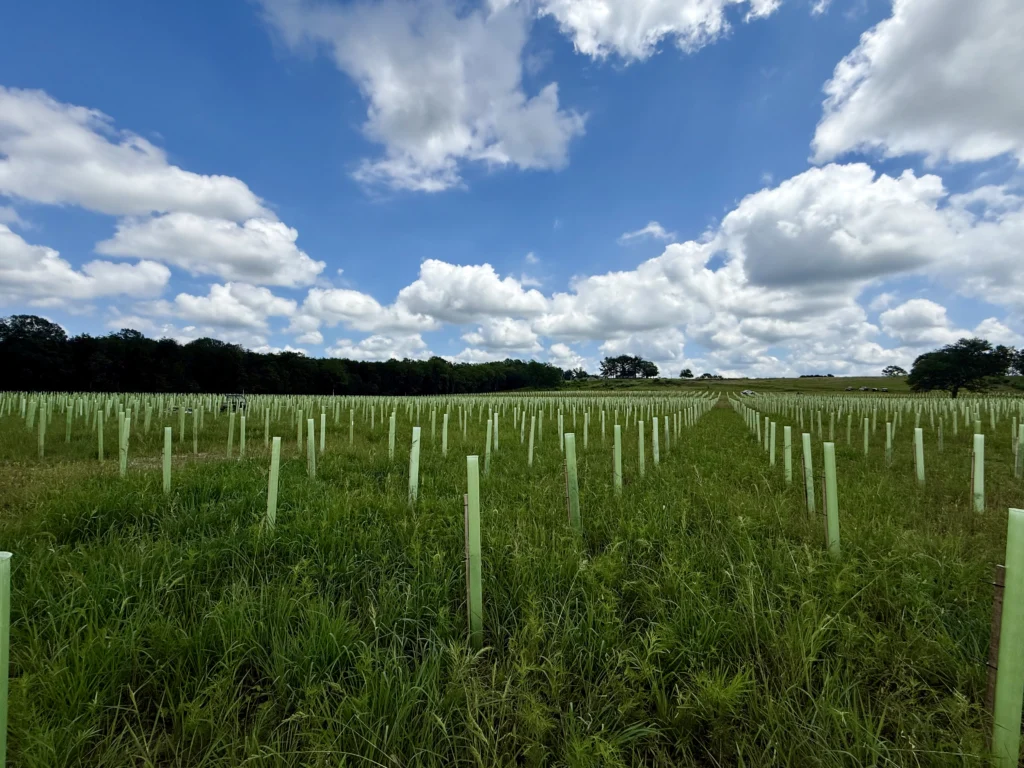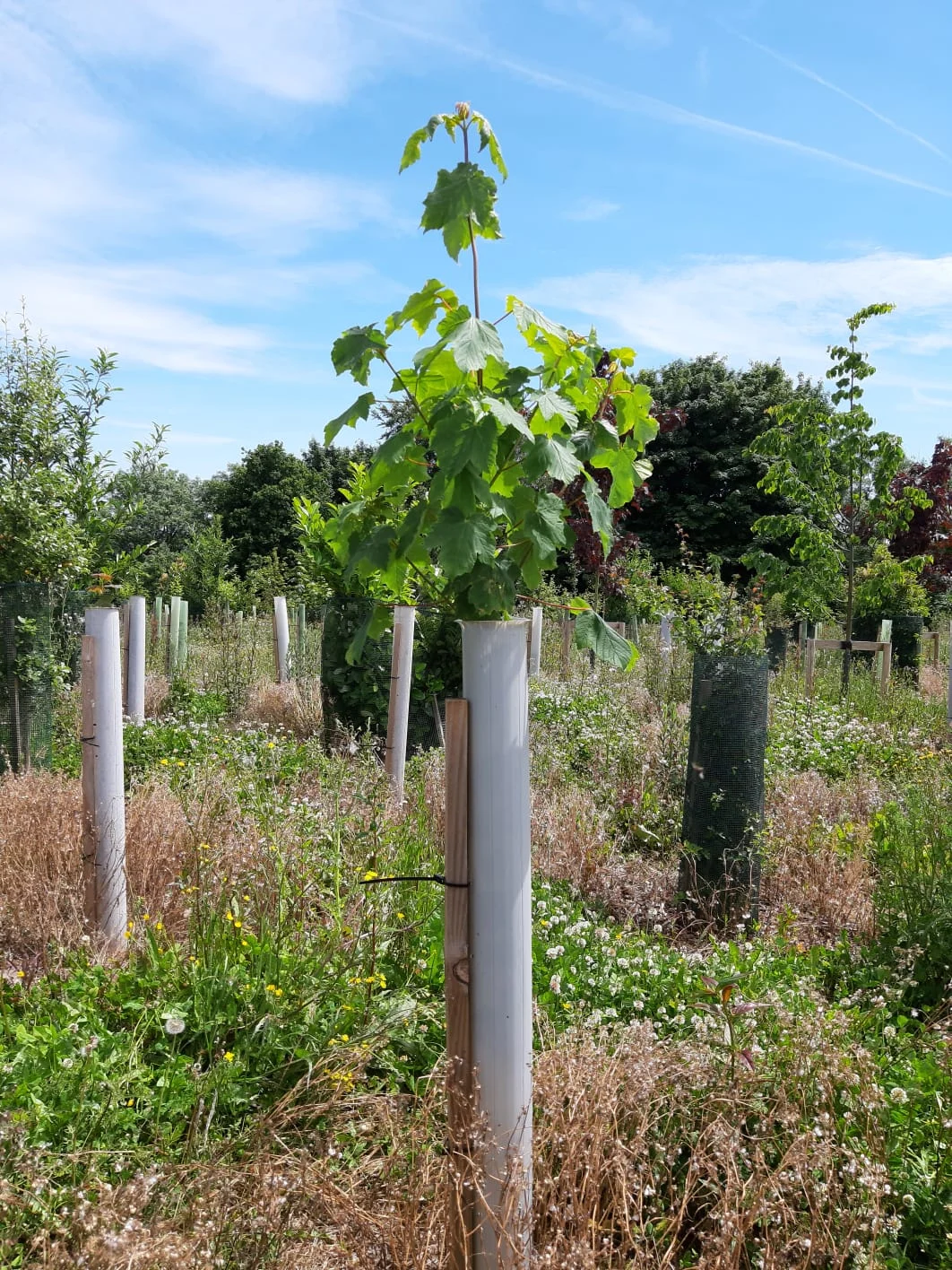
Biodegradable tree shelters have moved from niche alternative to mainstream choice for foresters, land managers and conservation projects across the UK and Europe. But with different products making different claims, it’s worth understanding exactly what makes a tree shelter truly biodegradable, and what that means in practice for your planting project.
What Makes a Tree Shelter Biodegradable?
A conventional tree shelter is made from polypropylene (PP), a durable plastic that protects young trees effectively but persists in the environment long after the tree no longer needs it. Recyclable PP shelters address this by being collected and processed at end of life, but they still require removal from the ground.
A genuinely biodegradable tree shelter is different: it is designed to break down in situ, in the soil, without leaving microplastics or toxic residues behind. The key phrase is “soil biodegradable”: meaning the material degrades through the action of soil microorganisms, not just UV light or mechanical fragmentation.
Not all “eco” shelters meet this standard. Some products fragment into smaller pieces without fully mineralising. Genuinely soil-biodegradable shelters are verified through standardised laboratory testing that confirms complete breakdown into CO₂, water, and naturally occurring minerals.
Inside Vigilis Bio
The Vigilis Bio tree shelter is made from custom, patented biodegradable polymer rather than petroleum-based plastic.
The result is a light brown, twin-walled shelter that installs just like a standard tree guard but has a fundamentally different end-of-life profile. Available in heights from 0.6m to 1.8m, the Vigilis Bio range includes both standard and VentAir vented variants to suit different species and site conditions. Find out more on our Vigilis Bio page.
How Biodegradation Works in the Field
The Vigilis Bio shelter is engineered to provide full protection during the critical establishment phase, laboratory testing confirms at 3+ years of effective service life. After that, as the young tree becomes self-sufficient, the shelter begins to fragment and break down.
Once fragments contact the surrounding soil, naturally occurring microbes and soil bacteria begin to metabolise the material. Over a further three to four years, the shelter fully mineralises, leaving behind only water, CO₂, and a small amount of naturally occurring minerals. No microplastics. No toxic residue. No retrieval visit required.
This is a meaningful practical benefit. On large-scale reforestation or rewilding projects, returning to site to collect thousands of spent shelters is costly and logistically challenging. Soil-biodegradable shelters remove that requirement entirely.
For background on tree shelter research and performance standards, Forest Research provides detailed technical resources for UK foresters and land managers.
Biodegradable vs Recyclable: Which Is Right for Your Project?
Vigilis manufactures both biodegradable and recyclable tree guards, and the right choice depends on your project’s priorities.
| Biodegradable | Recyclable (PP) | |
|---|---|---|
| End-of-life | Breaks down in soil | Must be collected |
| Labour | No retrieval needed | Collection visit required |
| ESG / reporting | No plastic in field | Recyclable at end of life |
| Appearance | Light brown | Green |
| Best for | Rewilding, conservation, public land | Commercial forestry, managed estates |
For conservation grants, rewilding schemes, and projects with ESG reporting requirements, biodegradable shelters typically offer a cleaner outcome. For commercial forestry where retrieval is already standard practice, recyclable PP remains a cost-effective option.
Certification and Environmental Standards
Vigilis holds both ISO 9001 (quality management) and ISO 14001 (environmental management) certification: a commitment to rigorous environmental standards across the full product range, including Vigilis Bio. The biodegradation performance of the material is verified through controlled laboratory testing, confirming complete soil breakdown without harmful residues.
If your project requires evidence of environmental credentials for grant applications or ESG reporting, speak to your Vigilis distributor for relevant technical documentation.
Next Steps
Biodegradable tree shelters are no longer a compromise, they match recyclable shelters on performance and outperform them on end-of-life simplicity. Whether you are planning a rewilding scheme, an agroforestry system or a large-scale forestry planting, Vigilis Bio removes the retrieval burden while meeting the environmental standards your project demands.
Explore the Vigilis Bio tree shelter range or find your local distributor to discuss your requirements.