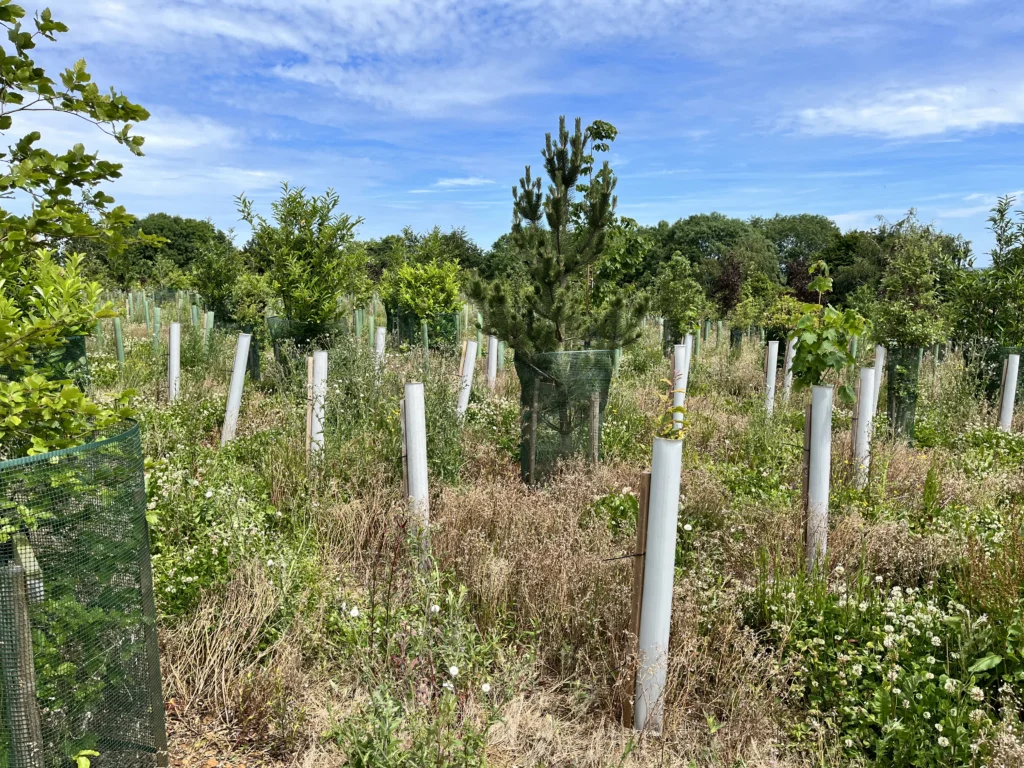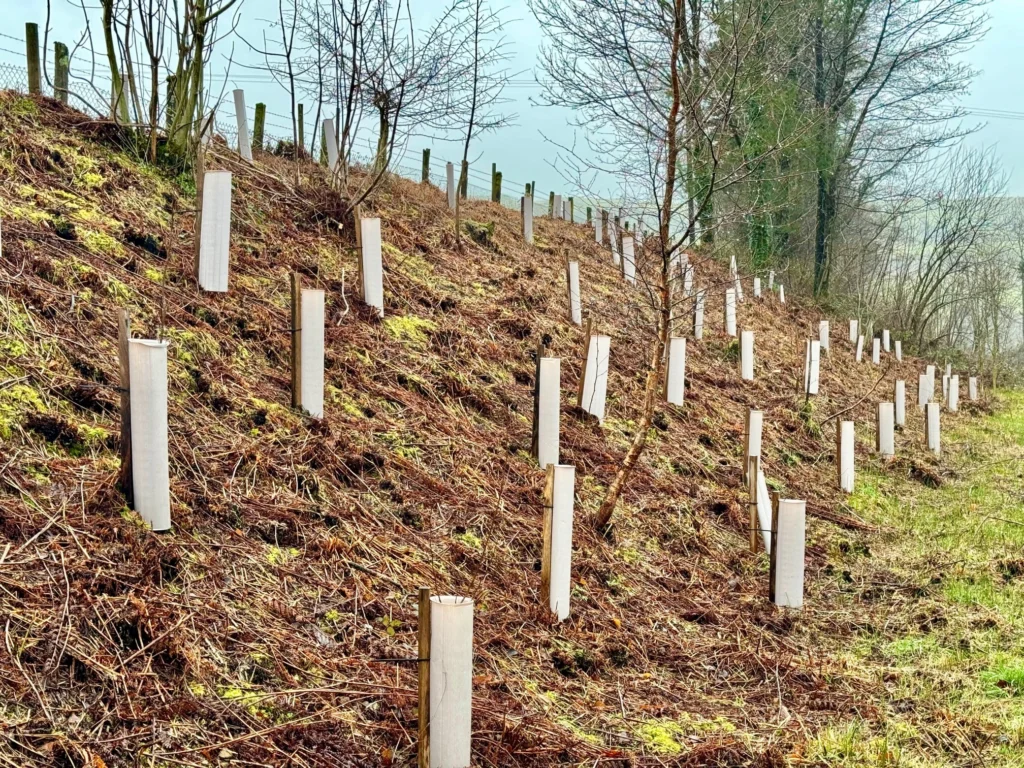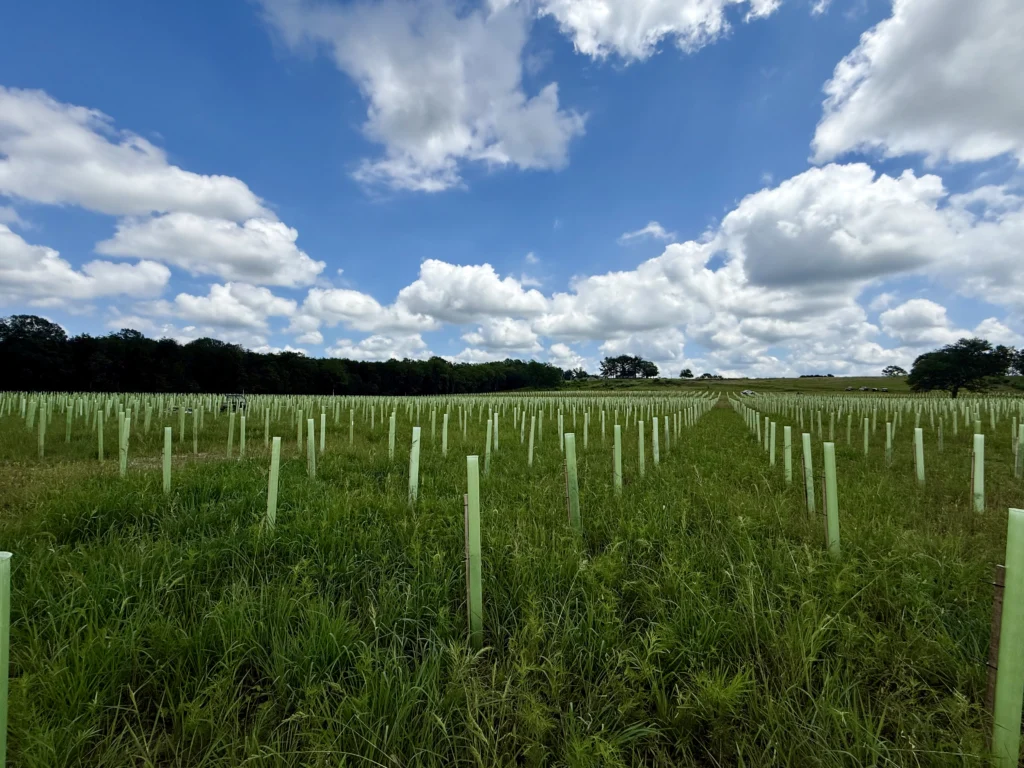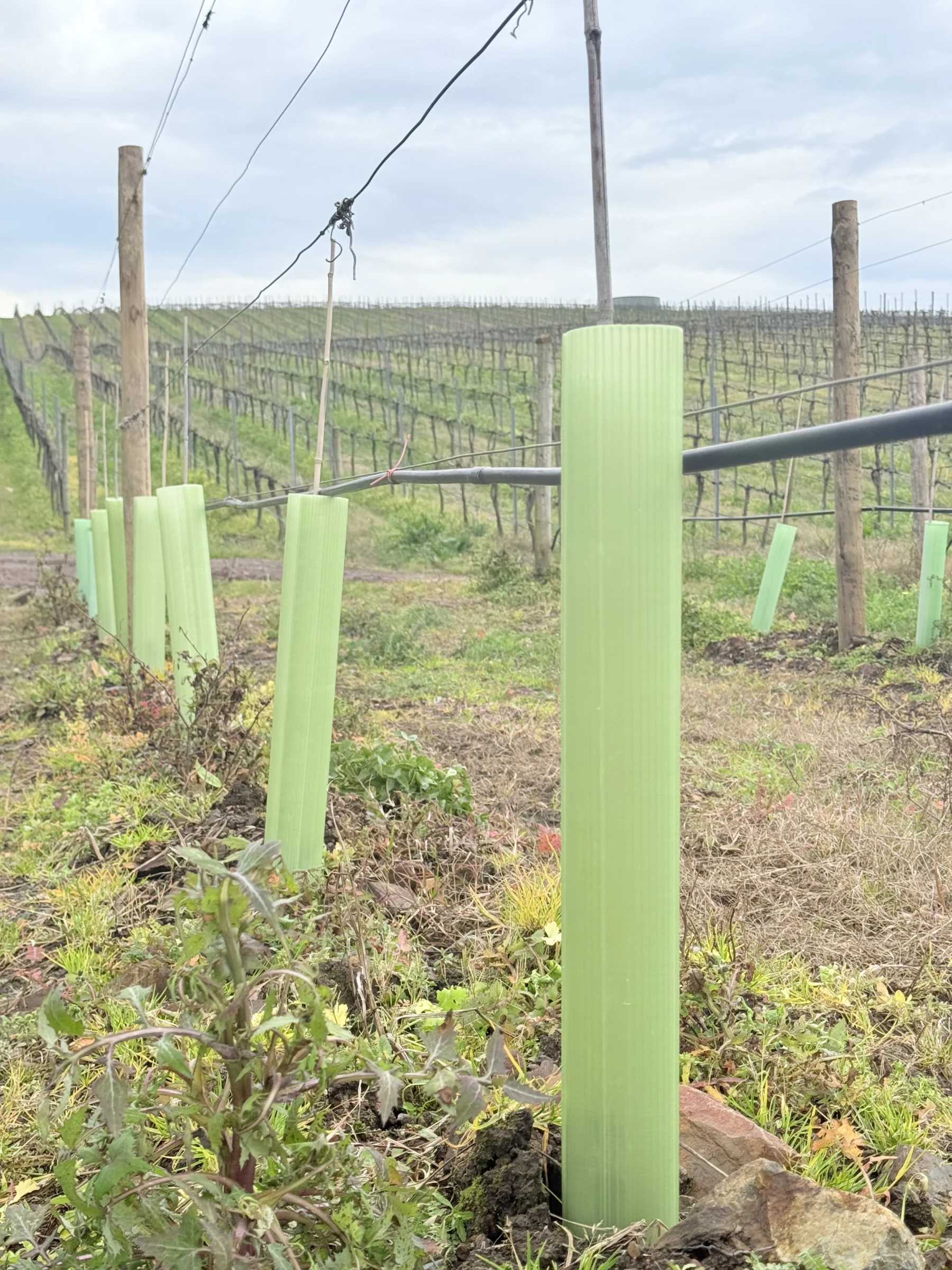
Young vines are vulnerable for their first two to three growing seasons. Rabbit and hare browse, herbicide drift, wind rock, late frosts and dry summers can all set establishment back by a year or more, and in commercial vineyards, every lost season pushes the return on planting further out. Vine guards are the most reliable way to protect young vines through this critical period, and the right specification depends on where the vineyard is and what it is up against.
This guide explains how growers in the UK, France and Portugal approach vine guards, what conditions drive the choice, and how Vigilis supports vineyards across all three markets.
Why Vineyards Use Vine Guards
In a new planting, vine guards do four things at once:
- Protect against rabbit and hare browse: The dominant cause of vine loss in unprotected plantings across the UK and much of continental Europe. A single chewed graft union usually means a dead vine.
- Allow safe herbicide application: A vine guard creates a physical barrier so growers can use contact or residual herbicides along the row without risking the young vine.
- Reduce wind rock and abrasion: Particularly important on exposed southern English and Portuguese sites where prevailing winds can damage soft spring growth.
- Moderate the microclimate: A guard buffers cold nights, reduces desiccation in dry springs, and supports faster early growth, which compresses the time to first cropping year.
For commercial vineyards, the calculation is straightforward: vine guards cost a fraction of the labour and material involved in replanting failed vines, and they protect the investment in rootstock, trellis and irrigation that has already been committed to the row.
UK Vineyards: The English Wine Boom
The UK is now home to more than 1,000 vineyards covering over 4,200 hectares, and WineGB reports continued rapid expansion driven by sparkling wine demand and warming summers. New plantings are concentrated in the south of England (Kent, Sussex, Hampshire, Essex), and increasingly in the South West and East Anglia.
The dominant pressures on young UK vines are:
- Rabbit browse: Almost universal across rural England.
- Spring frost: Late frosts in April and May can damage primary buds; vine guards reduce radiative cooling around the graft and lower stem.
- Herbicide row management: Most UK vineyards use a herbicide strip under the vines rather than cultivation, making guards essential.
For UK growers, a guard height of 60–75cm is typical for the establishment phase, sized to cover the graft union and the early shoots until the vine is trained onto the fruiting wire.
French Vineyards: Established Viticulture, Modern Pressures
France remains the largest wine-producing nation in the OIV statistics, and replanting in established regions (Bordeaux, Burgundy, Champagne, Languedoc) is a continuous activity. New plantings face many of the same establishment challenges as the UK, with regional variations:
- In northern and central regions, frost protection and rabbit browse drive guard selection.
- In Mediterranean regions, summer heat and wind exposure are the bigger concerns, and vented or perforated guards help moderate temperatures inside the tube during peak summer.
- Herbicide and mechanical weed control are both common, and a robust guard reduces the risk of vine damage from either.
French growers are also increasingly attentive to end-of-life material choices, with biodegradable and recyclable options gaining ground as part of broader sustainability commitments in the sector.
Portuguese Vineyards: Heat, Drought and Dry Establishment
Portuguese vineyards, from the Douro and Dão in the north to the Alentejo in the south, face a different set of pressures. Establishment is dominated by heat, drought and dry-summer conditions, and young vines often go through their first summer with limited rainfall. Vine guards in this context need to:
- Reduce desiccation around the graft and young stem.
- Tolerate high UV exposure without becoming brittle over the establishment period.
- Allow airflow to prevent heat buildup inside the tube on the hottest days.
Rabbit and hare pressure is significant in many Portuguese regions, particularly in rewilded or marginal land being brought back into viticulture. Wind exposure on hillside plantings adds a further argument for a structured guard.
Choosing the Right Vine Guard
For most commercial plantings across all three countries, the key specification points are:
Height: 60–75cm covers the establishment phase for grafted vines on standard rootstock.
Diameter: Wide enough to accept the graft union and early shoots without abrasion.
Ventilation: Vented or perforated for hot, dry sites; solid for cold or wind-exposed sites.
Material: Recyclable polypropylene as the standard option; soil-biodegradable for projects with sustainability targets or organic certification.
Stake compatibility: Compatible with bamboo, hardwood or composite stakes commonly used in the region.
Vigilis vine guards are designed and manufactured in Portugal, with stock and distribution across the UK and Europe through our distributor network. For projects with biodegradable or ESG specifications, our Vigilis Bio range extends the same protection without leaving plastic in the soil at the end of life.
Talk to Vigilis About Your Vineyard
Whether you are planting a one-hectare boutique vineyard in Sussex, replanting an established Bordeaux parcel, or establishing new vines in the Alentejo, the right vine guard specification depends on your site, your management approach and your sustainability goals. Get in touch through our contact page to discuss the right vine guards for your project.