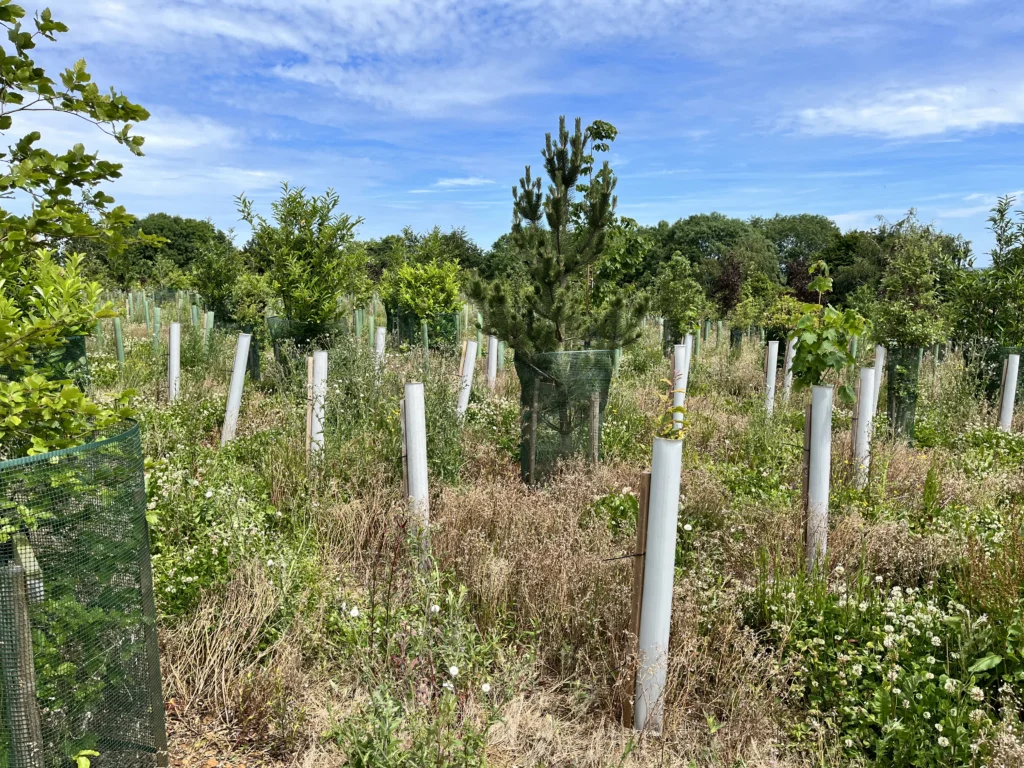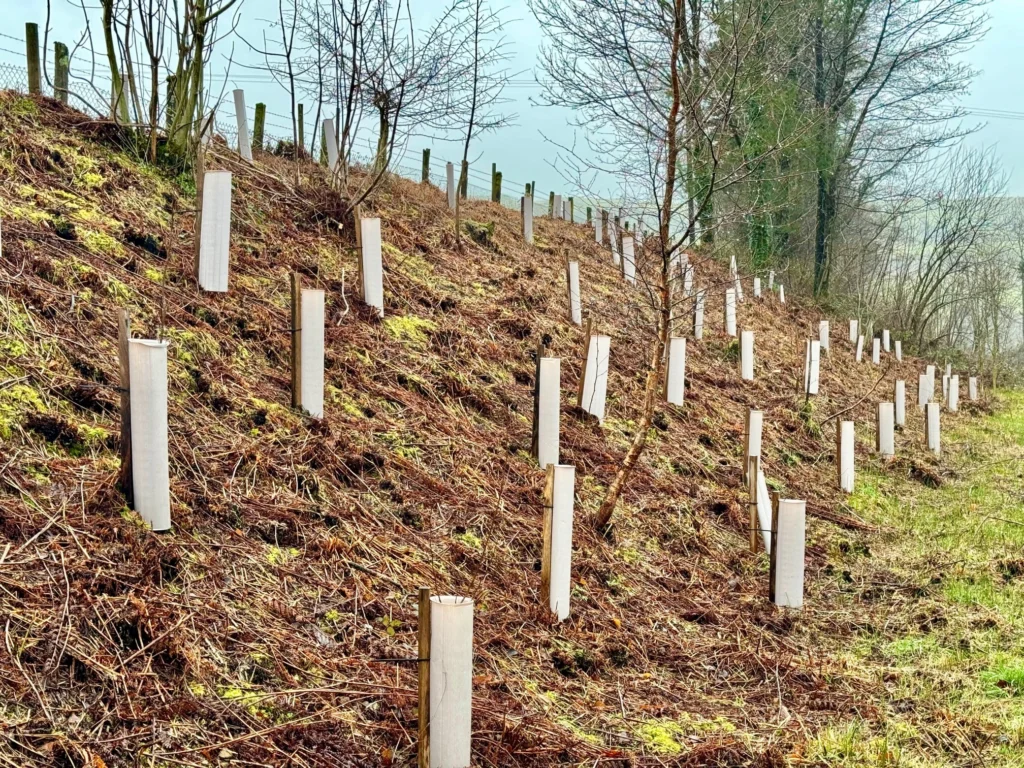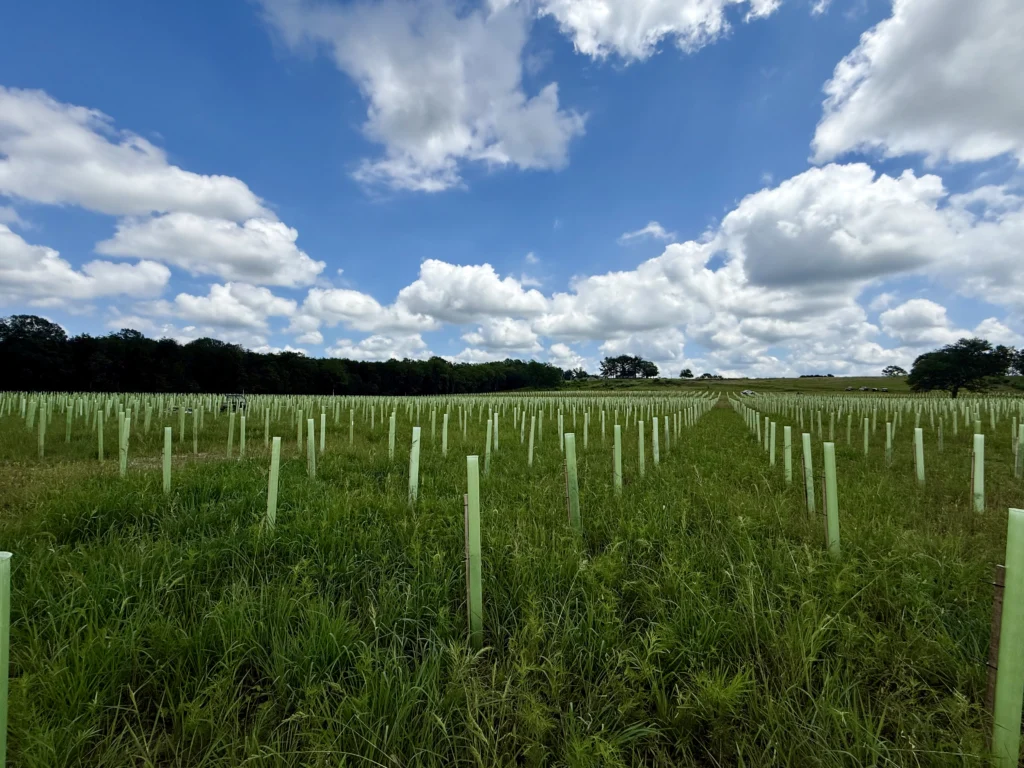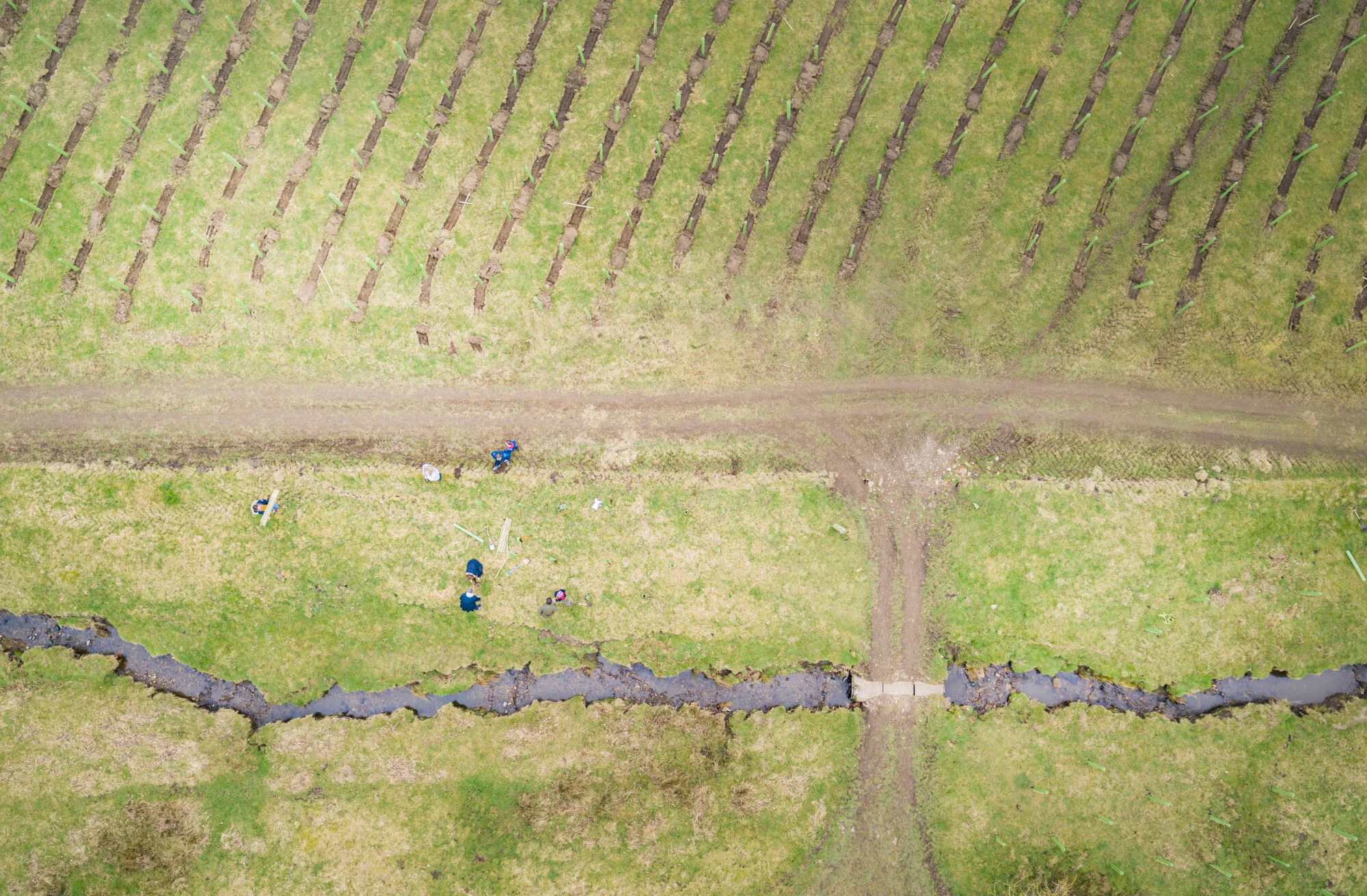
Rewilding has moved from concept to practice across the UK and Europe. From the Caledonian pinewoods at Dundreggan to lowland scrubland on former agricultural sites, projects are now reintroducing native trees at scale, and getting the shelter specification right for each species is one of the biggest drivers of establishment success.
This guide breaks down the most common native species in UK and European rewilding planting schemes, and which tree shelters work best for each.
Why Species Matters for Shelter Choice
Different native species have very different relationships with browsing animals, light, moisture and competition. A single shelter specification across a mixed planting is rarely the right answer. The four factors that drive species-by-species selection are:
- Browse palatability: Aspen, hazel and rowan are far more attractive to deer than birch or holly. The more palatable the species, the taller and more robust the shelter needs to be.
- Growth rate: Fast pioneers like birch, alder and willow outgrow shelters quickly; slow-growing oak and hornbeam need protection for longer.
- Shade tolerance: Light-demanders like Scots pine and birch suffer in tubes that create too much shade for too long; ventilated or mesh options often perform better.
- Site conditions: Wet-ground species like alder and willow rarely need full establishment shelters; upland Caledonian planting at Dundreggan-style sites faces heavy red deer pressure and needs the tallest specification.
Species-by-Species Guide
Oak (Quercus robur, Q. petraea): Slow-growing, highly palatable to deer, and the cornerstone of UK native woodland. Use solid 1.2m tube shelters as standard, increasing to 1.5m on sites with heavy red or fallow deer pressure. Oaks need protection for five-plus years to clear browse height. Biodegradable options are particularly suitable here because retrieval visits are difficult in mature plantings.
Silver and Downy Birch (Betula pendula, B. pubescens): Fast-growing pioneers with lower palatability than most broadleaves. A 0.75–1.2m shelter is usually sufficient. Birch is also light-demanding, so vented or mesh shelters tend to outperform solid tubes once the leader is established. The Woodland Trust notes that silver birch alone supports more than 300 insect species, making it a high-value nurse for rewilding mixes.
Hawthorn (Crataegus monogyna): Thorny and modestly palatable, but young hawthorn benefits from early shelter against rabbits and hares in its first two seasons. A mesh shelter at 0.6–0.75m is often the right choice, protection without the microclimate effects of a solid tube.
Hazel (Corylus avellana): A core understorey and coppicing species in lowland woods. Hazel is browse-sensitive in early years but bushy enough that mesh shelters or short tubes (0.75m) work well. For projects expecting future coppice rotations, a removable mesh shelter simplifies management.
Rowan (Sorbus aucuparia): A high-elevation pioneer, moderately palatable to deer. Use 1.2m tube shelters on sites with significant browse pressure, dropping to 0.75m on lower-pressure sites. Rowan establishes well in upland rewilding mixes alongside Scots pine and birch.
Scots Pine (Pinus sylvestris): The keystone conifer for Caledonian rewilding. Scots pine is light-demanding and suffers in over-shaded shelters, but it is also a deer favourite where pressure is high. The standard specification is a 1.5m ventilated tube, allowing light penetration while protecting the leader through several seasons of red deer pressure.
Aspen (Populus tremula): One of the most browsed natives in the UK. Aspen needs 1.5m shelters as standard, and on the most pressured sites can require additional fencing or mesh outer protection. Worth the effort: aspen’s biodiversity value in upland and riparian rewilding is exceptional.
Willow and Alder (Salix spp., Alnus glutinosa): Wet-ground specialists. Both establish quickly and are less reliant on shelters than other species, though a short tube or mesh in the first season helps in rabbit-heavy areas. Willow grows up to 40cm per year and quickly outpaces shelter height in any case.
Match the Shelter to the Site, Not Just the Species
Browse pressure is rarely uniform across a rewilding site. Red deer dominate upland Scotland; roe deer are everywhere; muntjac increasingly dominate southern English lowlands; rabbit pressure varies dramatically by hedgerow proximity. Specification should reflect both the species and the site: a 1.2m tube might be excessive for hawthorn in a fenced muntjac-free enclosure, but inadequate for the same species on an open rewilding site with red deer.
The UK’s 2026 broadleaf woodland grants require a minimum of 800 stems per hectare across predominantly native broadleaf mixes, so the per-stem cost of shelters at scale is a meaningful consideration for project budgets.
Biodegradable Shelters for Rewilding
For rewilding in particular, the end-of-life question matters. Retrieving plastic shelters across hundreds of hectares of wilding land is impractical and undermines the ecological intent. The Vigilis Bio range is soil-biodegradable: full protection for three-plus years, then full breakdown in soil over the following two to three years. No microplastics. No retrieval visit. Projects like Dundreggan show what large-scale native rewilding looks like, and the shelter material has to belong to the same ecological logic as the planting itself.
Choosing for Your Rewilding Project
The right tree shelter spec for a rewilding scheme depends on species mix, browse pressure, project scale and end-of-life intent. Talk to Vigilis through our rewilding applications page or our distributor network. We can match shelter specification to the species, the site and the ecological goal of the project.