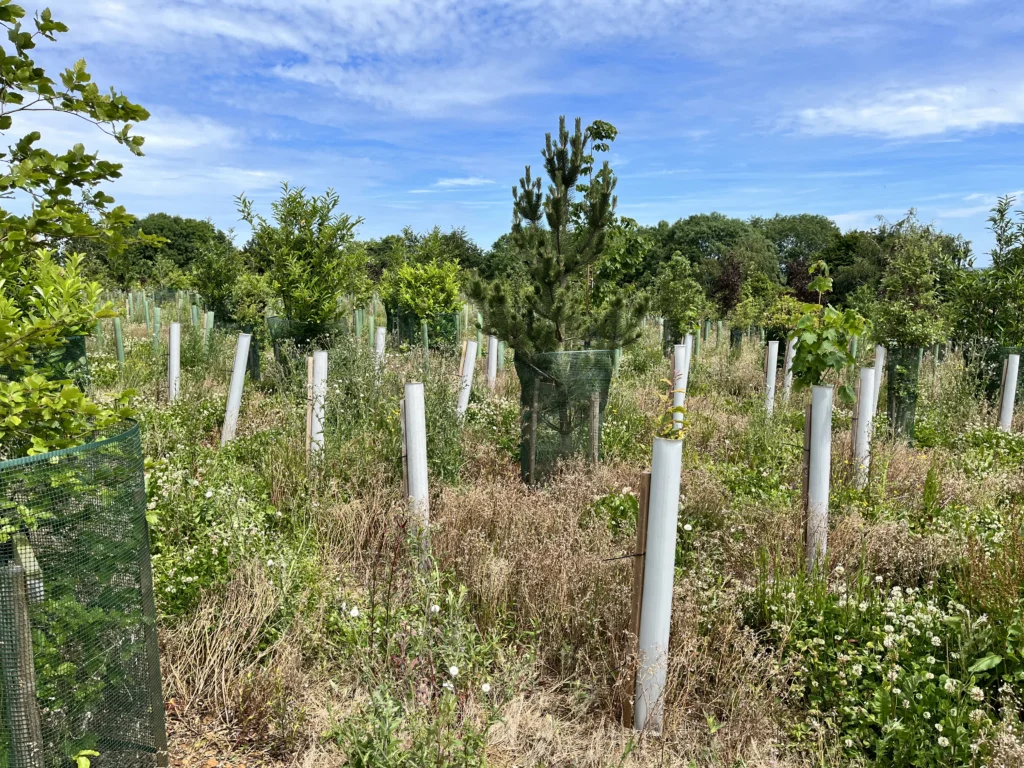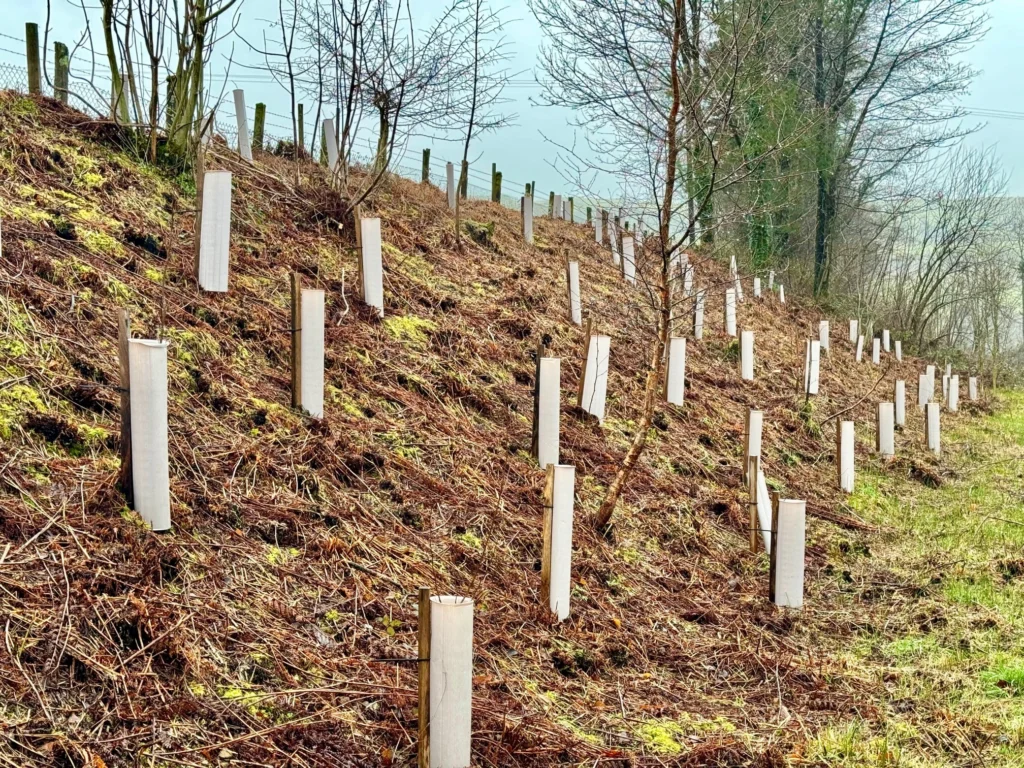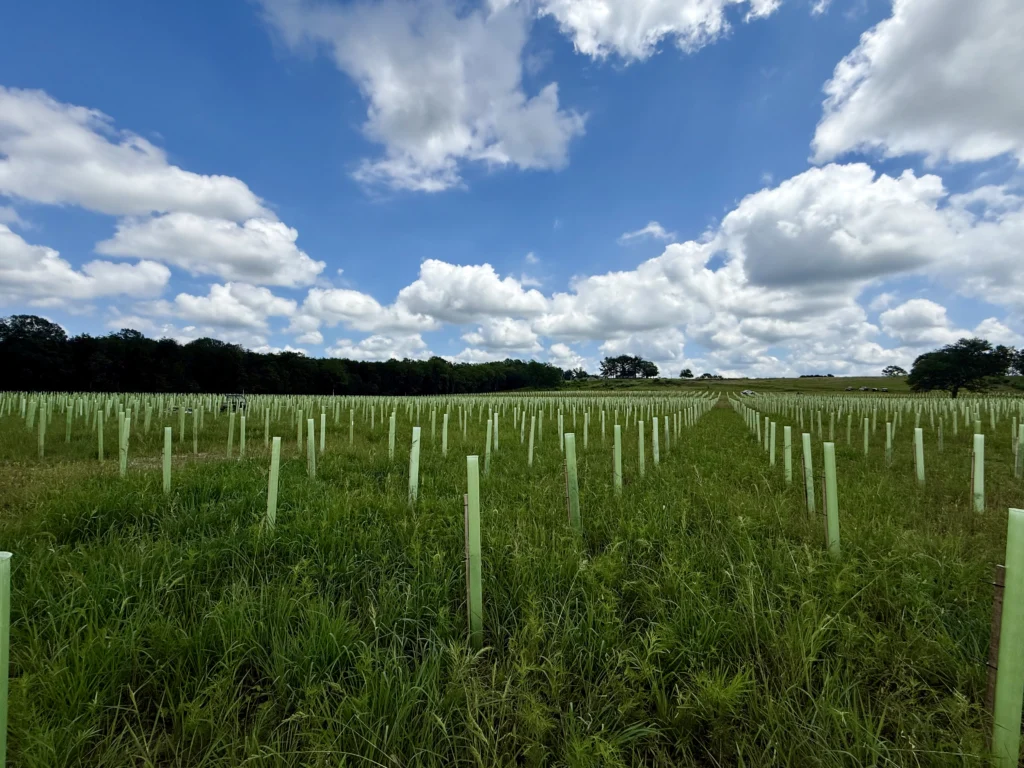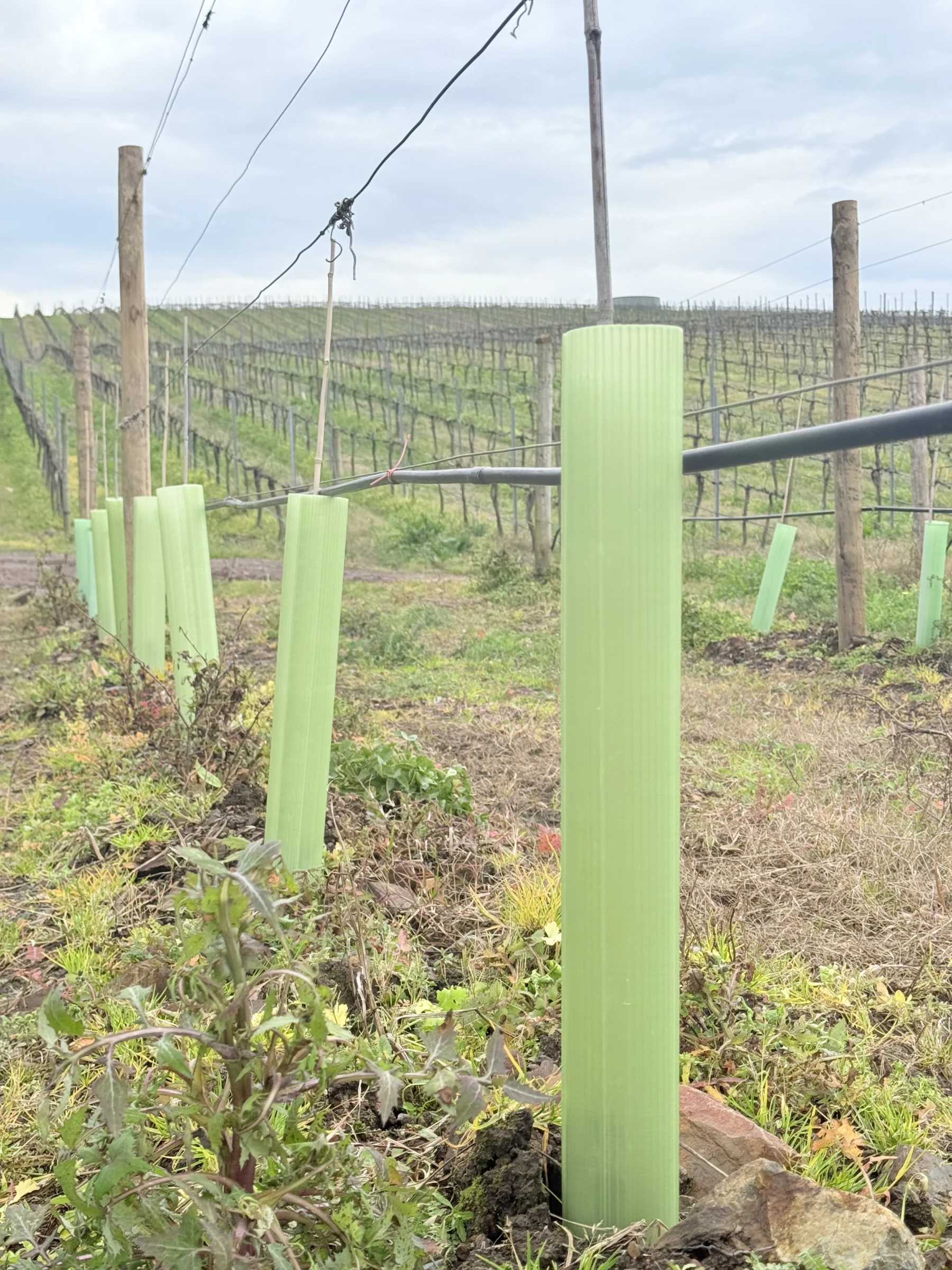
Vine protection is not the same as tree protection, even though the hardware looks similar. The conditions young vines face, the establishment timeline growers are working to, and the consequences of getting it wrong (losing a growing season, or worse, losing plants to browse or frost damage), mean that vine shelter selection deserves careful consideration rather than a default order from the nearest agricultural supplier.
This guide is written for growers: vineyard managers, estate viticulturists, and anyone establishing new vines in the UK. It covers what vine shelters actually do, what to look for in a shelter, the mistakes that cost growers time and money, and where Vigilis products fit into this picture.
Why vine protection matters
In UK viticulture, the establishment phase, the first two to three years of a vine’s life, is the period of greatest vulnerability. Young vines face browse pressure from rabbits and deer, competition from weeds, desiccating winds, and the particular challenge of the UK climate: high precipitation, variable spring temperatures, and the risk of late frosts that can damage new growth.
A vine shelter does several things simultaneously:
- Browse protection: Physically prevents rabbit, hare, and deer from damaging the developing vine stem and foliage.
- Microclimate: Creates a warmer, more humid environment immediately around the vine, reducing desiccation, accelerating early growth, and extending the effective growing window.
- Herbicide protection: Allows chemical or mechanical weed control around the vine without risk of spray drift damage.
- Wind protection: Reduces moisture loss and physical damage on exposed sites, a significant factor on many UK vineyard sites.
Done well, vine shelters can bring first proper harvest forward by a full growing season compared to unprotected plants. Done poorly (with the wrong product, wrong size, or inadequate fixings), they create as many problems as they solve.
What to look for in a vine shelter
Twin-walled construction
Single-walled shelters are common in warmer climates where their lighter structure is sufficient. In the UK they are prone to collapse under snow load and provide less insulation against cold. For UK vineyards, twin-walled, corrugated construction provides the structural rigidity and thermal performance needed across a full establishment cycle.
UV stability
Polypropylene shelters must be UV-stabilised to last through the three growing seasons required in UK viticulture. Shelters that degrade and become brittle before the vine has established force an early replacement operation. Adding cost and disturbing the developing plant. Look for a minimum three-season UV guarantee for the UK climate.
Diameter
Vine shelters need to accommodate a growing vine stem and, in the early stages, allow for cane training. A diameter that is too narrow restricts growth; one that is too wide loses the microclimate benefit. 80–100mm internal diameter is typical for vine shelters, wider than a standard tree guard to allow for cane management.
Height
60cm–75cm is the standard range for vine shelters in the UK. This is tall enough to provide full browse protection from rabbits and hare while remaining practical to install and manage. Taller shelters are available where deer pressure is a concern on specific sites.
Fixings
A vine shelter is only as good as its installation. Shelters that twist, lean, or collapse in wind create abrasion damage on developing stems and lose the microclimate benefit. Use robust stakes, 25mm square minimum, with cable ties or clips at the top of the shelter, and ensure stakes are driven to a depth that will resist the wind conditions on your site.
Common mistakes growers make
Under-specifying on browse pressure. A 60cm shelter provides rabbit protection. It does not provide deer protection. If your site has muntjac or roe deer, you need 1.2m or taller, or a perimeter fence. Many growers find this out the hard way.
Choosing single-wall for a UK site. It works in Bordeaux. In a wet Welsh autumn with early snowfall it does not. Always specify twin-walled for UK establishments.
Ignoring the fixing system. The shelter is the visible product; the stakes and ties are what keep it working for three seasons. Budget appropriately for fixings and do not cut corners on stake quality or depth.
Using a standard tree guard diameter. A 73mm tree guard on a vine works for the first season. By season two, stem girth and cane management create problems. Use vine-specific diameters from the start.
The Vigilis range for vine protection
Vigilis manufactures twin-walled, UV-stabilised tree guards in dimensions suited to UK viticulture. Our tree guards and mesh shelters are available in the heights and diameters appropriate for vine establishment, with matching stakes and fixings.
For growers with sustainability commitments, our Bio and Bio VentAir ranges provide soil-biodegradable protection, eliminating the end-of-life retrieval operation from the vineyard. This is particularly relevant for certified organic and biodynamic producers working to minimise plastic use across their operations.
More detail on how Vigilis products are used in viticulture, including sector-specific guidance, is on our viticulture sector page.
Talk to us about your vineyard
Every vineyard site is different. Soil type, aspect, local climate, deer pressure, row spacing, training system, all of these affect the right specification. If you are establishing a new vineyard or re-planting a section and want advice on vine shelter selection, contact us and we can work through the options with you.