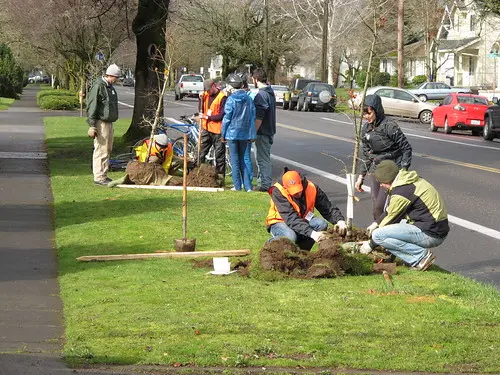
Urban tree canopy has become one of the fastest-growing areas of public tree planting in the United States. Cities from Phoenix to Detroit are pledging to plant hundreds of thousands of street trees to cool neighbourhoods, clean the air and correct decades of uneven investment. Behind the headline numbers sits a practical question every program eventually meets: how do you keep young street trees alive long enough to deliver the canopy you paid for? This guide looks at why US cities are funding street tree planting, where the money comes from, and how tree protection fits in.
Why US cities are investing in canopy
The driver is heat as much as greenery. Urban neighbourhoods with little tree cover can run several degrees hotter than leafy ones a few blocks away, and that gap tracks closely with income and historic disinvestment. The concept of “tree equity” (every neighbourhood deserving the cooling, health and stormwater benefits that canopy provides) has reframed street trees as public-health infrastructure rather than decoration.
Mature canopy lowers summer street temperatures, cuts air-conditioning demand, absorbs stormwater and measurably improves respiratory health. Cities that once treated trees as a parks line item now write canopy targets into climate and resilience plans, with goals stretching to 2030 and beyond.
Where the funding comes from
The single biggest shift has been federal. The USDA Forest Service Urban and Community Forestry program received an unprecedented injection of funding through the Inflation Reduction Act, roughly $1.5 billion in grants aimed squarely at disadvantaged communities. That money flows to states, cities, tribes and non-profits to plant and maintain trees where canopy is thinnest.
Federal grants sit alongside municipal budgets, state urban forestry programs, water-utility stormwater credits and private philanthropy. This mix matters for anyone specifying materials: grant-funded plantings are increasingly judged on survival rates and long-term outcomes, not just the number of trees put in the ground. A tree that dies in its second summer is a line item that failed to deliver, and funders are paying closer attention than ever.
Grant rounds open now
Federal money reaches the ground through state and municipal programmes, and those run to their own calendars. The rounds below were open as of September 2026, and they give a fair picture of the range on offer, from a few thousand dollars for a small community to six figures for a city-scale response.
- Indiana: the DNR Community and Urban Forestry grants close on 11 September 2026, with awards from $1,000 to $30,000 for canopy planning, tree inventories, planting and education. The programme is funded through the USDA Forest Service Urban and Community Forestry programme.
- Minnesota: the DNR Protect Community Forests for Community Resiliency round closes on 14 September 2026, with $1.7 million available, a $150,000 maximum and no match required. It is aimed squarely at emerald ash borer, covering the removal, treatment and replacement of infested ash. Tribal governments, 501(c) non-profits, educational institutions and local government are all eligible.
- New York: the State Urban Forestry Council’s Tree City USA Reward Grant must be postmarked by 2 October 2026, and supports autumn planting of specimen trees or groves.
- Austin, Texas: the Urban Forest Grant closes at 11.59pm on 1 November 2026, open to parent-teacher groups, academic and private institutions, non-profits and community groups, for projects on civic property.
The Minnesota round is worth a closer look, because it points at where a lot of this money is going. Emerald ash borer has forced cities across the Midwest into large-scale removal and replacement, which means the planting is remedial rather than expansionary: replacing a mature tree that has been lost, usually in a street or park setting where the public will notice if the replacement fails. That raises the stakes on establishment considerably.
The establishment challenge on city streets
Street trees face a harsher start than woodland trees. Compacted soil, reflected heat, limited root space, road salt, string trimmers, mowers and occasional vandalism all take a toll in the first few years. Survival rates for newly planted urban trees can be disappointingly low precisely because that establishment window is so hostile, and replacing failed trees quietly doubles the cost of a program.
The protection priorities are different from a forest, too. Deer may not be the main threat downtown; the bigger risks are mechanical damage from maintenance equipment, foot traffic and drying winds funnelled between buildings. A young trunk needs a barrier against strimmers and a bit of shelter from the urban microclimate while its roots take hold.
How tree protection supports canopy programs
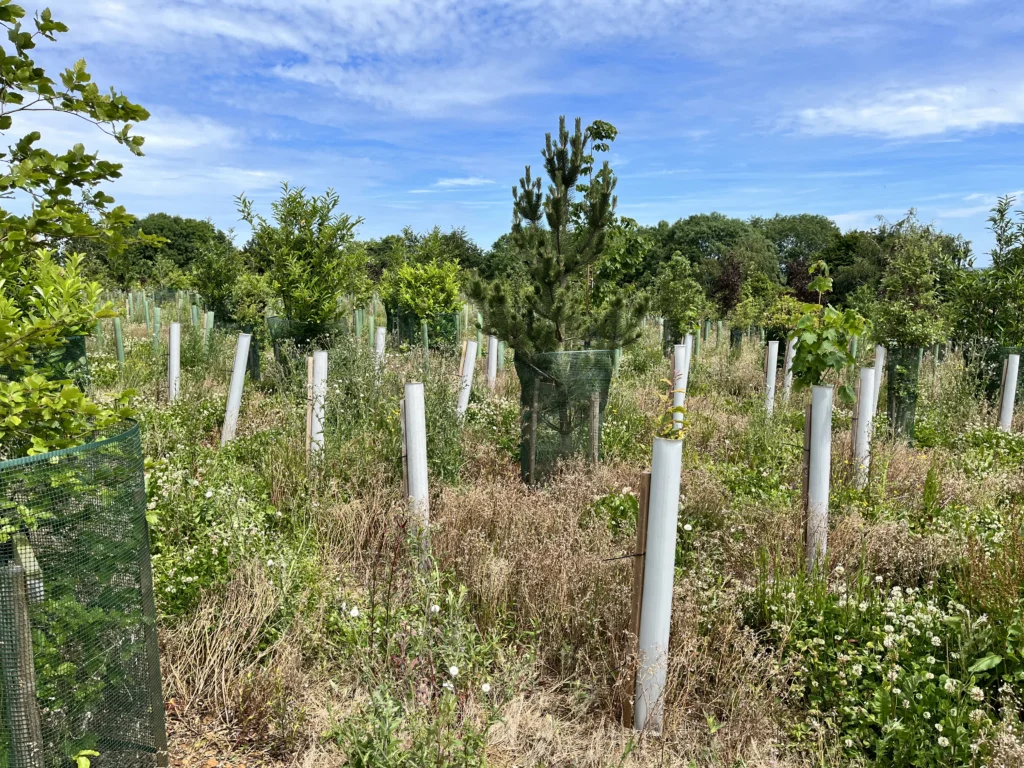
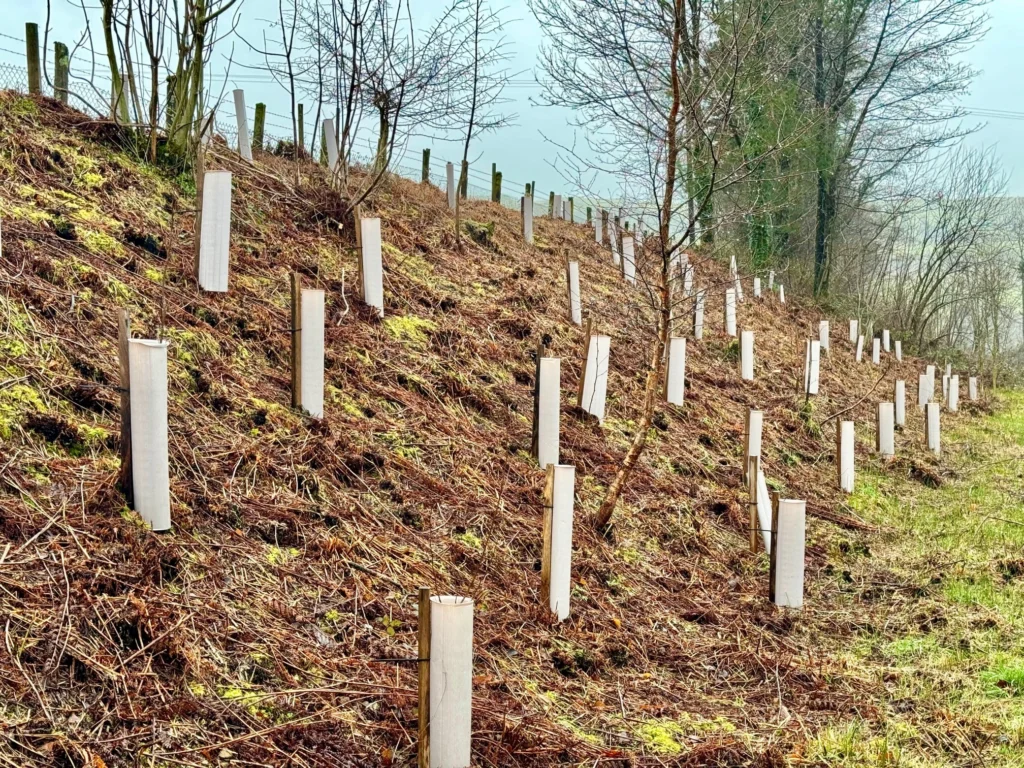
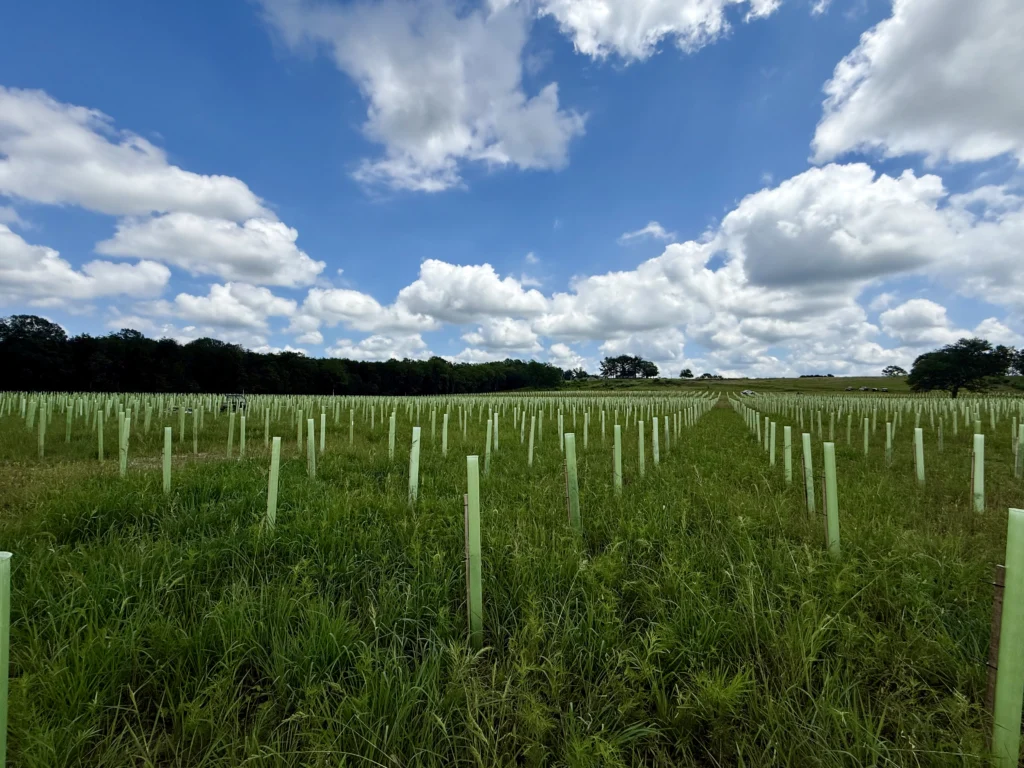
Getting protection right is one of the cheapest ways to lift survival rates and protect a grant’s return. A guard around the base of a young street tree shields the trunk from mowers and trimmers, the leading cause of avoidable urban tree death, and helps the stem through its vulnerable first seasons. In landscaping and amenity settings, matching the guard to the setting keeps trees healthy without cluttering the streetscape.
End-of-life matters even more in a public setting. Standard plastic guards left on street trees look neglected and eventually have to be collected across a whole city. Soil-biodegradable shelters remove that maintenance burden by breaking down once the tree is established: no crews sent out to retrieve thousands of guards, no littered plastic in the public realm. For smaller ornamental and understorey planting that fills out a streetscape, shrub shelters give the same protection at the right scale.
With billions now flowing into US urban forestry, the pressure is on to make every planted tree count. Protecting young street trees through establishment, with materials that do the job and then disappear, is how canopy targets turn into actual shade. To specify tree protection for a municipal or landscaping planting, talk to your local Vigilis distributor.