Project Background
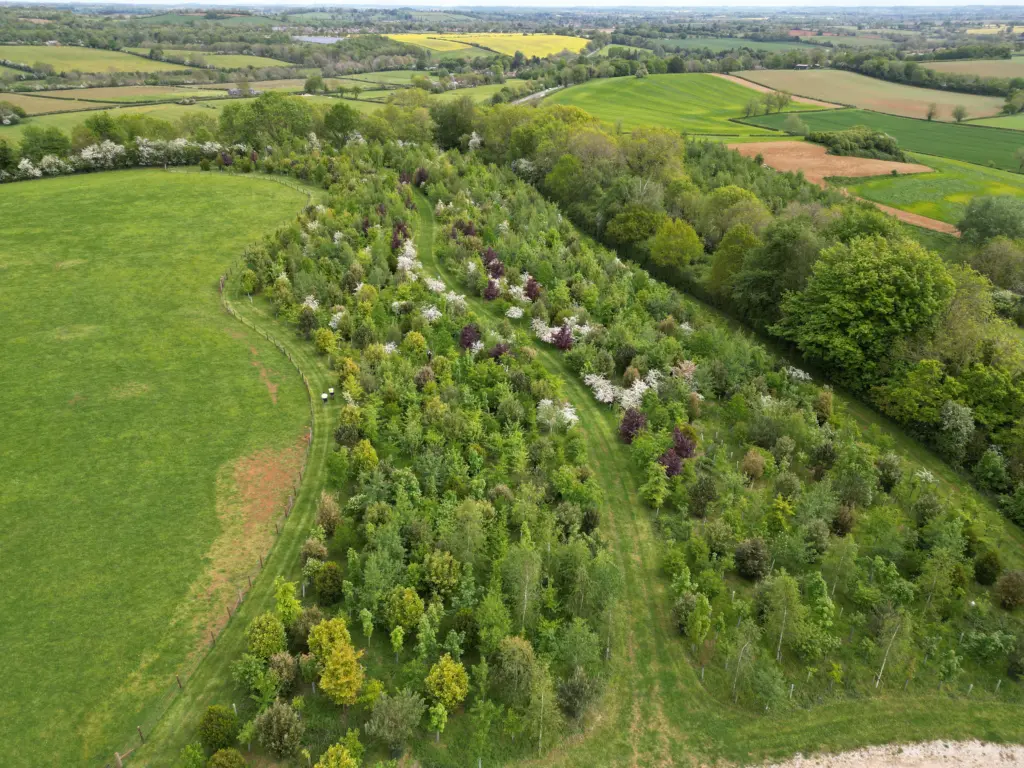
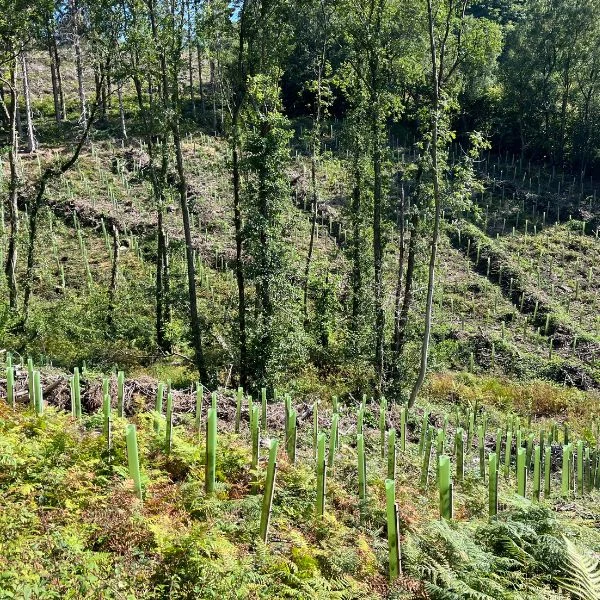
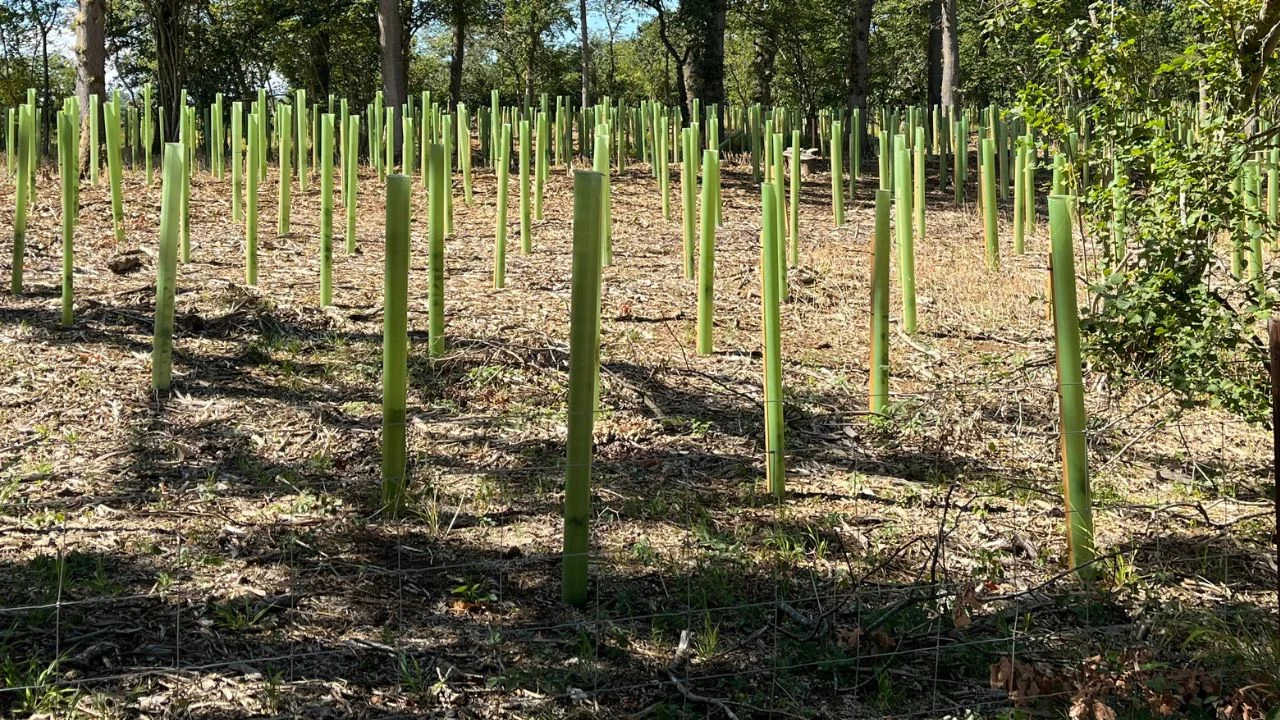
A privately managed estate in the Cotswolds undertook a major restocking programme after widespread ash dieback caused significant losses across the woodland. With a large number of mature ash trees lost, the estate management team took the opportunity to select a carefully considered range of replacement species: chosen not only for their suitability to current site conditions, but for their likely resilience under the climate conditions expected in the Cotswolds over the coming decades. Replacing a monoculture of vulnerable ash with a more diverse and climate-adapted mix represents a long-term investment in the estate’s woodland value.
The Challenge
Despite multiple fencing measures already in place across the estate, browsing pressure from deer remained persistently high. The replacement species, many of them palatable broadleaves, needed individual protection if they were to establish without setback. With over 9,000 trees to shelter across the restocking area, supply reliability and consistent product quality were as important as the shelter specification itself. The estate also chose to participate in the Vigilis-Bio UK-wide monitoring trial, requiring a proportion of biodegradable shelters to be installed and tracked alongside the main population, an exercise in evaluating future options as plastic reduction becomes a greater priority in woodland management.
The Vigilis Solution
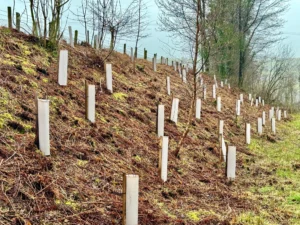
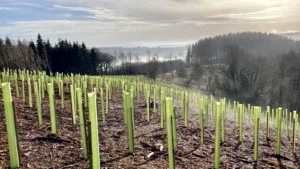
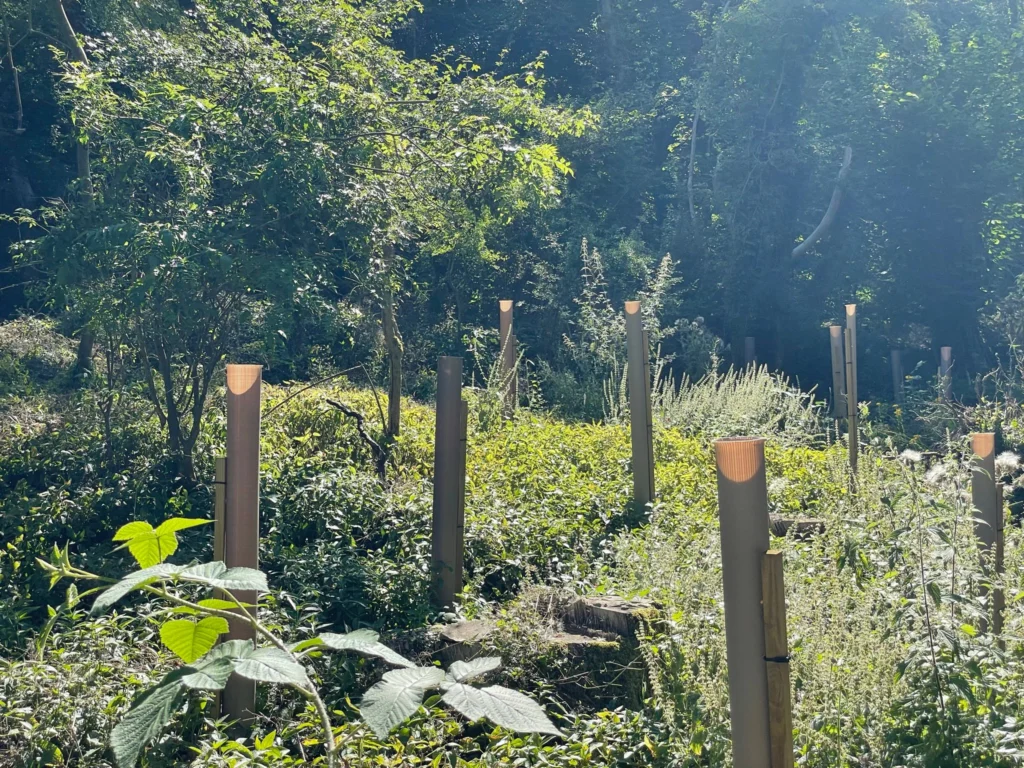
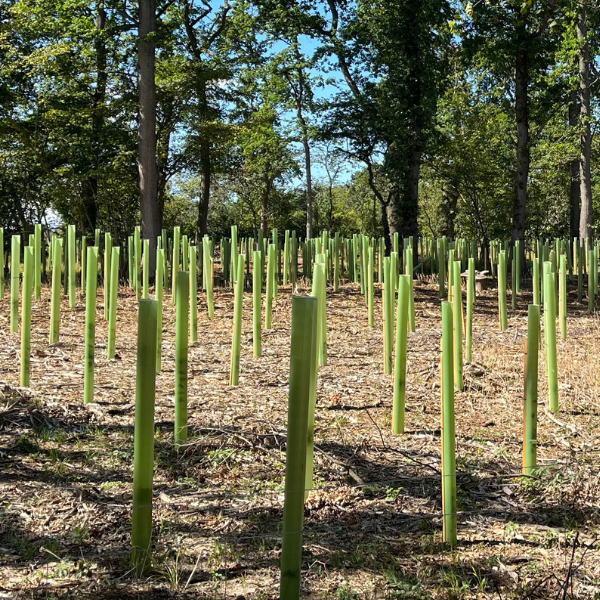
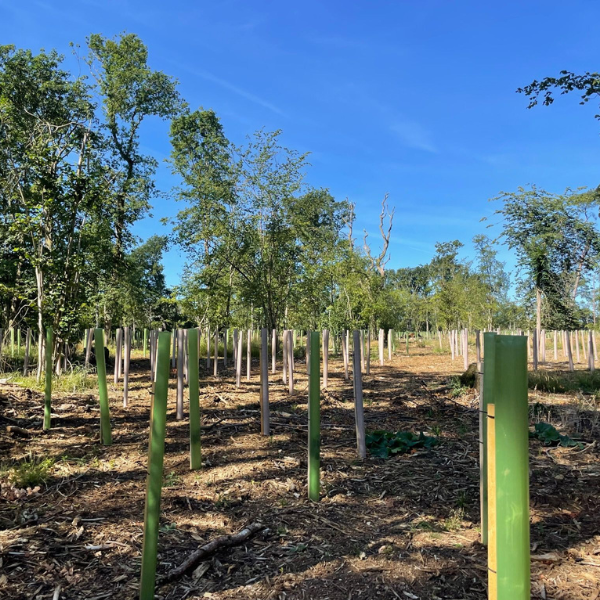
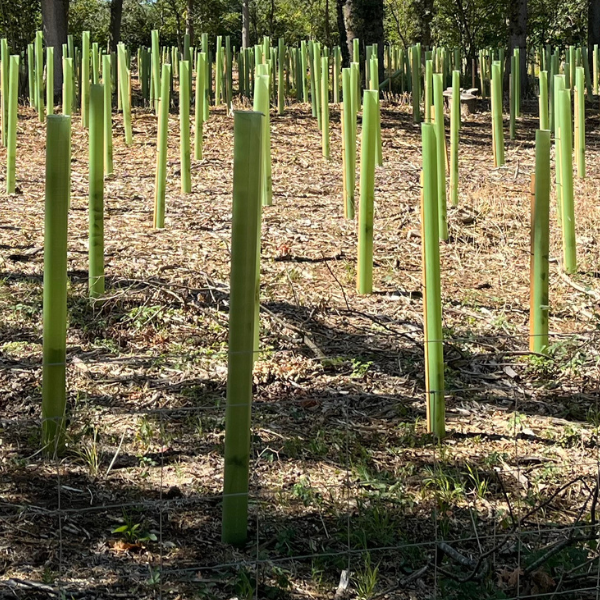
Over 9,000 × 1.5m Vigilis Tree Shelters were planted across the restocking area on standard softwood stakes. The 1.5m height was specified to provide reliable browsing protection above the browse lines of the larger deer species present on the estate. Vigilis Tree Shelters feature two releasable cable ties and three vent holes, giving the estate management team flexibility to adjust shelter height configuration during beat-up operations without needing to replace shelters entirely. Several hundred 1.5m Vigilis-Bio Tree Shelters were also installed within the restocking area: identical in dimension and performance to the standard product, but designed to biodegrade in soil after the protection period, eliminating the need for collection.
Outcome
Both the standard and Bio shelter populations are now subject to formal monitoring over a five-year period, with tree health and shelter structural integrity tracked as key indicators. The climate-resilient replacement species are establishing across the restocking zones, and if they perform as the species selection modelling suggests, the estate will have productive, diverse woodland in place for the long term. The Cotswolds site is one of the larger combined-product installations in the Vigilis-Bio trial, and the data gathered here will be particularly valuable given the high deer pressure context.
- Scale
- 9,000+ × 1.5m Vigilis Tree Shelters; several hundred 1.5m Vigilis-Bio Tree Shelters
- Product
- Vigilis Tree Shelters & Vigilis-Bio Tree Shelters
- Location
- The Cotswolds
- Project type
- Ash dieback restocking