Project Background
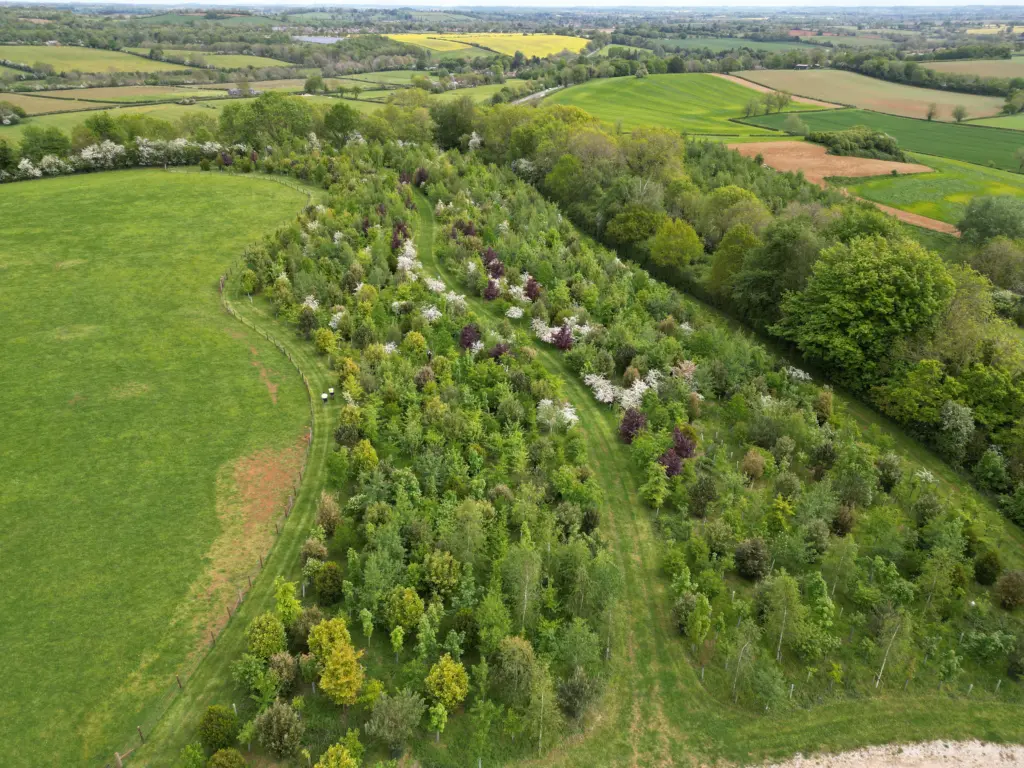
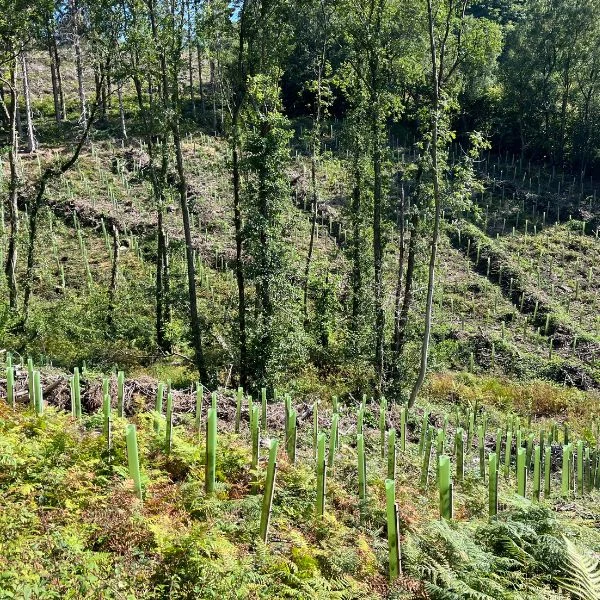
Cirencester Park, part of the historic Bathurst Estate in Gloucestershire, faced the dual challenge common to many lowland estates in southern England: managing the ongoing impact of ash dieback while restoring woodland cover in areas cleared as part of active woodland management. A thin but important stretch of new woodland was commissioned across the estate to return tree cover to a productive corridor, replacing lost ash with a mix of species suited to the site’s soil and light conditions.
The Challenge
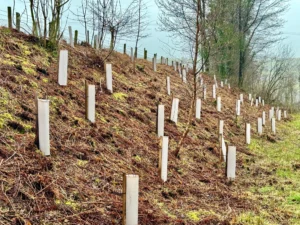
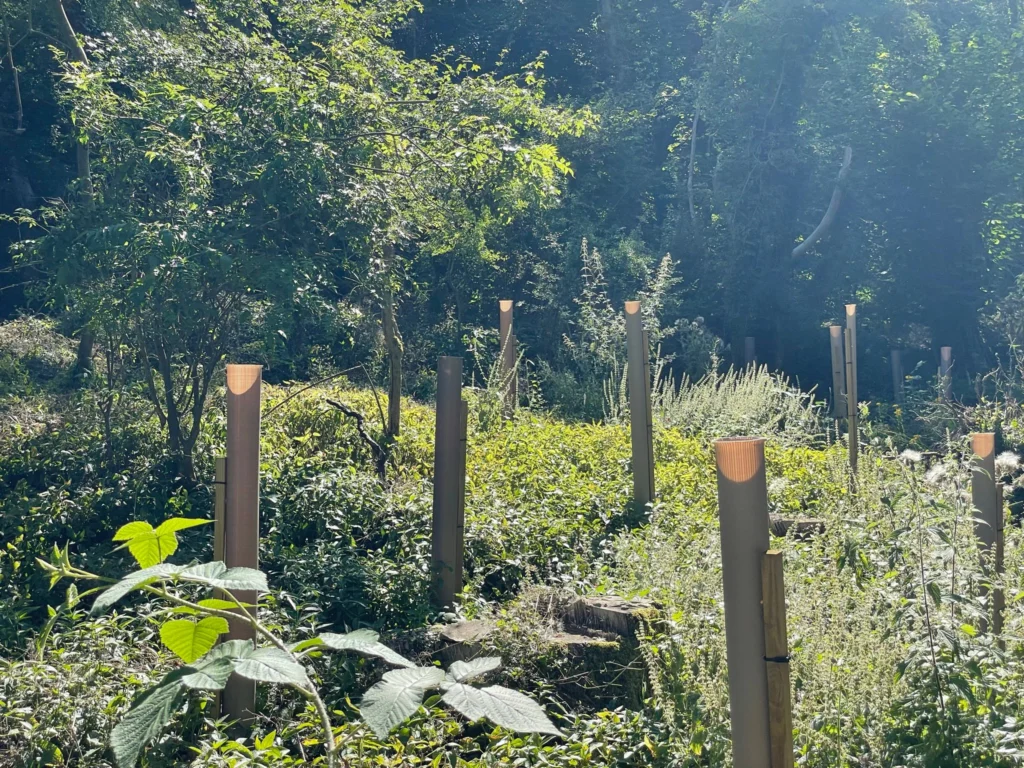
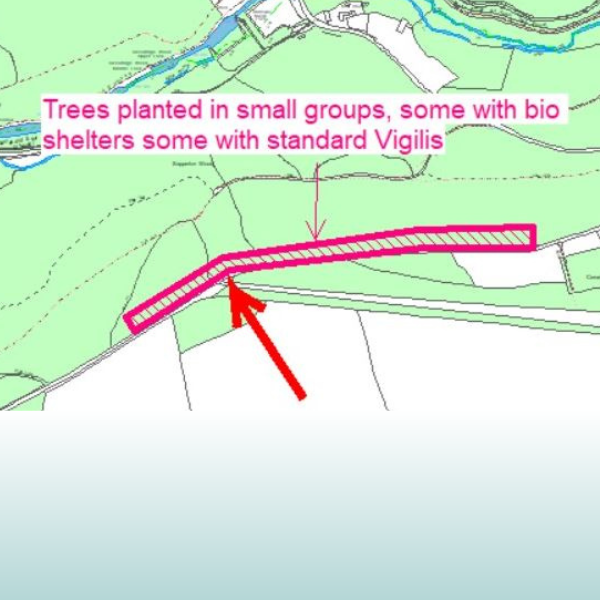
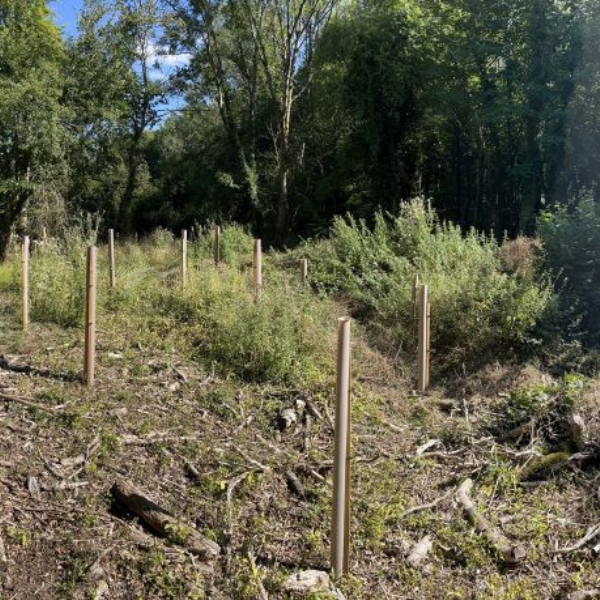
The restocking area had not been fully cleared before planting began, leaving the new trees distributed across small clusters set within denser existing vegetation. This configuration ruled out conventional deer fencing: the geometry simply didn’t lend itself to a perimeter solution, and the access and maintenance implications of a fence across this type of terrain would have been considerable. Yet the Bathurst Estate carries a significant population of fallow deer, a species that exerts a heavier browsing pressure than roe or muntjac and requires taller shelter heights to protect against effectively. Individual shelter protection was the only viable path, but it had to be specified for the right threat level.
The Vigilis Solution
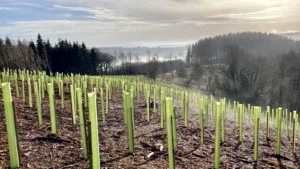
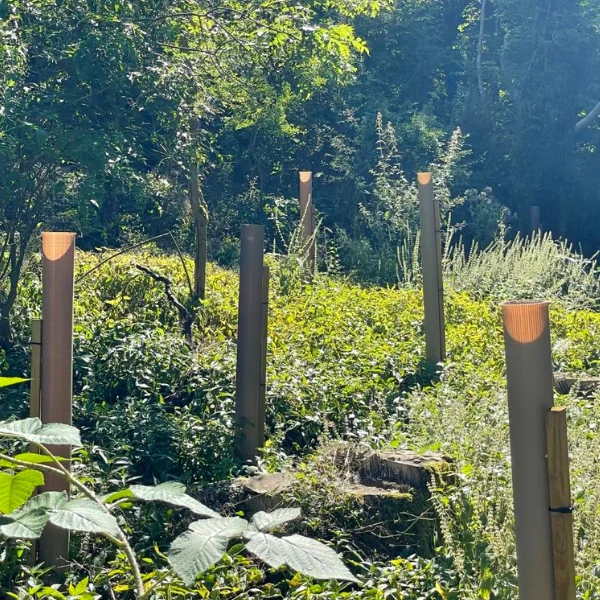
1.5m Vigilis Tree Shelters were specified as the primary protection across the planting clusters, matched to the fallow deer browse line. The 1.5m Vigilis Tree Shelter features three vent holes and two releasable cable ties, allowing the shelter to be reconfigured at lower heights during beat-up work without replacing the unit, a useful flexibility on an estate where management efficiency matters. Within the harder-to-access planting clusters, a proportion of 1.5m Vigilis-Bio Tree Shelters were installed alongside the standard product. The Bio shelter performs identically during the establishment period but biodegrades fully in soil afterwards, eliminating the need to collect shelters from areas where access is inconvenient or costly.
Outcome
The woodland corridor is now establishing across Cirencester Park, with the new trees protected through their critical early years. The inclusion of Vigilis-Bio in the more remote planting clusters has a practical long-term benefit: no collection required once the trees have grown beyond the shelter height, reducing the maintenance burden on sections of the estate that are difficult to access with vehicles. Vigilis will continue to monitor the Bio shelter population as part of the national trial, with the fallow deer browsing pressure context here making this one of the more demanding test environments in the programme.
- Scale
- 1.5m Vigilis Tree Shelters + 1.5m Vigilis-Bio Tree Shelters
- Product
- Vigilis Tree Shelters & Vigilis-Bio Tree Shelters
- Location
- Gloucestershire
- Estate
- Bathurst Estate, Cirencester Park