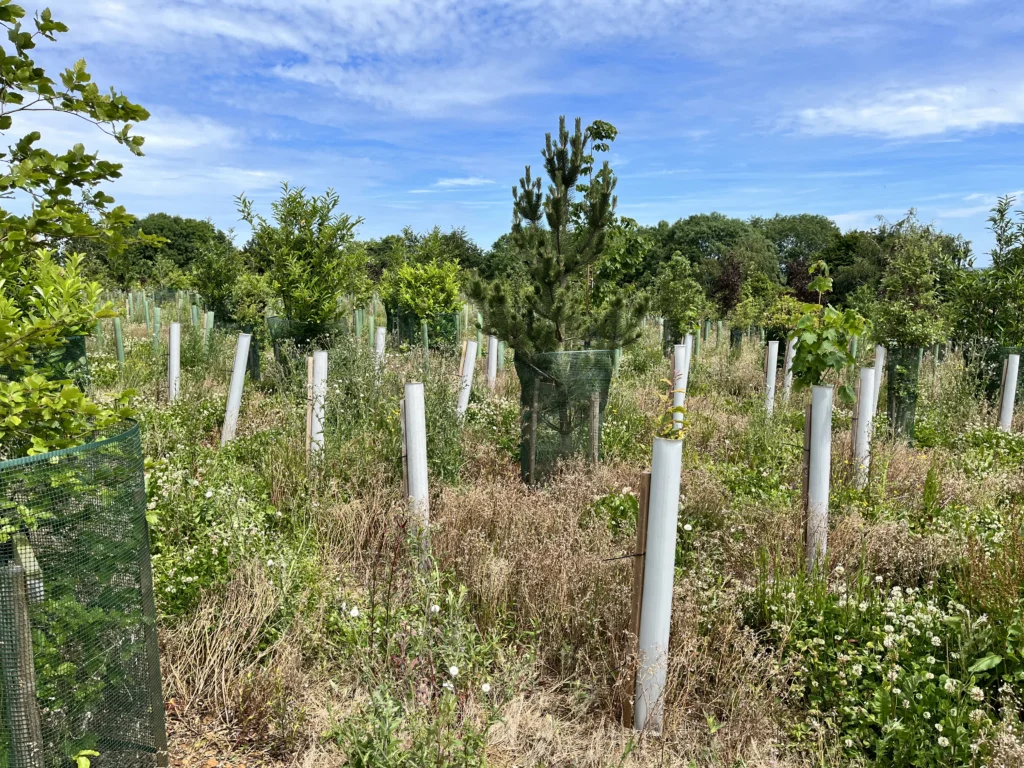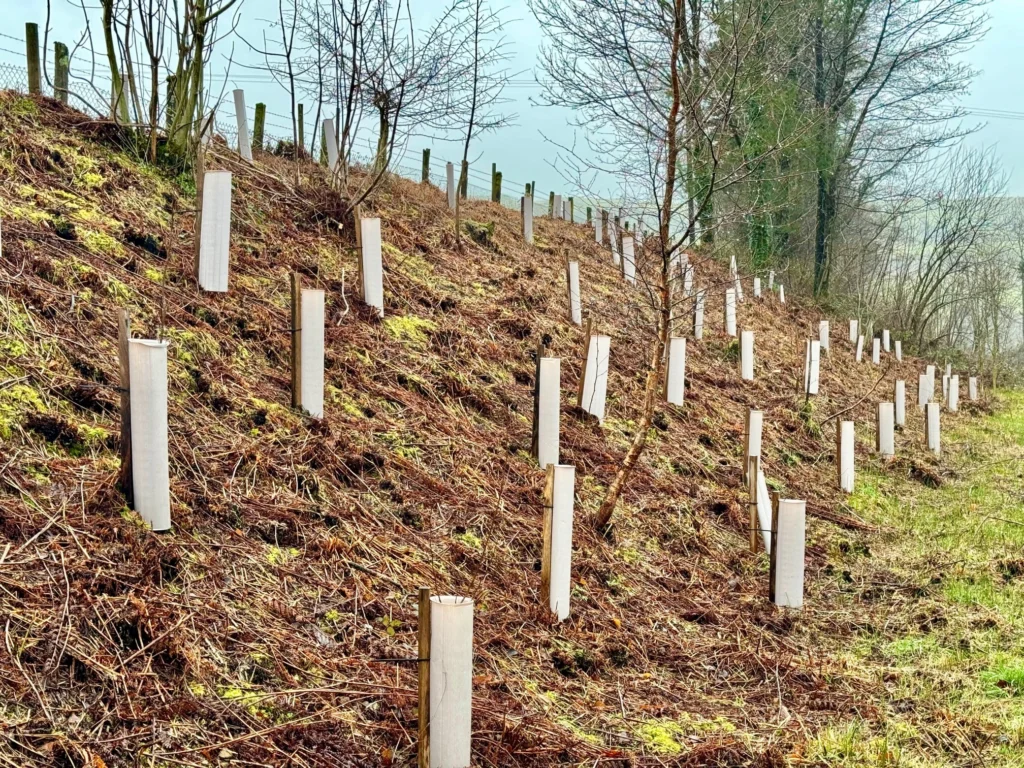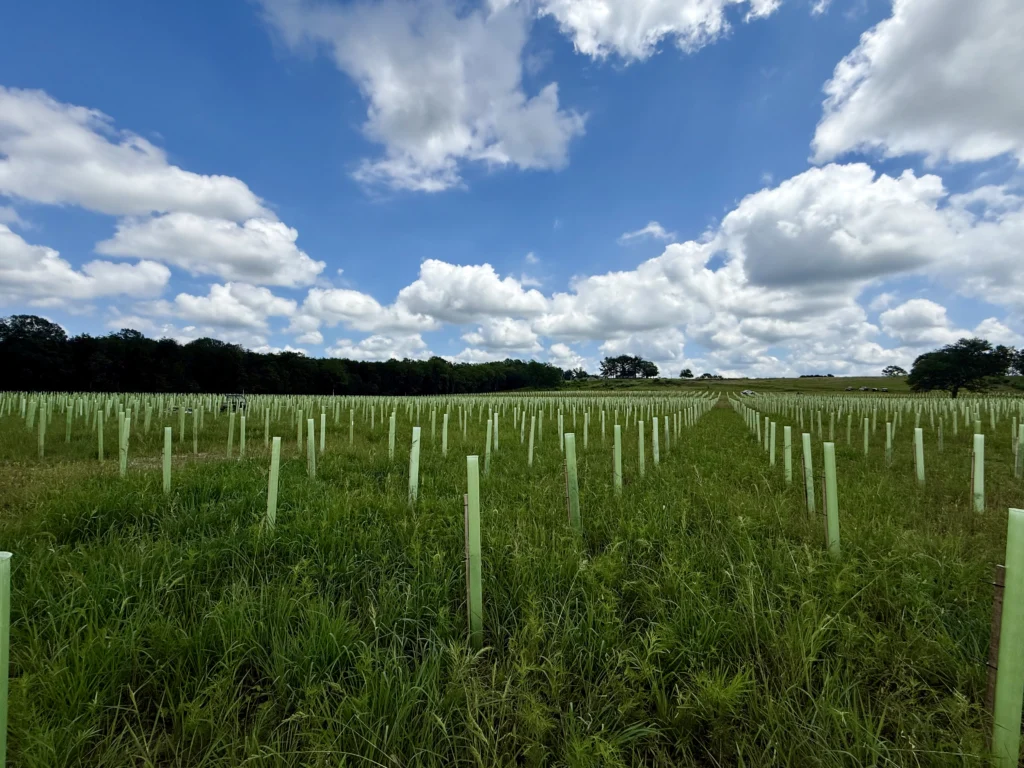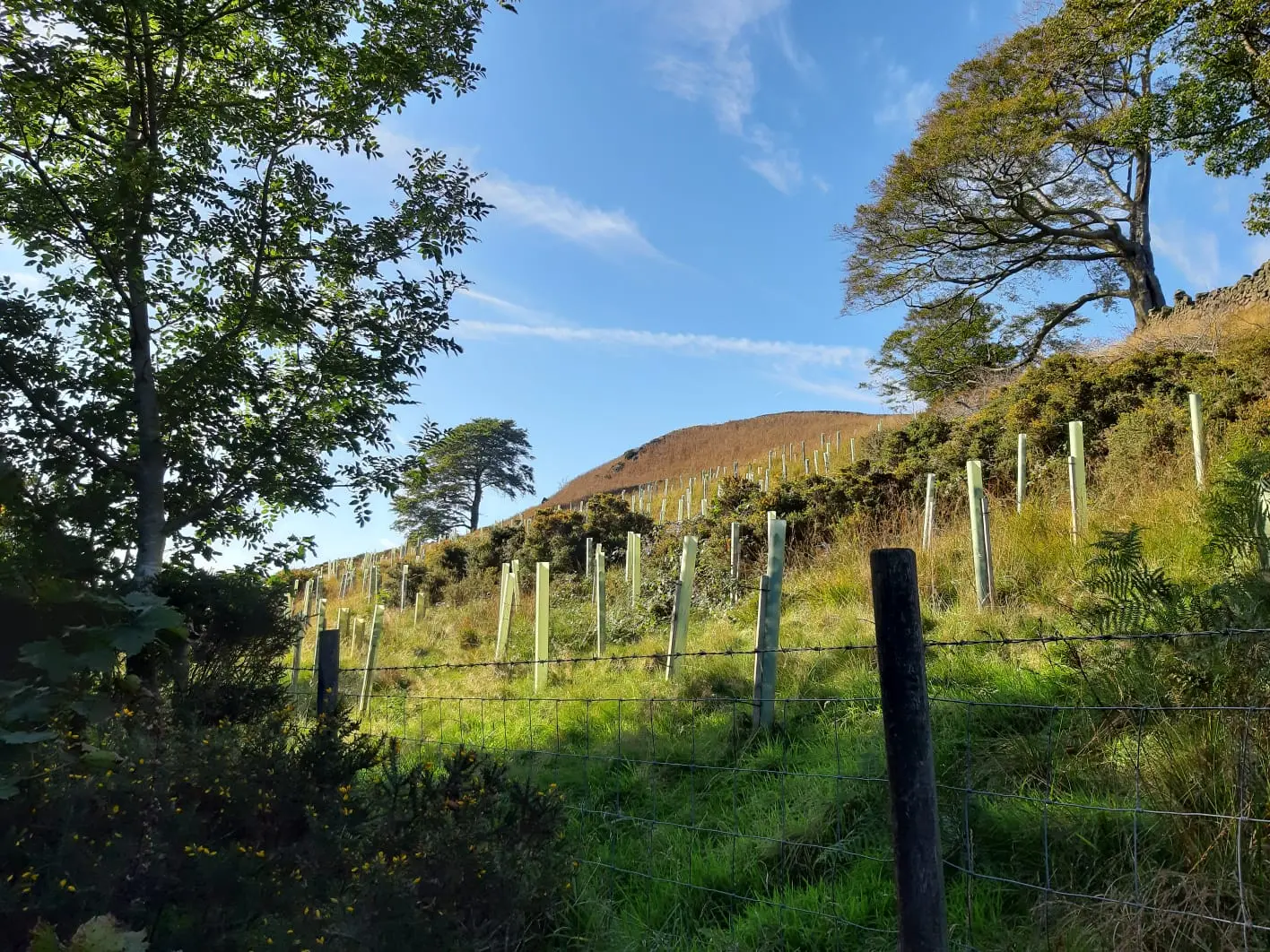
Removing tree shelters is the step every planting project plans for and very few enjoy. Once a tree has outgrown its guard, that protection has to come off and be dealt with, and across thousands of trees on difficult ground, retrieval is slow, costly and easy to put off. This guide covers when a tree shelter’s job is done, how to take a conventional guard off properly, and why a soil-biodegradable shelter removes the task from your list entirely.
When is a tree shelter’s job done?
A shelter has done its work once the tree no longer needs protection from browsing and the stem is strong enough to stand on its own. In practice that usually means the leading shoot is well clear of the top of the guard, the bark has hardened, and the trunk has enough taper and sway strength to support itself without the tube. Depending on species, site and growth rate, that point is commonly reached somewhere between five and eight years after planting.
Leaving a rigid plastic guard on too long causes its own problems. The tube can constrict the expanding stem, trap moisture against the bark, and start to fragment in UV light, shedding plastic exactly where you were trying to grow a healthy tree. Checking guards during routine maintenance and removing them at the right moment matters as much as installing them well in the first place.
How to remove a conventional shelter properly
Taking off a standard plastic guard is straightforward tree by tree: release or cut the ties securing it to the stake, ease the tube up and away from the tree without snagging low branches, and pull the stake. The part that catches people out is what happens next. Guards and stakes have to be gathered, carried off site and sorted: the plastic for recycling where a stream exists, the stakes for reuse or disposal. Done properly, nothing is left behind on the ground.
The reality is that this rarely happens cleanly at scale. On a large forestry or restoration site, collecting spent guards across steep or remote terrain is labour the original budget seldom accounted for. That is how the countryside ends up dotted with split, brittle tubes years after the trees have established.
The retrieval problem at scale
Multiply the removal job by tens of thousands of trees and it stops being a task and becomes a liability. The Woodland Trust and others have run volunteer campaigns specifically to collect abandoned plastic guards from maturing woodland, a clear signal of how often retrieval gets skipped. Every guard left in place fragments into the soil, and every collection trip that does happen carries a real cost in time, fuel and labour long after the planting grant has been spent.
For anyone specifying protection today, that end-of-life cost belongs in the decision from the start. A guard is not just the price on the pallet; it is the price of getting it back off again.
Why biodegradable shelters skip the job
This is the case for soil-biodegradable protection. Vigilis Bio shelters are designed to protect the tree through establishment and then break down in place, so there is no tube to cut off, collect or recycle, and no fragmenting plastic left in the soil. The removal task, the retrieval trips and the awkward long-tail liability simply disappear. For a fuller look at the materials and how they behave in the ground, see how Vigilis Bio is made.
Where guards genuinely can be collected easily (accessible amenity sites, for example), recyclable formats keep the material in circulation. But on the large, remote plantings where retrieval is hardest, designing the removal problem out is the cleaner answer. Whether you are protecting a handful of specimen trees or a landscape-scale scheme, factor removal in before you plant. To choose protection that matches your site and your end-of-life plan, talk to your local Vigilis distributor.