Viticulture
Vigilis vine guards protect young grapevines from deer, rabbits, frost and herbicide drift, helping vineyards across the UK, USA and Europe reduce establishment risk and reach first harvest sooner.
With over 7 million hectares of vineyards planted across the USA, France, Italy, Spain and beyond, vine protection during establishment is a near-universal requirement. Young grapevines take 3–5 years to reach productive yield, and the establishment window is the period of maximum vulnerability: deer, rabbits and hares browse soft new growth repeatedly if unprotected, and a single herbicide spray event can damage an unguarded vine. Vigilis vine guards protect new plantings from browsing, herbicide drift and frost during the critical establishment years, helping commercial vineyards worldwide maximise establishment rates and accelerate the path to first harvest.
Viticulture Products
Browse the Vigilis range recommended for viticulture projects — tree shelters, guards and accessories engineered for effective establishment and long-term browse protection.
Frequently Asked Questions
What are vine guards and why do commercial vineyards use them?
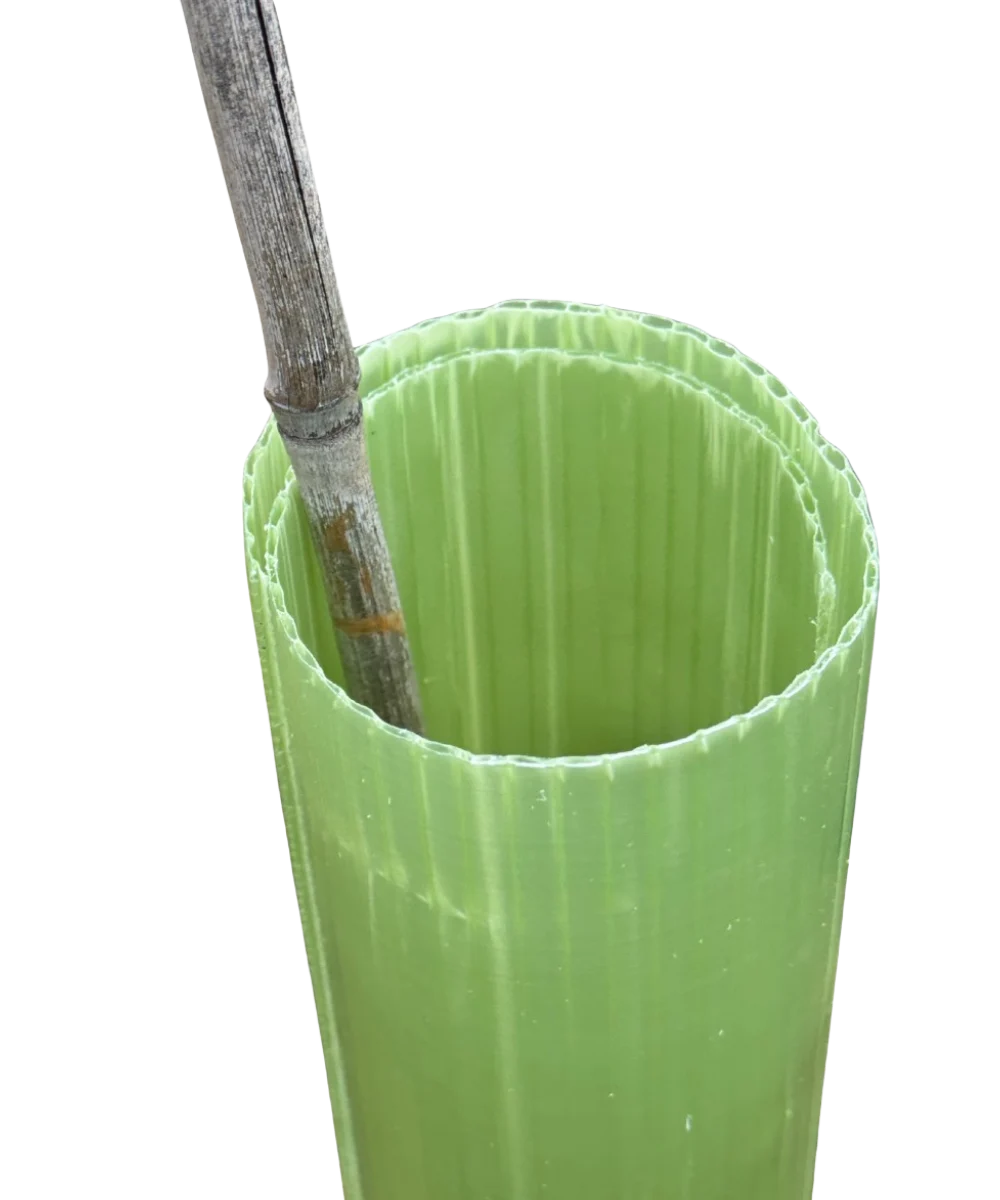
Vine guards are cylindrical shelters placed over individual grapevines after planting. They protect young vines from deer, rabbit and hare browsing during the 2–3 years before the vine reaches the trellis wire and develops sufficient woody structure to resist damage. In vineyards worldwide, deer pressure is a significant risk on sites adjacent to woodland or hedgerow. Our vine guards are manufactured in UV-stabilised polypropylene, available in heights matched to the browsing pressure on your site. For UK growers, Vineyard Magazine covers vine protection guidance in depth; for US producers, the USDA National Agroforestry Center provides comparable resources.
What height vine guard do I need for my vineyard?
Standard vine guard heights are 45cm (rabbit pressure only), 60cm (rabbits and hares), and 90cm (roe deer or equivalent medium-size deer). For sites with larger deer species — fallow or red/sika deer in Europe, white-tailed or mule deer in North America — 1.2m protection is recommended, though site-level deer fencing is typically the more practical primary solution. Most commercial vineyards use 60cm as a baseline, upgrading to 90cm where deer are confirmed on site. Browse our vine guards product page or contact our team for a specification.
Can vine guards protect against frost as well as browsing?
Yes — vine guards create a microclimate around the young vine that moderates temperature extremes, providing a degree of protection against late spring frosts, one of the most damaging risks for vineyards in establishment years across cooler climates including the UK, northern France, Germany and the US East Coast. The enclosed environment also accelerates early shoot growth, helping vines reach the trellis wire faster. Solid polypropylene guards provide the greatest thermal buffer. For frost-prone sites, the frost mitigation benefit is a significant factor in guard selection alongside browsing protection. See our vine guards range for available options.
How do vine guards interact with herbicide use in the vine row?
Herbicide applications within the vine row for weed competition control are standard vineyard management, particularly during establishment years. Vine guards protect the stem and young foliage from chemical contact and drift, preventing herbicide damage to growing points. Guards must completely cover all active growth above ground for protection to be effective — ensure the base is secured firmly to prevent spray ingress beneath the guard. Our vine guards are designed to seat firmly at ground level. For advice on combining vine protection with your row management programme, speak to our team.
When should vine guards be removed?
Vine guards are typically removed in late spring of the third or fourth growing season, once the vine has been tied to the first trellis wire and has sufficient woody stem development to resist browsing. The ground should be firm enough to support tractor operations to prevent compaction. Remove guards before the summer growth flush — soft green growth remains palatable to deer even on established vines. Our polypropylene vine guards are designed for clean removal and are recyclable at end of life. Contact us with any questions on removal timing.
Are vine guards suitable for varied international growing climates?
Our polypropylene vine guards are engineered for a wide range of climates, including the high precipitation and variable UV exposure of UK and northern European conditions, and the drier, higher-UV environments of California and southern Europe. Single-walled paperboard guards are not recommended for wet climates — they degrade rapidly in high precipitation. Our vine guards maintain structural integrity for a minimum of three growing seasons under field conditions, and are fully recyclable at end of life. For environmental footprint requirements, biodegradable alternatives are available through our tree guards range — contact us to discuss suitability.
Ready to get started?
Talk to our team
We'll help you choose the right product and connect you with your nearest distributor.