Project Background
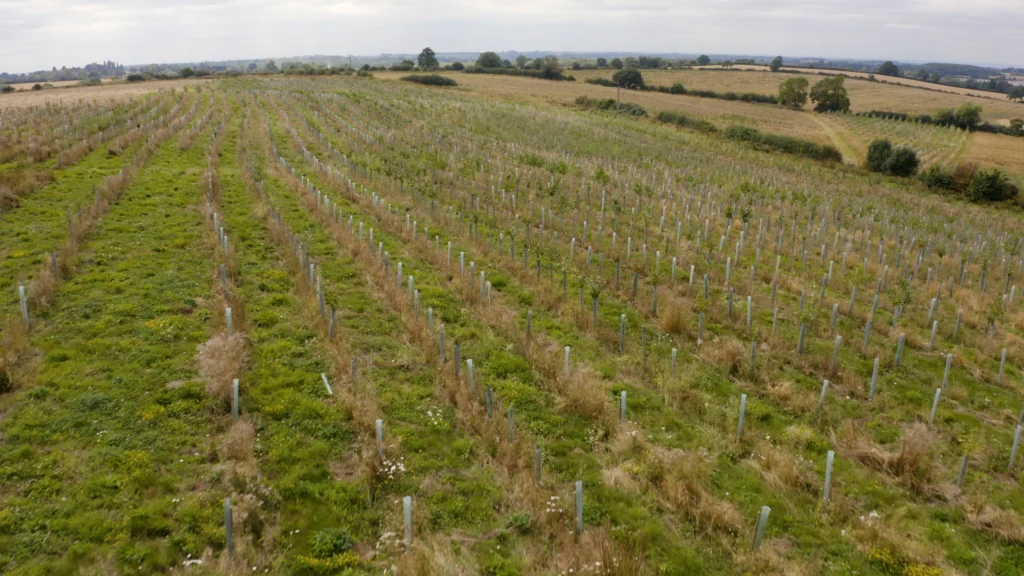
Spains Hall Estate, a historic estate near Finchingfield in Essex, has committed to an ambitious programme of transforming 300 hectares of farmland into an alley-cropping system, one of the most ecologically integrated land management approaches available to UK landowners. Over a five-year period, 10,000 nut and timber trees will be planted in lines running through arable and grazing fields, designed to produce food products and timber for decades to come. Between the tree rows, grassland, herbal leys, and wildlife mixes are being established to support biodiversity, build soil health, sequester carbon, trap water, and help mitigate drought. The estate has partnered with Vigilis Tree Shelters, based nearby in Finchingfield, to supply protection for the planting.
The Challenge
The alley-cropping system is ambitious in both scale and ecological ambition. But that ambition created a direct problem with conventional tree shelter technology: providing individual protection for 10,000 trees using standard polypropylene shelters would mean tens of thousands of plastic units requiring collection, sorting, and responsible disposal at the end of the trees’ establishment period: a significant operational burden spread across large areas of productive farmland, and fundamentally at odds with Spains Hall’s nature-first approach to land management. The estate needed a protection solution that matched the ecological integrity of the project itself, without compromising on the protection performance the young walnut and oak trees would require through their establishment years.
The Vigilis Solution
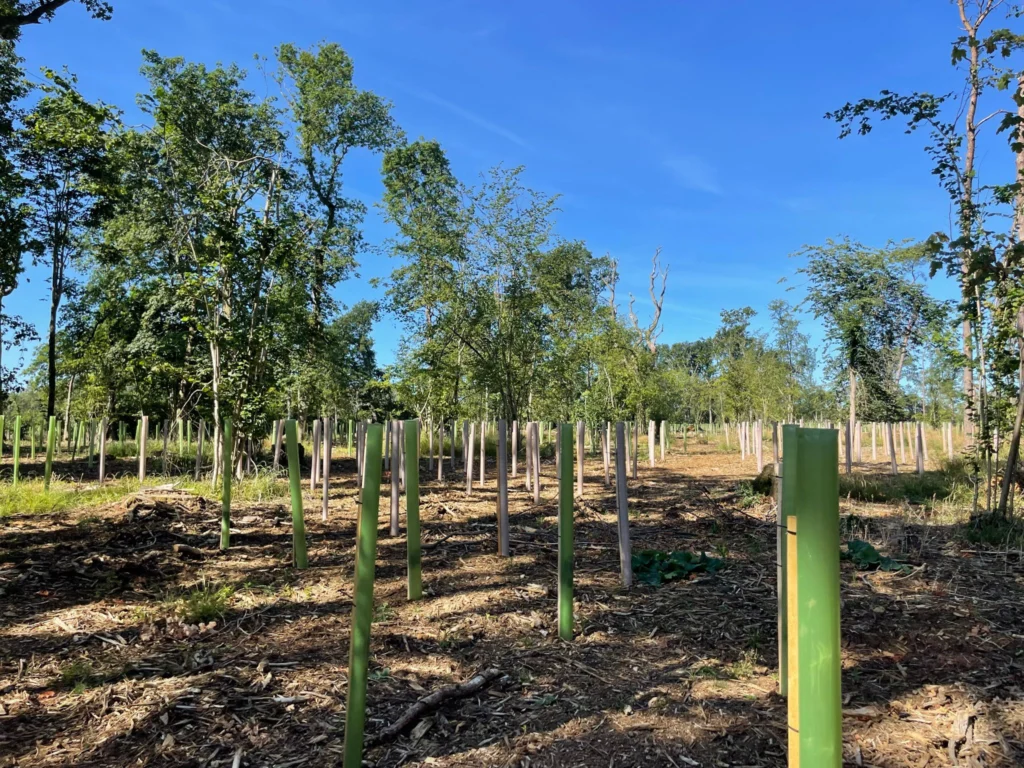
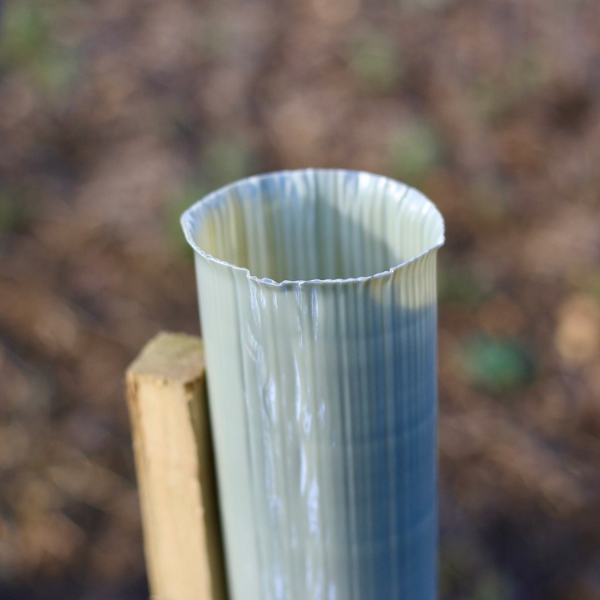
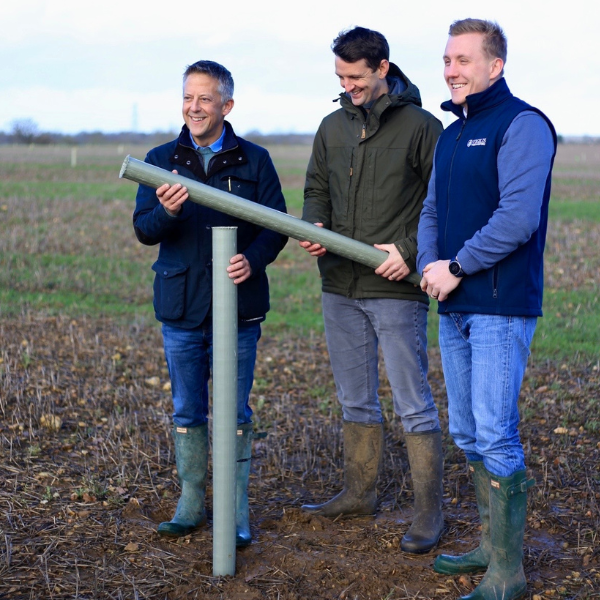
Vigilis supplied nearly 1,000 Vigilis-Bio Tree Shelters for the first phase of the alley-cropping planting. The Vigilis-Bio shelter is manufactured from a blend of bio-based derivatives (including potato starch, wood fibre, and corn combined with a custom biodegradable polymer), and is engineered to deliver the full protection and micro-climate performance of a standard tree shelter while being 100% soil biodegradable. The shelter creates the same enclosed growing environment that accelerates early tree growth and advances first harvest timing, providing a minimum of five years of browsing and herbicide protection. After this period, the shelter gradually fragments and is absorbed into the soil, leaving only biomass, water, and minerals: no collection required, no plastic waste at the estate. The proximity of Vigilis’s Finchingfield base to Spains Hall made the supply relationship a natural fit for the estate’s local sourcing commitments.
Outcome
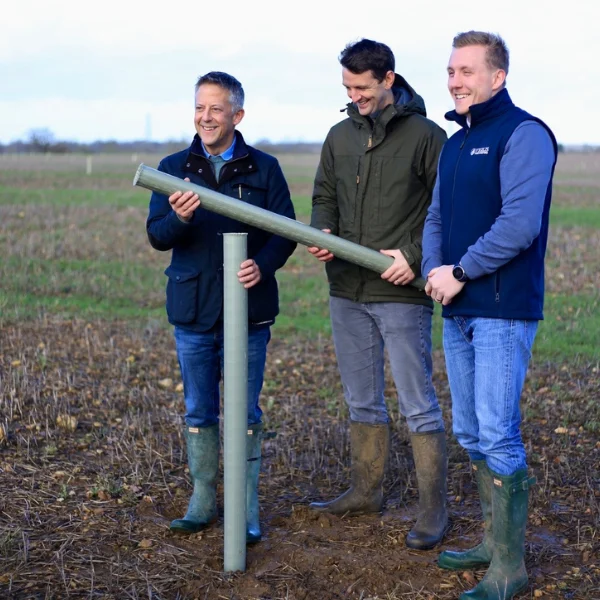
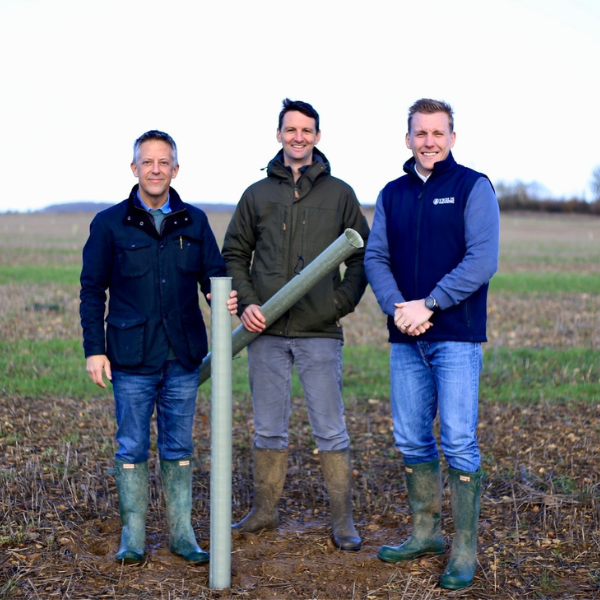
Vigilis-Bio shelters are now protecting walnut and oak trees across the first alley-cropping phase, with visitors to Spains Hall able to observe the shelters in situ and see the embrittlement and fragmentation process developing year by year. Archie Ruggles-Brise, Estate Manager at Spains Hall, said: “It’s great to have the opportunity to trial Vigilis’ biodegradable tree shelters on our new walnut and oak trees. The fact they are a local company is even better. It’s paramount that we use more sustainable products such as these on our estate as part of our nature-first approach to land management.” John Warner, CEO at Vigilis, added: “We’re thrilled to supply our biodegradable Vigilis-Bio tree shelters to Spains Hall Estate. We are delighted to be able to educate visitors to the estate about the benefits and functionality of biodegradable tree shelters and the importance of transitioning towards a plastic-free forestry industry.”
- Scale
- ~1,000 Vigilis-Bio Tree Shelters
- Product
- Vigilis-Bio Tree Shelters
- Location
- Spains Hall Estate, Finchingfield, Essex
- Client
- Spains Hall Estate