Project Background
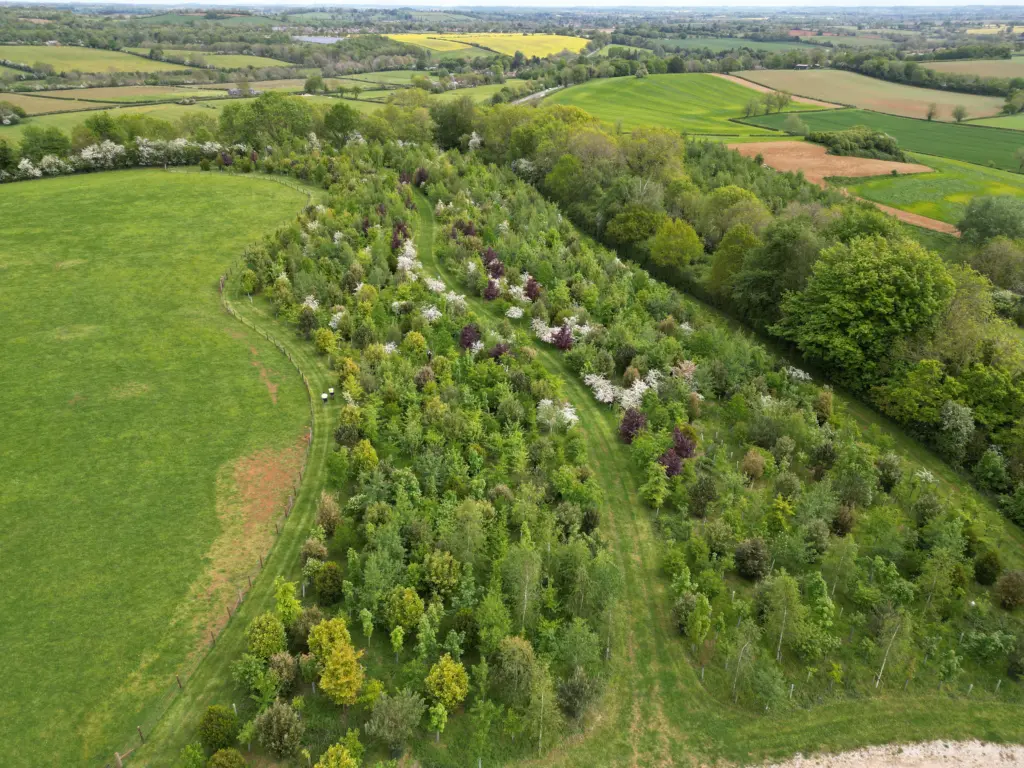
A landowner in Redditch, Worcestershire chose to plant mixed broadleaf trees on farmland adjacent to existing woodland, taking advantage of the incentive schemes available for planting within the HS2 infrastructure buffer zone. The programme supports landowners who create or extend woodland near the planned high-speed rail route, contributing to a network of mitigation planting designed to reduce the environmental and visual impact of the infrastructure as it develops.
The Challenge
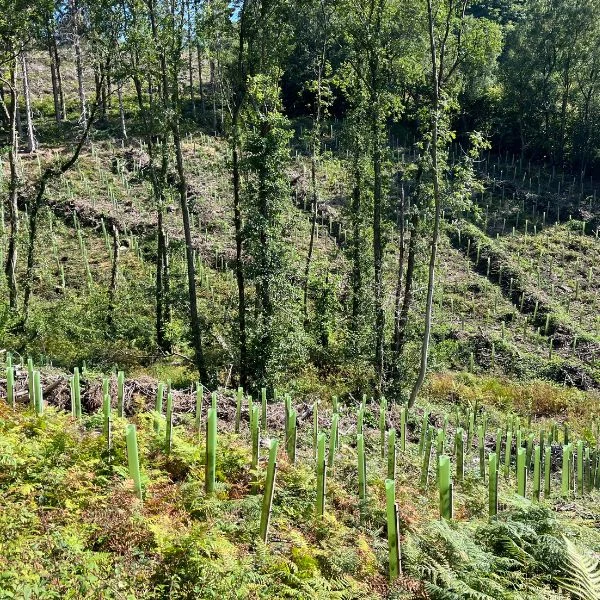
The planting scheme combined two distinct categories of work: ‘jigsaw’ infill planting to fill gaps between existing woodland parcels, and restocking of areas recently felled as part of active woodland management. Only new planting qualifies for the premium HS2 payments, restocking counts separately, creating financial pressure to get tree establishment right the first time. The task was complicated further by the previous season’s drought, which had driven unusually high national demand for replacement trees and left young stock scarce and expensive. Against this backdrop, both Roe deer and rabbits were active on the site, presenting a direct browsing risk to the young trees. Deer fencing was considered and rejected: it would not have addressed rabbit risk, would have restricted access across the public rights of way running through the area, and would have created an unwanted physical barrier between the existing woodland and the new planting.
The Vigilis Solution
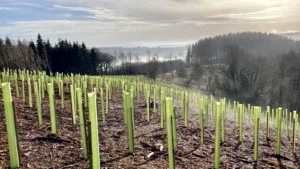
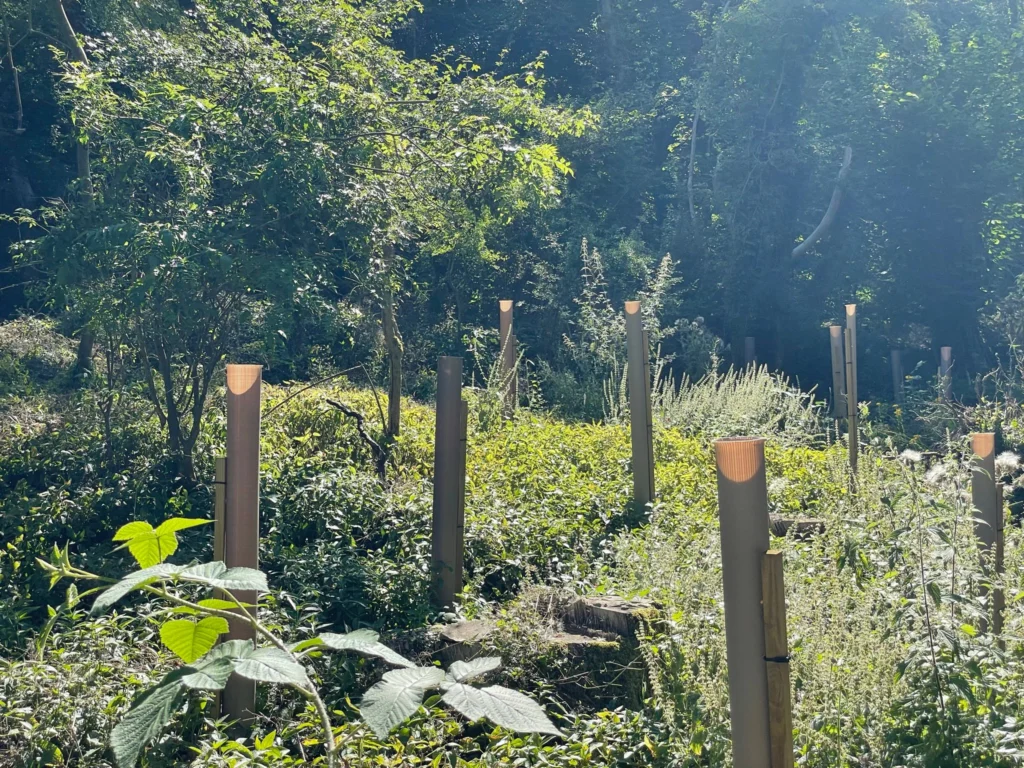
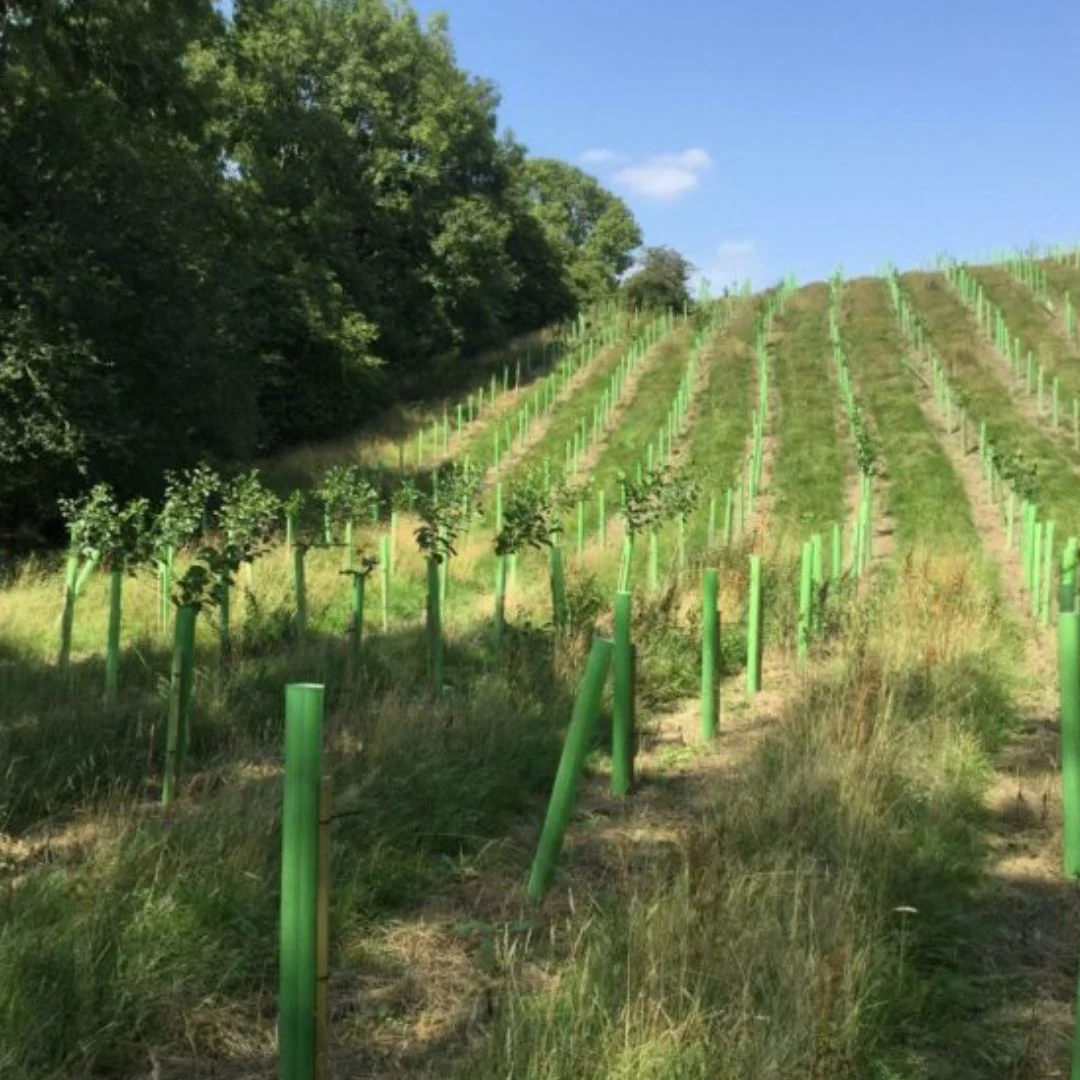
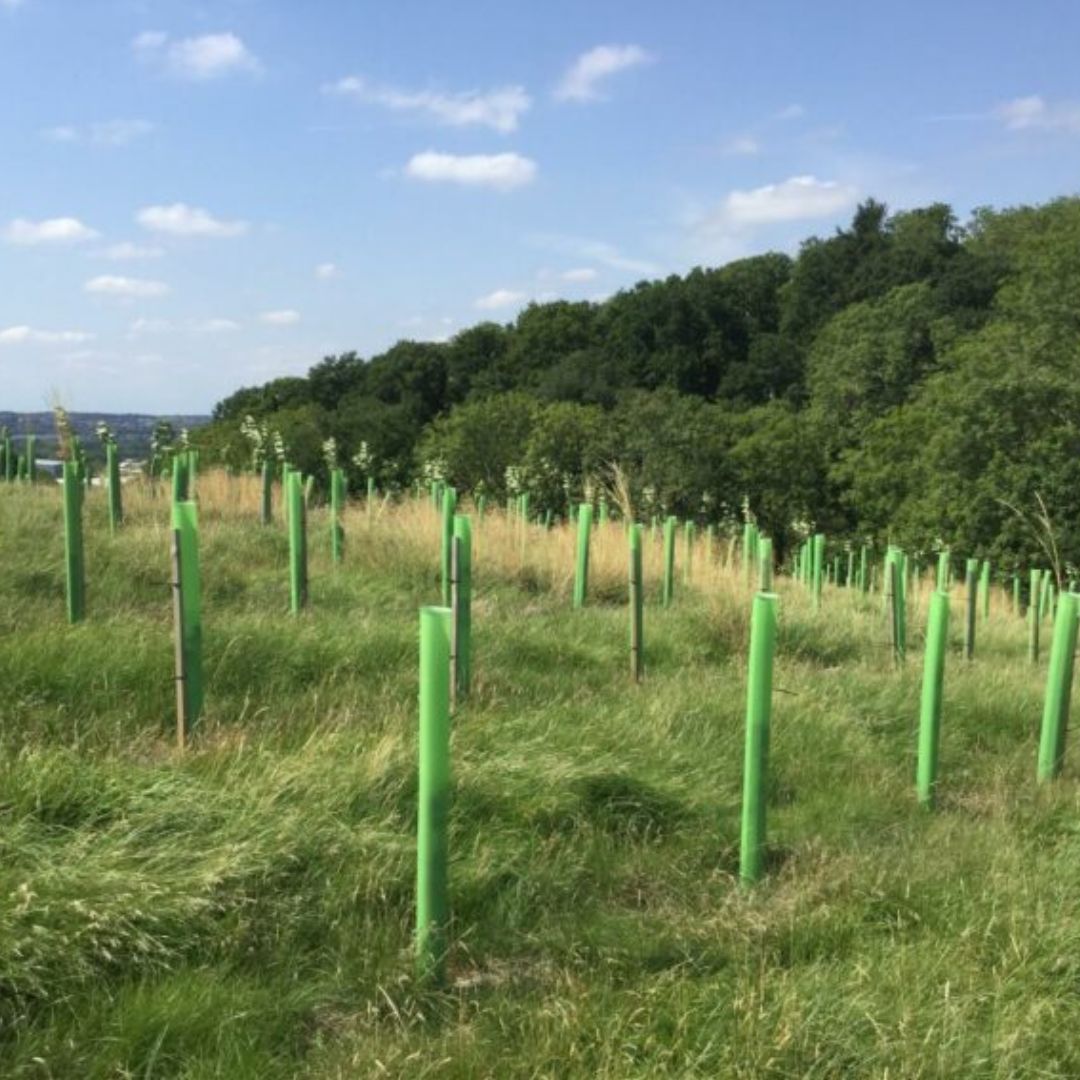
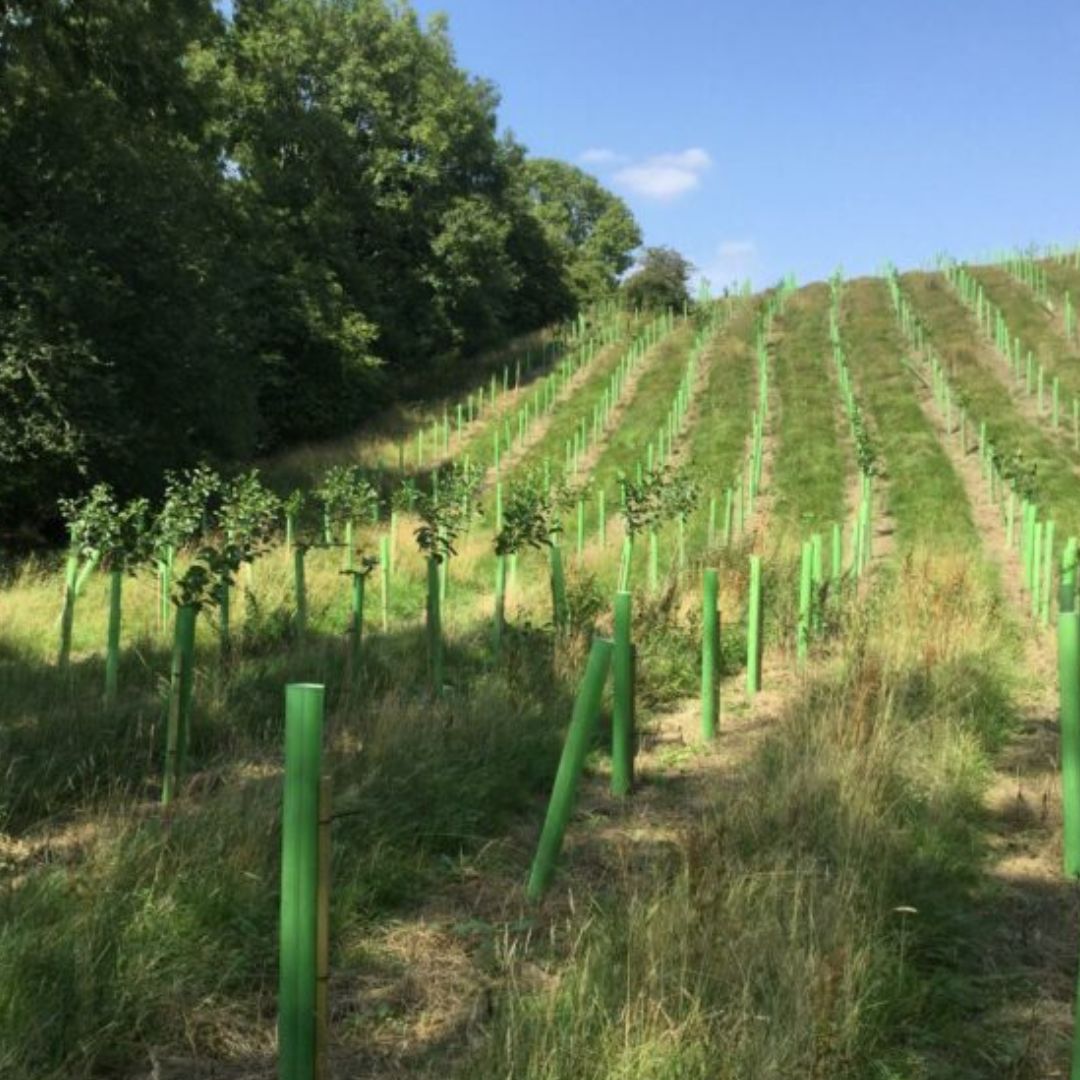
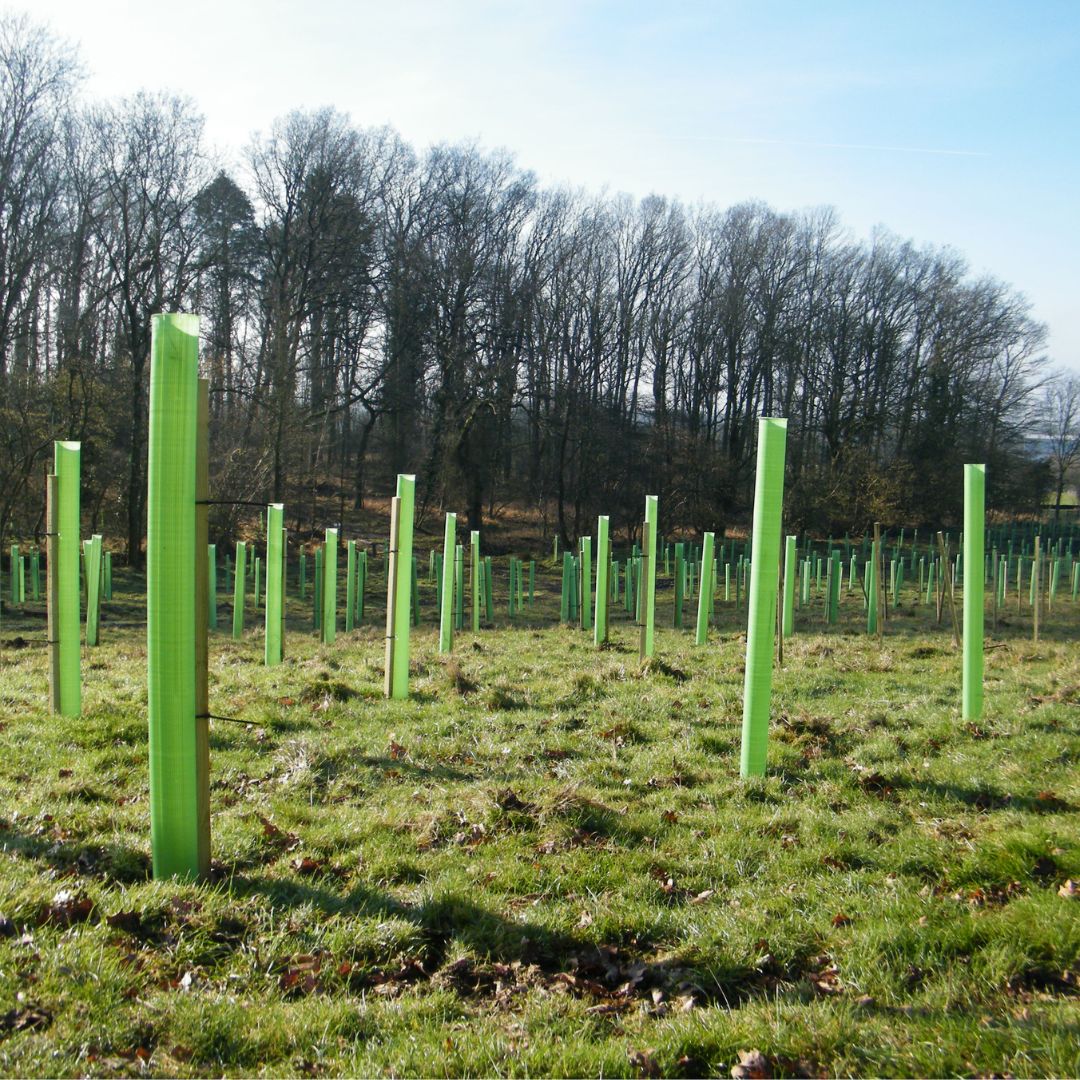
1.2m Vigilis Tree Shelters were installed on strong timber stakes across the planting area, providing individual protection against browsing from both Roe deer and rabbits. The 1.2m height is appropriate for the Roe deer browse line at this site, keeping costs well-calibrated to the actual threat. The enclosed design of the Vigilis Tree Shelter also offers a secondary benefit in drought-stressed environments: by reducing water vapour loss from within the shelter, it helps young trees retain moisture around the root zone during dry periods, a directly relevant advantage given the drought the previous season had demonstrated. Individual shelters also leave the site open and unfenced, preserving the rights of way and maintaining the connection between existing and new woodland.
Outcome
Protected by individual shelters, the scarce and valuable young stock has been able to establish without risk of browsing setback. Trees inside the Vigilis Tree Shelters are forming straight, well-branched stems: a direct benefit of the shelter’s enclosed micro-climate, which encourages vertical growth and eliminates side-branching below the shelter rim, adding long-term timber form value. The site remains open across the rights of way, consistent with the landowner’s original objectives for the scheme.
- Scale
- 1.2m Vigilis Tree Shelters on timber stakes
- Product
- Vigilis Tree Shelters
- Location
- Redditch, Worcestershire
- Context
- HS2 buffer zone woodland creation