Project Background
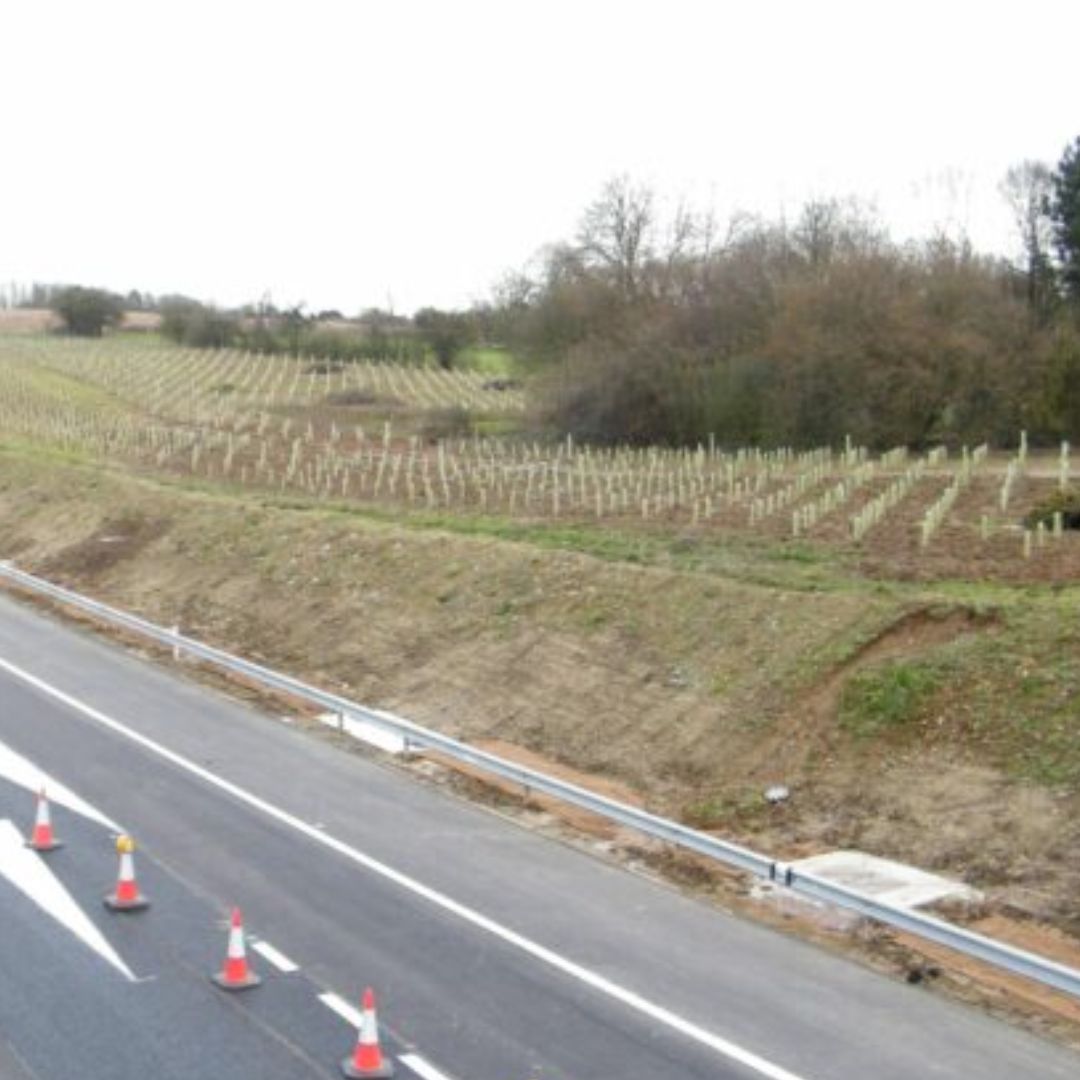
Planning consent for a major new road junction on the outskirts of Ashford in Kent included a requirement to establish a substantial tree and shrub planting belt along the embankments. The junction forms part of the M20 route to and from the Channel Tunnel, one of the UK’s most strategically important road corridors, and the landscaping specification called for rapid establishment of effective visual screening and acoustic buffering alongside the new infrastructure. Tilhill Forestry Ltd was engaged to deliver the planting programme.
The Challenge
The embankment planting areas face exposure on multiple fronts. Prevailing winds sweep in from the flat lowlands of Romney Marsh, creating persistent wind stress on newly planted trees and making shelter stability a primary concern. The embankment banking itself was built from recovered soil under relatively shallow topsoil, poor growing conditions with limited structure and water-holding capacity. Neighbouring farmland and woodland bordering the site harbour rabbits and potentially small deer, and with the M20 motorway context making any failure in screening or acoustic performance conspicuous, the specification for reliable, low-maintenance establishment was stringent. On a project of this scale and profile, re-staking and repositioning failures would have been both costly and operationally disruptive.
The Vigilis Solution
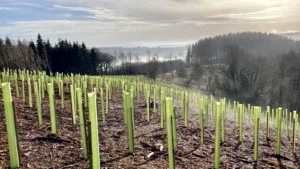
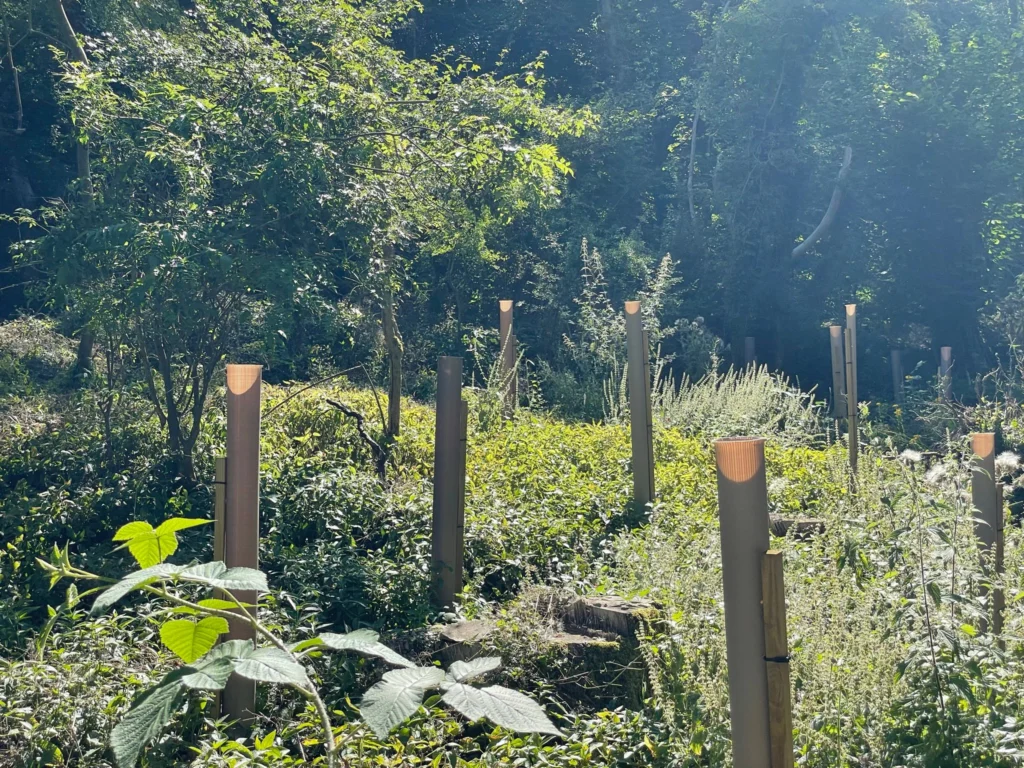
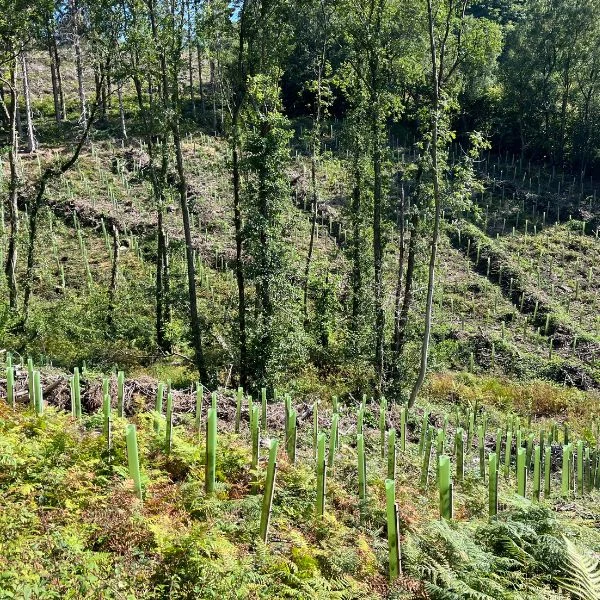
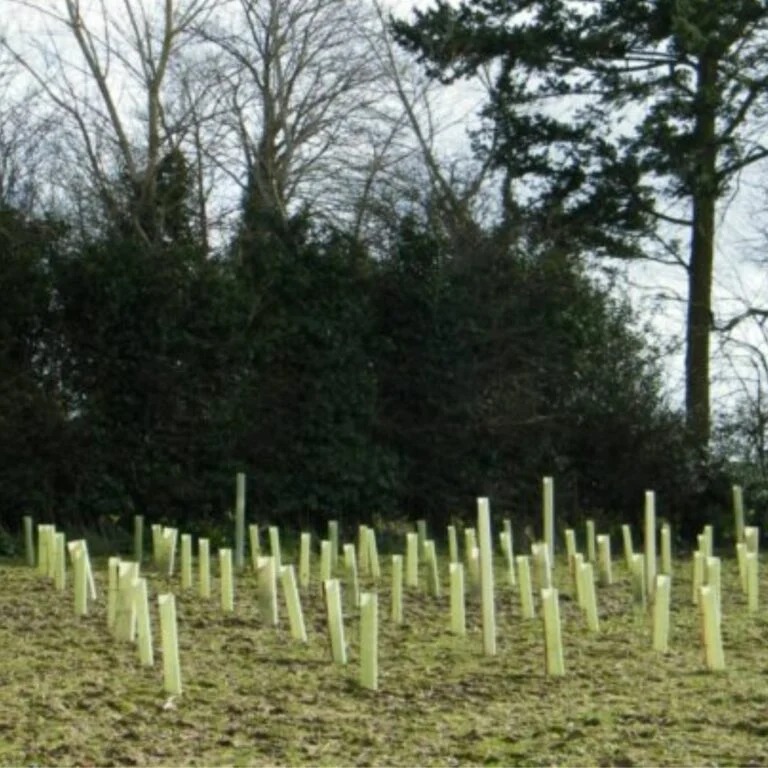
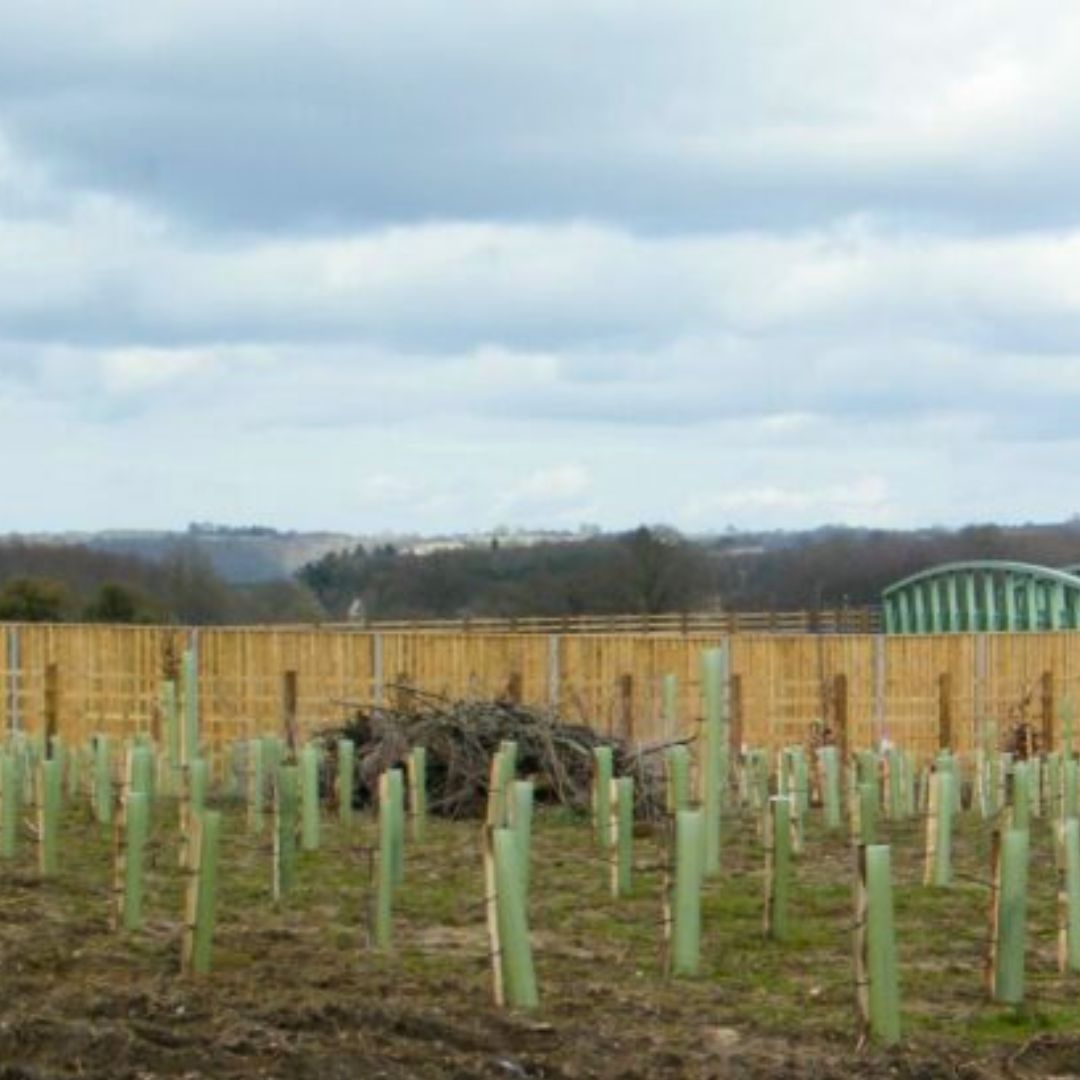
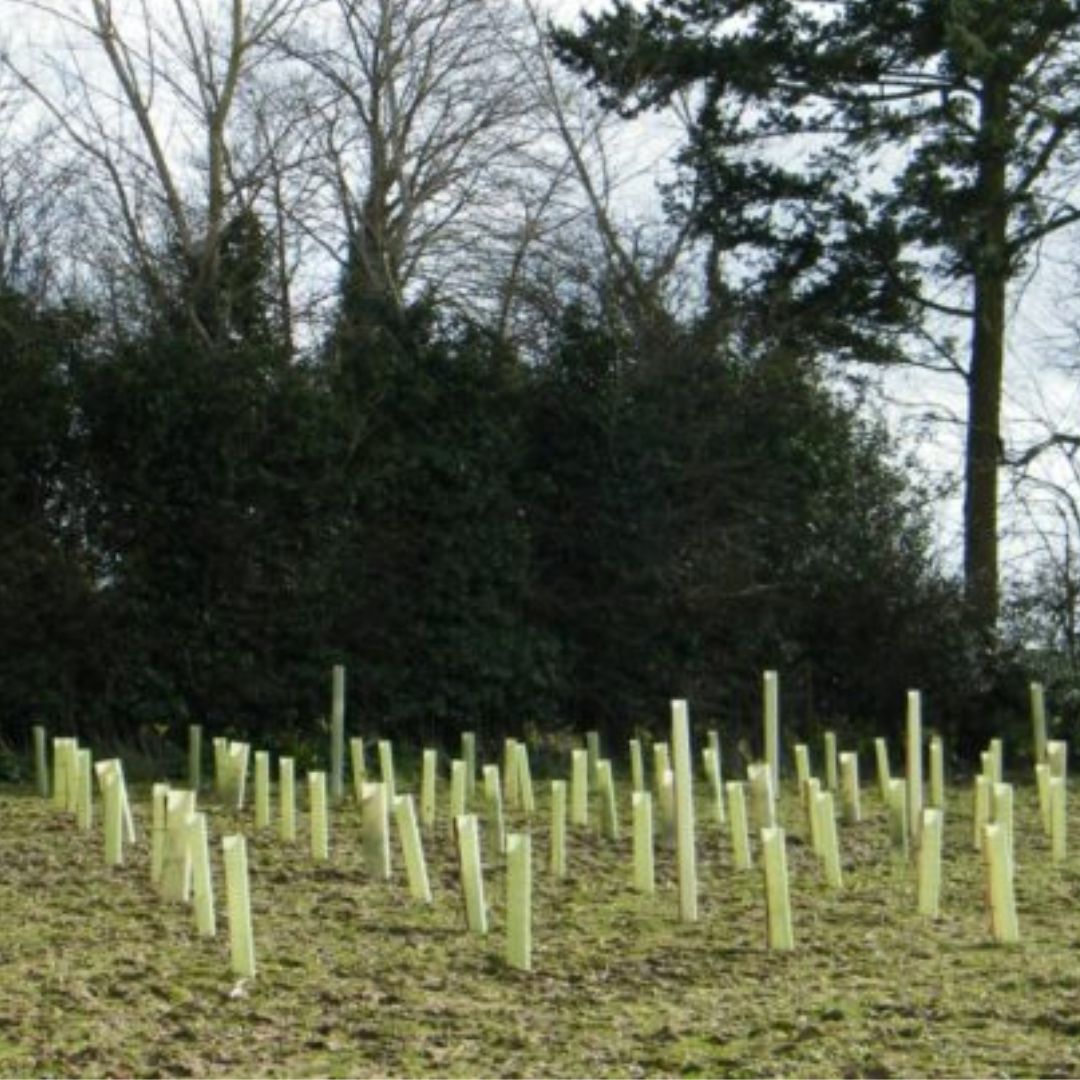
Tilhill specified 25,000 × 60cm Vigilis Tree Shelters for the seedling planting across the embankment belt. The 60cm height was calibrated to the actual browsing threat on site, rabbit and small deer, keeping the specification and cost appropriate to the risk without over-providing shelter height. The factor that most influenced the product choice was Vigilis’s use of two releasable ties per shelter. Where most competitor products use a single tie, the double-tie design provides significantly greater wind resistance, an important distinction on exposed embankment banking. To complement the shelter stability, Tilhill paired the shelters with locally sourced chestnut stakes: naturally thicker than standard softwood alternatives, and better suited to shallow topsoils where post penetration depth is limited.
Outcome
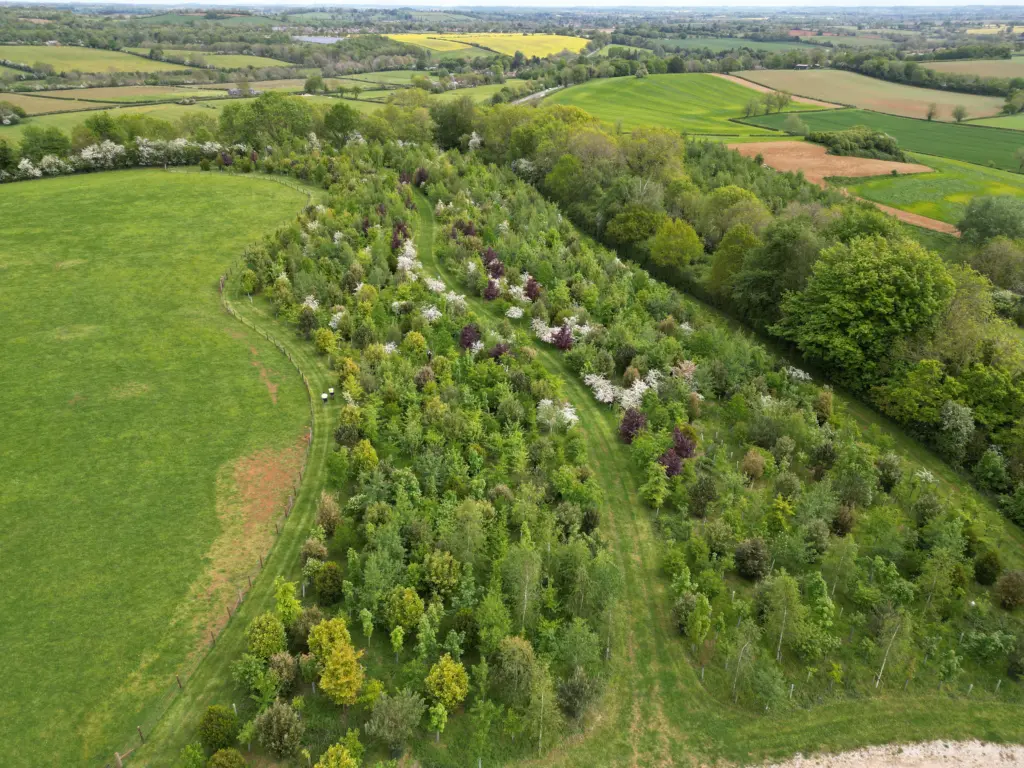
The twin-tie, chestnut stake combination has delivered a stable installation across the exposed embankment planting. Tilhill’s assessment is that the choice of shelter and stake significantly reduced the maintenance risk compared with single-tie alternatives, materially lowering the likelihood of costly re-staking operations as trees move through early establishment. Trees are now growing along the M20 Junction 10a embankments and the buffer screen is expected to reach its required height within a few years, delivering the visual and acoustic function the planning consent required.
- Scale
- 25,000 × 60cm Vigilis Tree Shelters
- Product
- Vigilis Tree Shelters
- Location
- Near Ashford, Kent (M20 Junction 10a)
- Contractor
- Tilhill Forestry Ltd