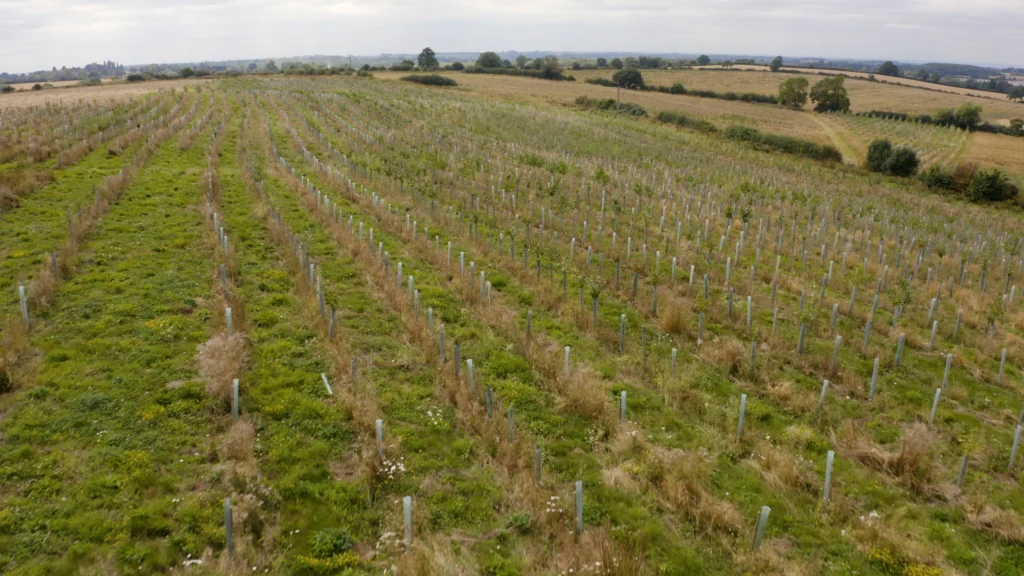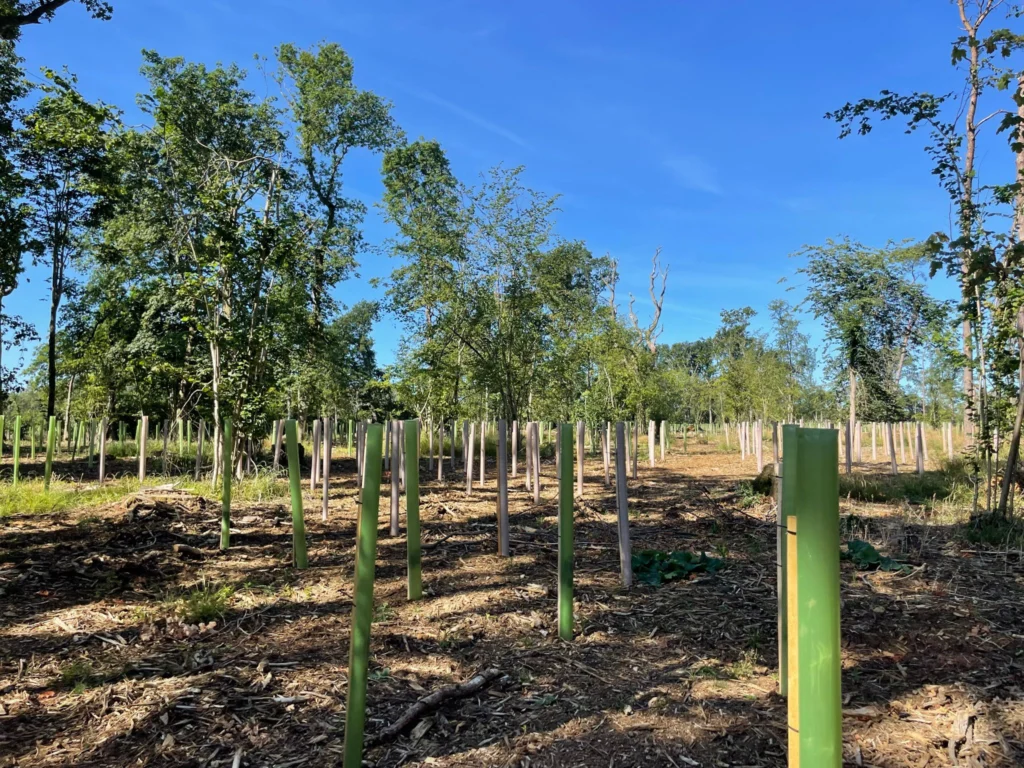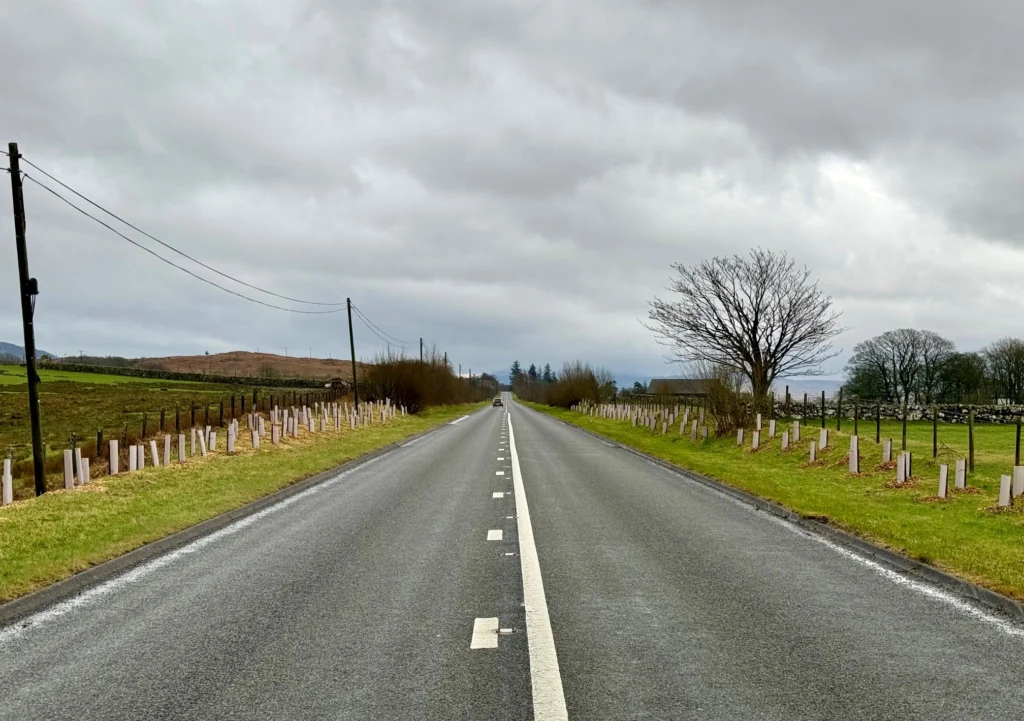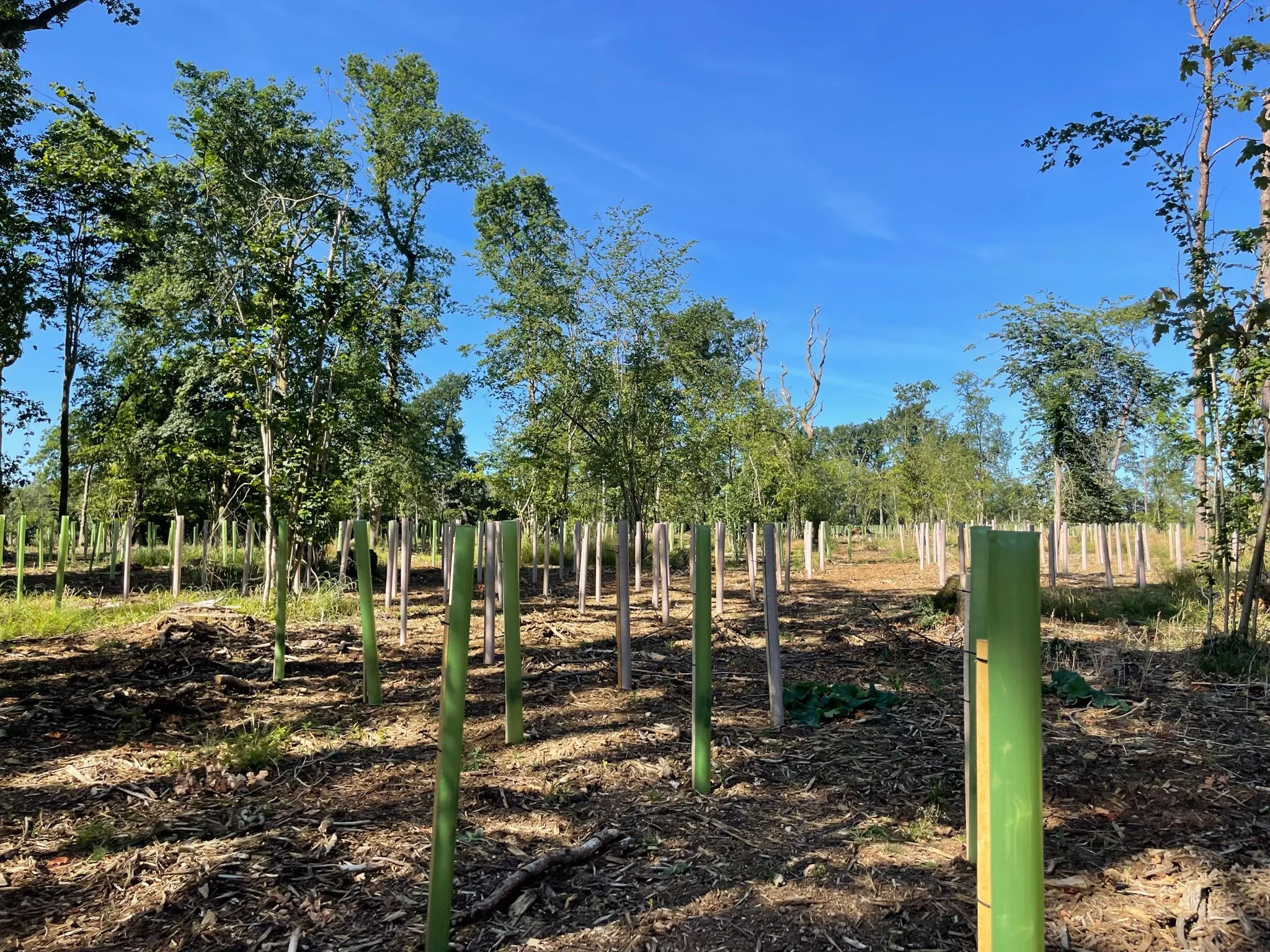
For a growing number of land managers, the choice between biodegradable and recyclable tree shelters is no longer just a practical one. It is an environmental, social and governance (ESG) decision. When you are reporting against sustainability targets or applying for conservation funding, the question of biodegradable vs recyclable tree shelters comes down to which option best fits the framework you are accountable to. Both have a strong environmental case; the right answer depends on your project and how you report on it.
The ESG question is not simply “which is greener?”
It is tempting to assume one material is automatically the more responsible choice. In reality, biodegradable and recyclable shelters solve the same problem, plastic left in the landscape, in two different ways. A biodegradable shelter removes the plastic by breaking down in the soil. A recyclable shelter removes it by being collected and reprocessed into new material. Which counts as “better” depends entirely on what your ESG reporting is measuring and what your project can realistically deliver on the ground.
Where biodegradable tree shelters fit your ESG goals
Soil-biodegradable shelters such as the Vigilis Bio tree shelter are made from plant-derived materials and break down in situ once the tree is established, leaving no microplastics or retrieval visit behind. For ESG purposes, this matters most when:
- Your reporting commits to no plastic left in the field: relevant for rewilding, conservation and public-land schemes.
- Retrieval is impractical: on large or remote sites, returning to collect thousands of spent shelters carries a real carbon and labour cost.
- You need a clean story for stakeholders, funders or the public, where visible plastic undermines the social licence of the planting.
Where recyclable tree shelters fit your ESG goals
Recyclable polypropylene tree guards support a circular-economy model: they are collected at the end of their service life and reprocessed rather than sent to landfill. This is often the stronger ESG fit when:
- Your operation already runs scheduled site maintenance, so retrieval is built into the workflow at little extra cost.
- Your sustainability framework prioritises measurable circularity, material recovered and kept in use, over in-soil breakdown.
- You manage commercial forestry or estates where shelters are routinely reused or returned through a take-back scheme.
Matching the choice to your reporting framework
Before specifying either, it is worth asking three questions: What does our ESG framework actually measure? (in-field plastic, end-of-life recovery, or both); Can we realistically retrieve shelters from this site?; and What evidence will funders or auditors expect? A rewilding charity reporting on habitat restoration will usually land on biodegradable; a managed commercial forest with annual access may report more strongly on a recyclable, recovered material. For background on shelter performance and woodland establishment, Forest Research publishes detailed technical guidance for UK land managers.
The documentation buyers should ask for
Whichever route you choose, your ESG reporting is only as strong as the evidence behind it. Vigilis manufactures both biodegradable and recyclable shelters and holds ISO 9001 (quality) and ISO 14001 (environmental management) certification, so the same supplier can support either reporting path. If you are building a grant application or a sustainability disclosure, ask your distributor for the relevant material and biodegradation documentation up front. Guidance on environmental reporting is also available via GOV.UK. Learn more on the Vigilis Bio page.
The bottom line
There is no single winner in the biodegradable vs recyclable debate, only the option that best matches your site, your stakeholders and the framework you report against. The most ESG-credible decision is the one you can evidence and deliver. To talk through which shelter suits your project’s goals, find your local Vigilis distributor.