Walk into any forestry supply catalogue and you will find dozens of tree protection products. Tree guards, mesh shelters, hedge wraps, shrub shelters. The range can be difficult to navigate, especially when you are specifying for a project with varied planting stock, different browse pressures, and its own environmental or sustainability requirements.
This guide cuts through the options. Rather than starting with products, it starts with your site. The questions you should ask before you specify, and the formats that make most sense for each set of conditions.
Start with your site, not the catalogue
Four factors should drive your initial specification decision:
- Browse pressure: What are you protecting against? Rabbit and hare require different heights to deer. Voles require ground-level mesh. High deer pressure may require a more rigid structure.
- Environment: Upland, exposed, or coastal sites favour robust twin-walled structures. Sheltered, accessible sites may be fine with lighter mesh options.
- Scale and maintenance: Large planting schemes on remote land favour biodegradable shelters that do not require retrieval. Smaller, managed sites may warrant recyclable options with a retrieval plan.
- Planting stock: Bare-root transplants, cell-grown whips, multi-stem shrubs, and vines all benefit from different protection formats and sizes.
Tree guards
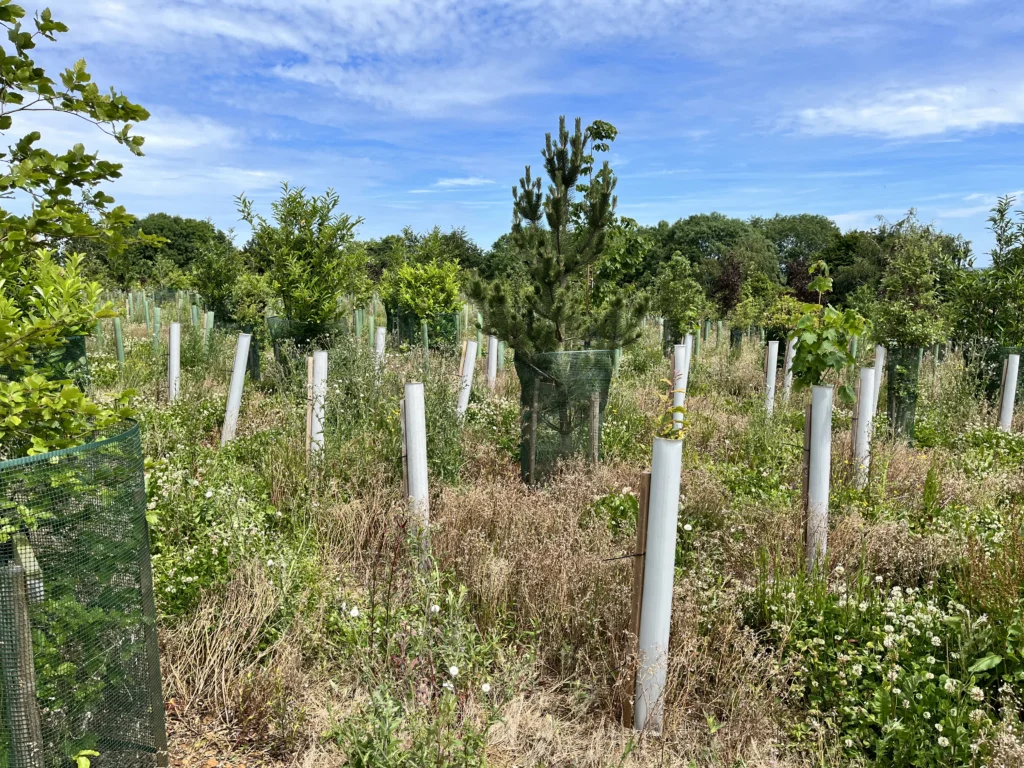
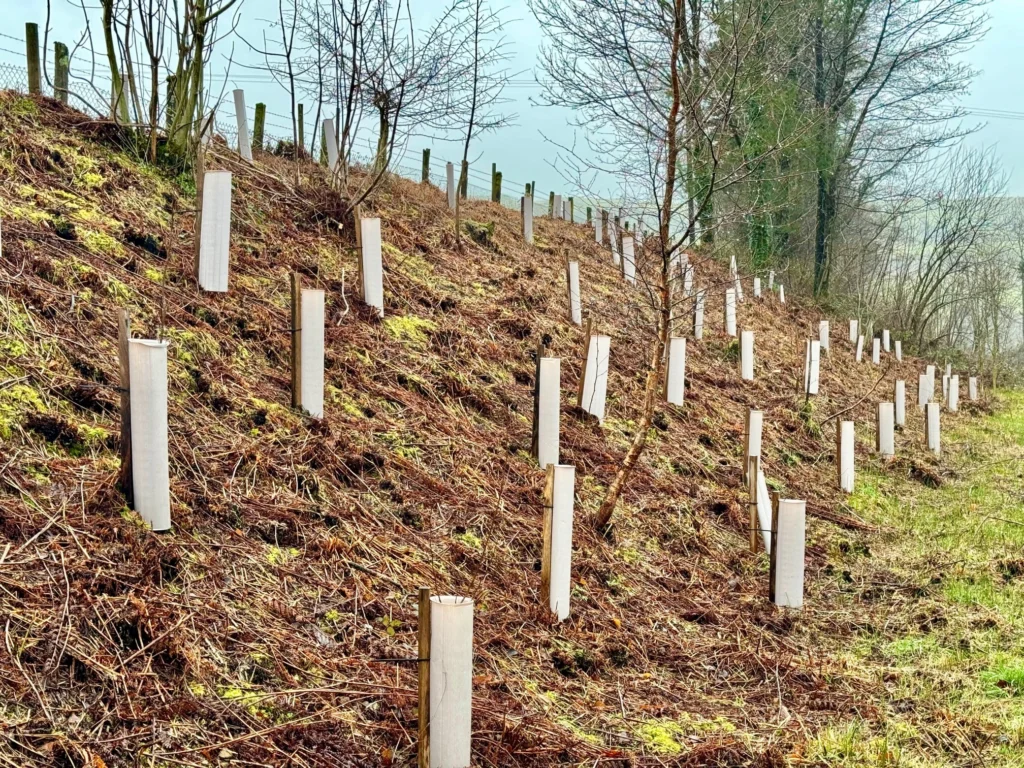
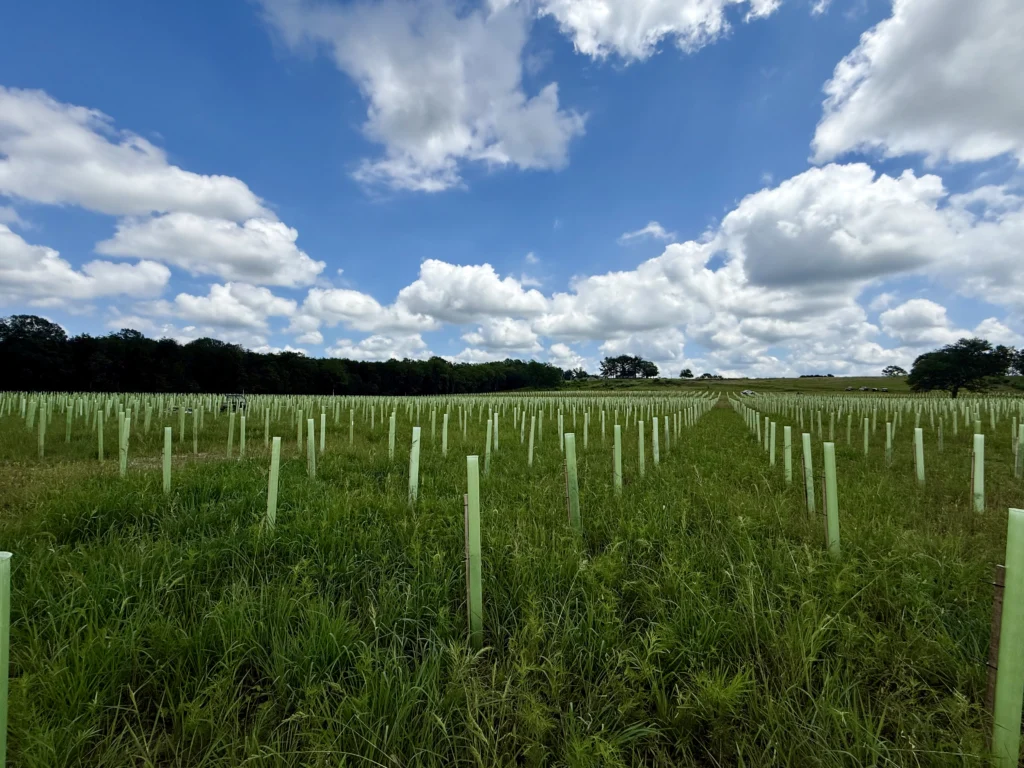
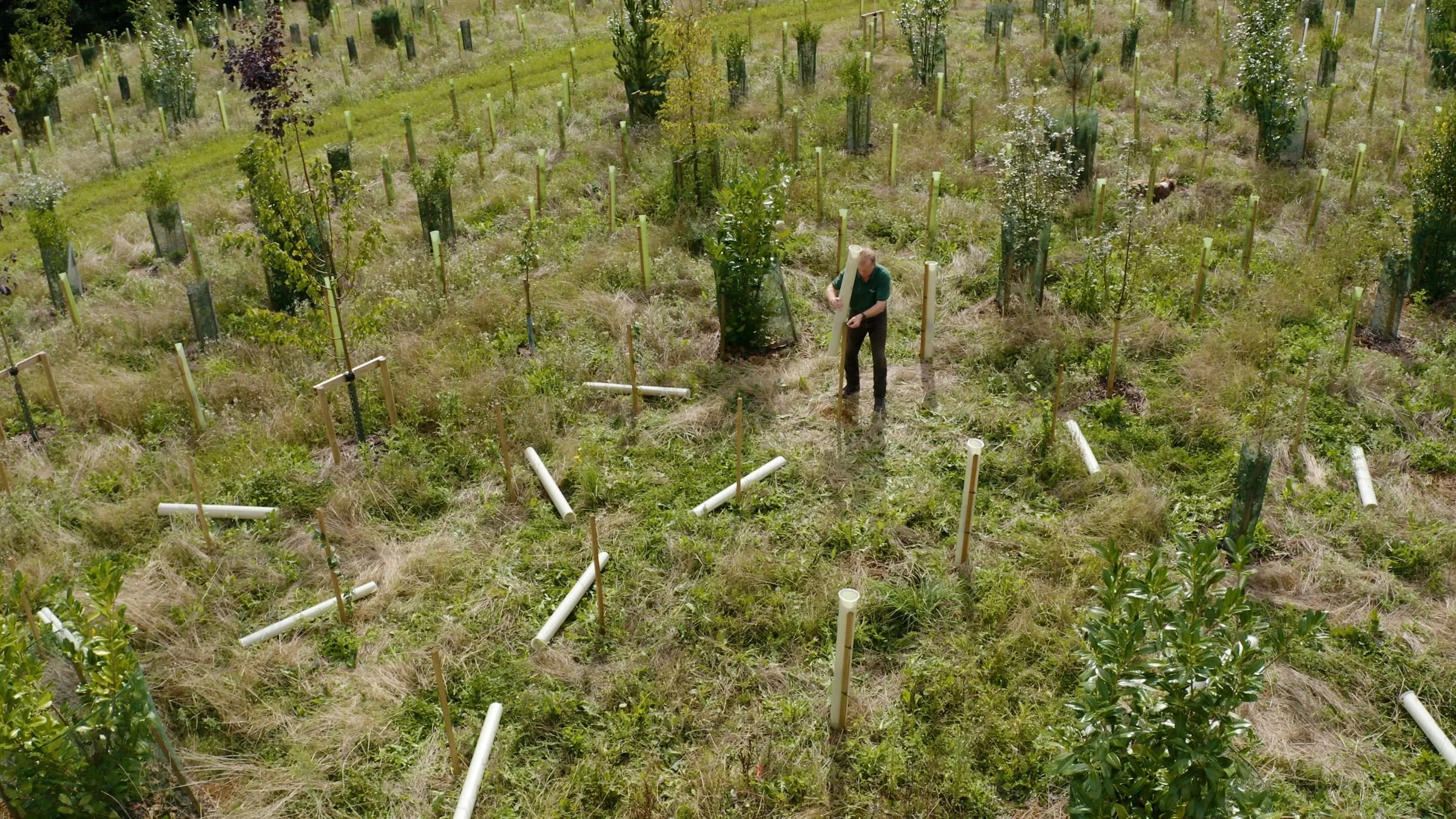
Rigid, twin-walled, cylindrical shelters are the most versatile format and the one most people think of when they picture a tree guard. They create a protected microclimate that accelerates early establishment, shelter against browse from rabbits, hare, and deer, and protect against herbicide spray drift during weed management.
They are available in heights from 0.6m to 1.8m, the taller options providing effective deer protection. Vigilis manufactures tree guards in recyclable, Bio, and Bio VentAir variants. The full tree guards range suits forestry, highway, community, and estate planting schemes.
Best for: Woodland creation, highway planting, estate and parkland schemes, any project requiring deer or rabbit protection with microclimate benefit.
Mesh shelters
Fine mesh shelters are an open-structure alternative to rigid tube-type protection. Because they allow more air movement, they avoid the moisture build-up that can weaken stems in high-humidity conditions. Trees grown in mesh shelters typically develop stronger stems and a more natural growth rate than those in solid-wall tubes.
Mesh shelters are less visually intrusive than tubes, which makes them a useful option for amenity or public-facing planting. They are less effective as a microclimate booster but better for species that require airflow, particularly conifers.
Explore the mesh shelters range for forestry, amenity, and mixed-species planting.
Best for: Conifer planting, amenity and urban schemes, mixed-species woodland where airflow is a priority.
Hedge wraps
Hedge wraps are lightweight, spiral or wrap-style guards designed for hedging plants, whips, and smaller transplants. They protect against rabbit and small mammal damage, herbicide drift, and strimmer damage during maintenance, and they expand naturally as the plant grows.
Biodegradable hedge wrap options are available, eliminating the need for retrieval after the plant is established. The hedge wraps range is suited to farm hedgerow restoration, boundary planting, and mixed hedge establishment.
Best for: Hedgerow planting, farm boundary restoration, mixed hedge establishment with light to moderate browse pressure.
Shrub shelters
Shrub shelters are wider-diameter shelters designed specifically for multi-stemmed and bushy planting stock: species like hazel, dogwood, hawthorn, and holly that do not grow as a single stem. Standard tree guard diameters are too narrow for this type of stock, so shrub shelters provide a wider protected environment during early establishment.
They protect against rabbit and hare browse, provide herbicide protection, and boost establishment rates in the critical first years. The shrub shelters range is commonly used in mixed native woodland and hedgerow planting schemes where a variety of species and structures is required.
Best for: Multi-stemmed native species, mixed woodland with varied planting stock, hedgerow and understorey establishment.
Quick reference: matching format to project
| Format | Browse protection | Microclimate | Best species type | Best project type |
|---|---|---|---|---|
| Tree guards | Rabbit, hare, deer | High | Single-stem whips | Woodland, highway, estate |
| Mesh shelters | Rabbit, hare | Low–moderate | Conifers, mixed species | Forestry, amenity, urban |
| Hedge wraps | Rabbit, small mammals | Low | Hedging, whips | Hedgerow, farm boundary |
| Shrub shelters | Rabbit, hare | Moderate | Multi-stemmed shrubs | Native woodland, mixed hedgerow |
Need help specifying?
Vigilis manufactures across all these formats, in recyclable and biodegradable variants, so we are not tied to recommending one type of product. If you have a project with mixed requirements or you are unsure which format is right for your site, contact us and we can advise.
You can also browse the full Vigilis product range, or read more about how we work across different sectors: forestry, viticulture, and community planting.