OK Compost HOME · TÜV Austria
Independently certified
Materials used are certified at minimum to OK Compost HOME via TÜV Austria. Includes heavy-metals, fluorine and ecotoxicity testing.
Vigilis Bio
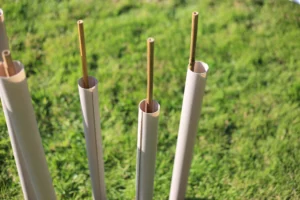
Vigilis Bio is a soil-biodegradable tree shelter engineered around a single principle: 5 years of full-strength protection in the field, then 3+ years of natural biodegradation in the soil. No retrieval. No microplastics. No landfill.
The Origin Story
Conventional polypropylene tree shelters have protected millions of trees — but at the end of the establishment period, many are never collected. Vigilis set out to build a shelter that did the same job with no lasting environmental footprint.
After 9 years of research and development in partnership with UK biotech company Biome Bioplastics, Vigilis Bio was born — the first material patented for use in soil-biodegradable tree, hedge, shrub and vine guards that protects trees through establishment, then degrades naturally once its job is done.
Our Approach
A soil-biodegradable shelter that retains the productivity benefits of a well-developed tree guard — without the environmental burden of persistent plastics at end-of-life.
Controlled weathering and strength loss.
The shelter performs as well as a conventional polypropylene guard through the tree's most vulnerable establishment years, with UV and mechanical properties tuned to European conditions.
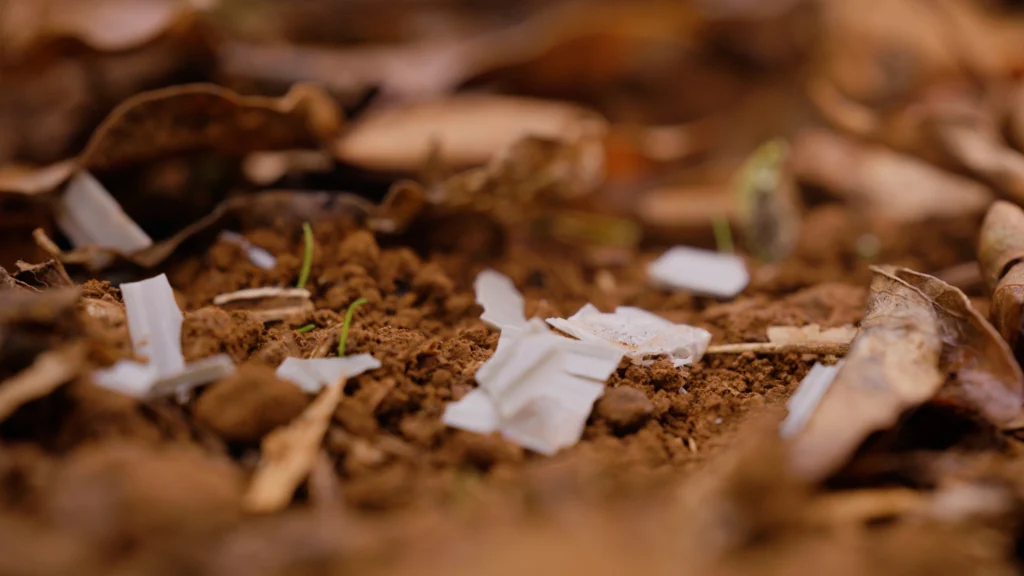
Soil biodegradation begins.
Once the shelter has fulfilled its protective role, native soil microbes metabolise the material. No retrieval labour, no microplastic residue, no landfill.
Material Origins
All materials in the Vigilis Bio shelter meet the most stringent independent biodegradability and safety standards.
OK Compost HOME · TÜV Austria
Materials used are certified at minimum to OK Compost HOME via TÜV Austria. Includes heavy-metals, fluorine and ecotoxicity testing.
Plastic Planet · Plastic Free
No bisphenols, no derivatives, no forever chemicals. Under the Plastic Planet definition, the Vigilis Bio materials are considered Plastic Free.
Life Cycle Analysis · 3rd Party
A desktop Life Cycle Analysis by Bangor University Biocomposites Centre indicates a 35% lower carbon footprint than equivalent shelters made from polypropylene.
The Material
Vigilis Bio uses a patented biopolymer designed to degrade naturally in normal soil temperatures (around 20°c). It delivers the same protective performance to recyclable Vigilis shelters, without the need to remove at the end of its functional life.
Degrades naturally in soil-contact conditions — no toxic residue left behind.
Where collection is practical, Vigilis Bio products can enter appropriate polymer recycling streams — keeping material out of landfill.
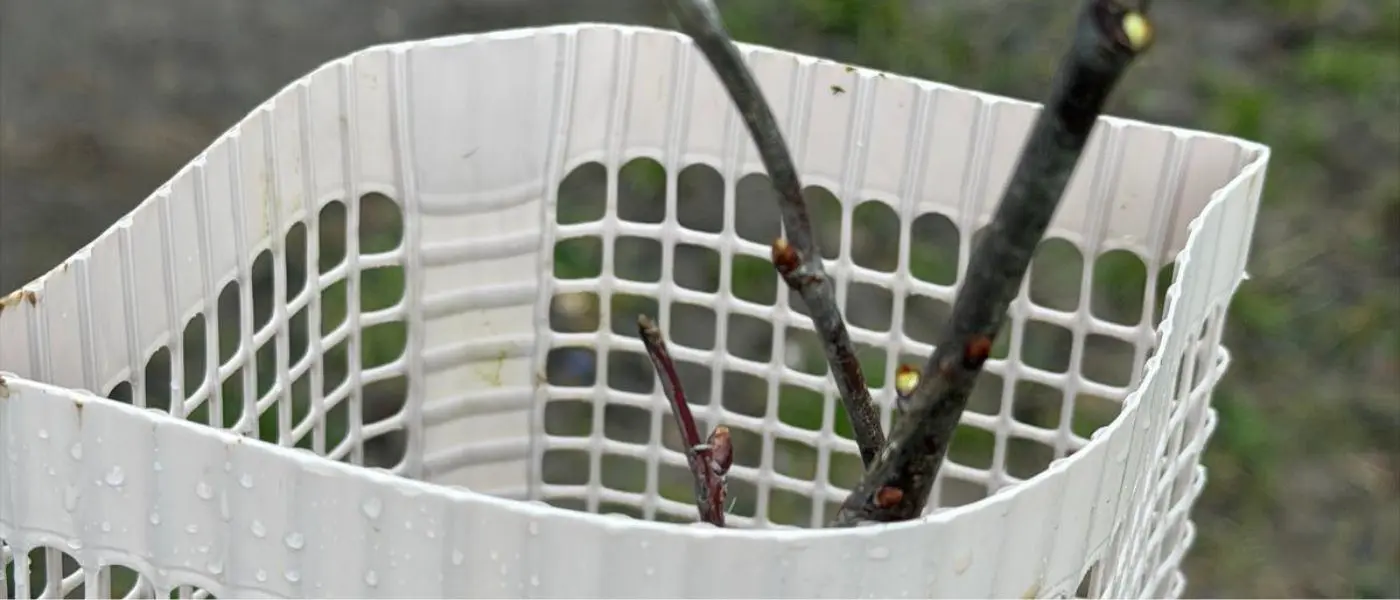
Twin-wall construction with break line and flared rim. Same height range and predation protection specification as standard Vigilis shelters.
Science & Innovation
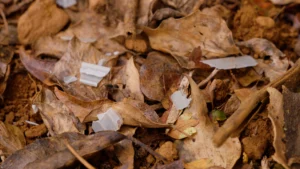
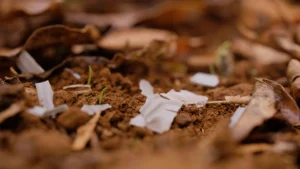
Vigilis Bio degrades in two natural stages. Above ground, the guard protects the tree while UV exposure gradually depletes the engineered UV stabiliser — this is what controls the functional lifespan. Once the stabiliser is exhausted, the guard breaks apart and falls to the forest floor, where naturally occurring soil microbes complete the breakdown. The end result is biomass and water — nothing else.

Comprehensive Testing
Vigilis Bio is the result of multi-year laboratory testing and continuous real-world monitoring — independent, repeatable and traceable.
Tested to
EN 13432
10 regulated heavy metals (Cu, Zn, Ni, Cd, Pb, Hg, Cr, Mo, Se, As). None detected. Barley and cress ecotoxicity growth tests pass on 50% test compost.
ISO 17556 (on-going)
The 2-year soil biodegradability standard originally designed for agricultural mulch film. After full biodegradation, only water, minerals and CO₂ remain.
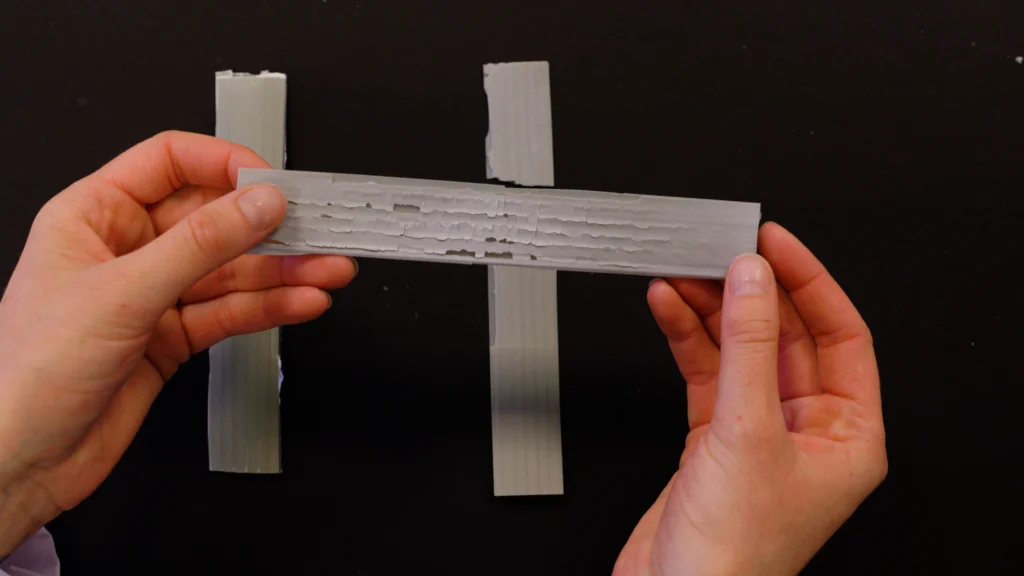
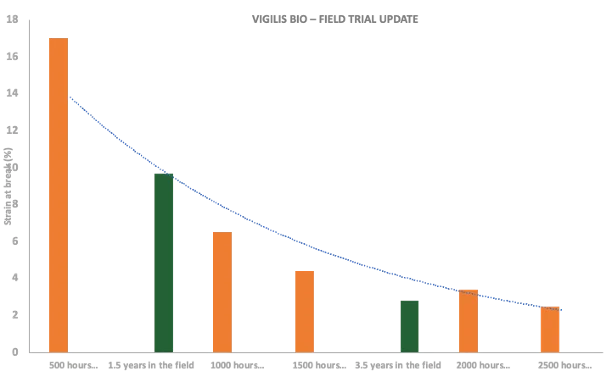
Strain-at-break correlation
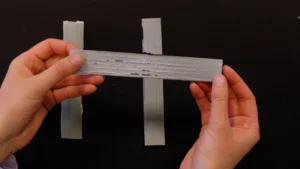
Accelerated weather aging lab data tracks closely with monitored UK field samples throughout the establishment phase.
Field Trials & Evidence
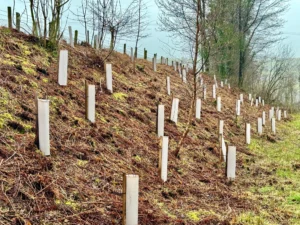
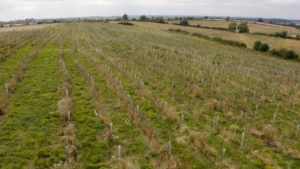
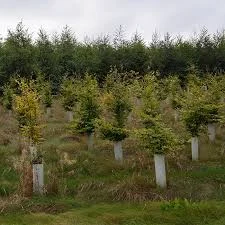
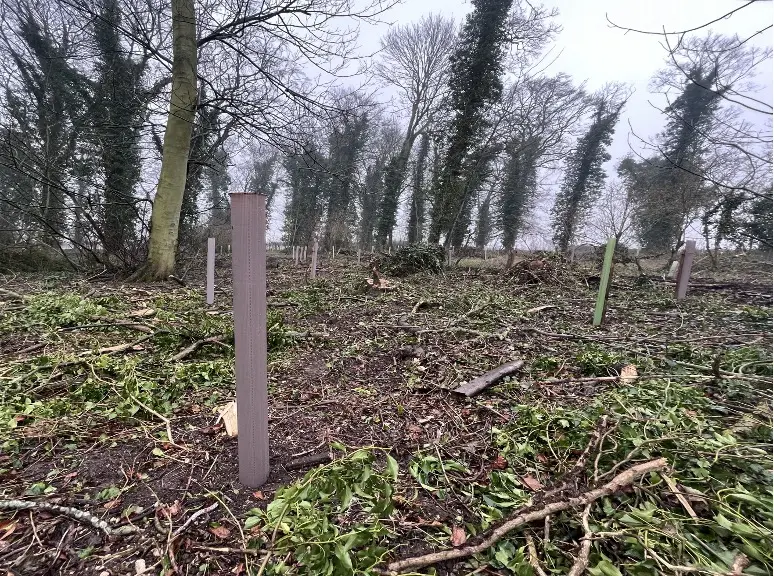
Vigilis Bio has been trialled and installed across 70 sites throughout the UK. More than 70,000 Bio guards have been placed in the ground as part of our field trial — giving us a robust, real-world picture of performance and biodegradation across five years of continuous monitoring.
Indicative Product Lifecycle
Bio Guards installed at scale across UK Phase 2 trial sites.
First systematic field assessment.
Mid-trial weathering data correlated with lab.
Shelters reaching the end of their functional life.
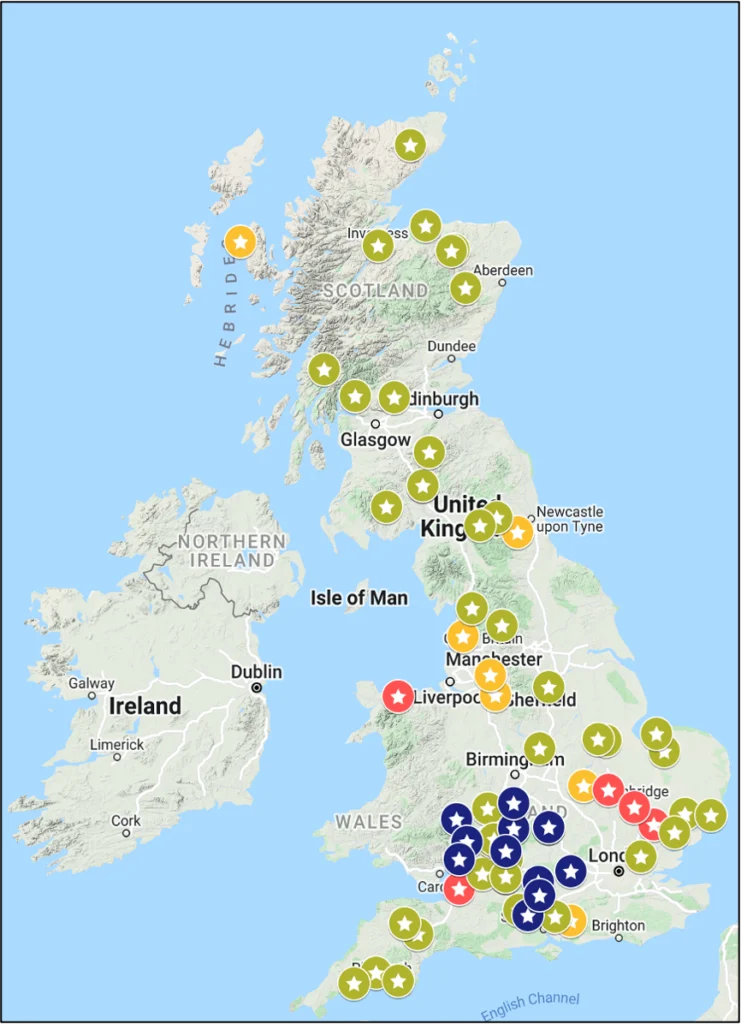
Trial sites span the full range of UK temperature, rainfall and sunshine — from the Hebrides to Cornwall.
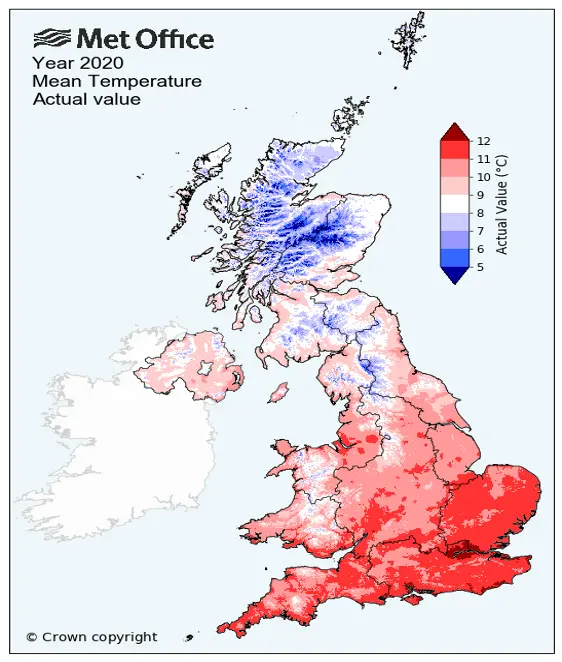
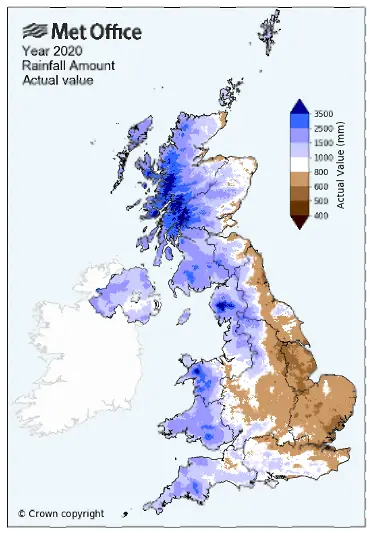
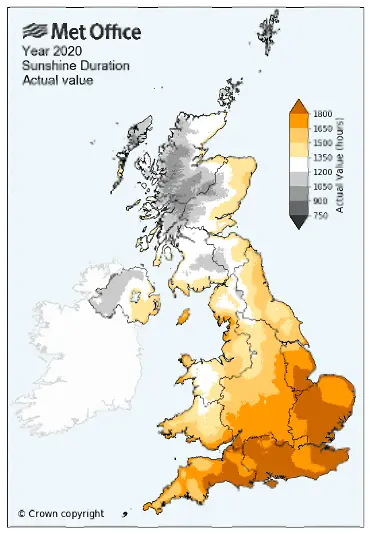
Maps: Met Office, 2020 © Crown copyright
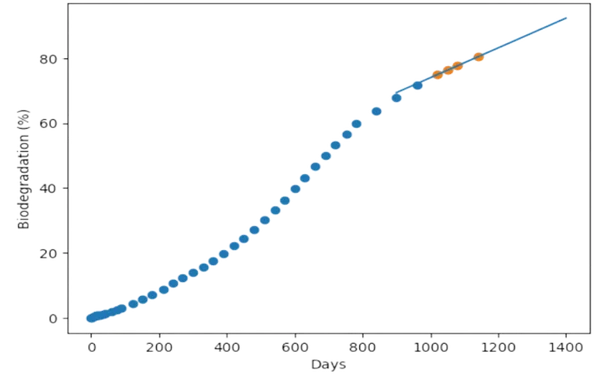
*All stated functional life and biodegradation timeframes are based on Vigilis field trial and laboratory test data. Figures are approximate and may vary with environmental conditions including soil temperature, moisture, microbial activity and UV exposure. Provided for guidance only, without warranty or liability.
The Bio Range
Every major Vigilis product family has a Bio equivalent — so you can make the switch without changing your specification.
In the Field
See how foresters, rewilders and land managers have put Vigilis Bio to the test — and what the results look like after several years in the ground.
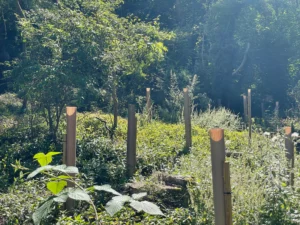
Malvern Case Study: Vigilis & Vigilis-Bio
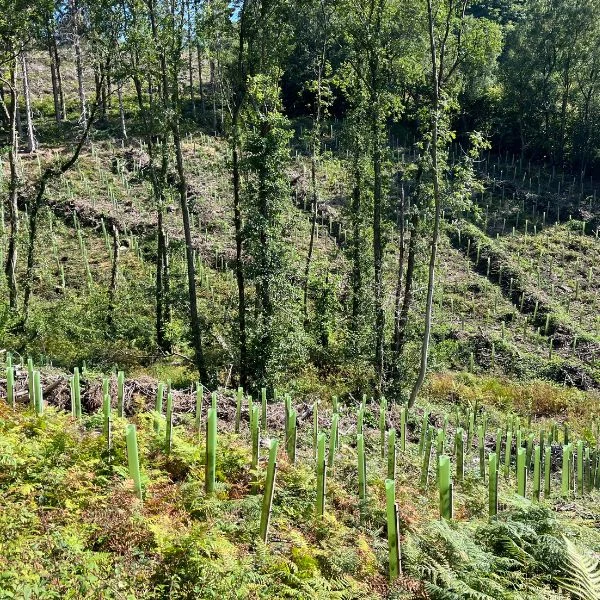
Newport, Wales: Standard & Vigilis-Bio Tree Shelters
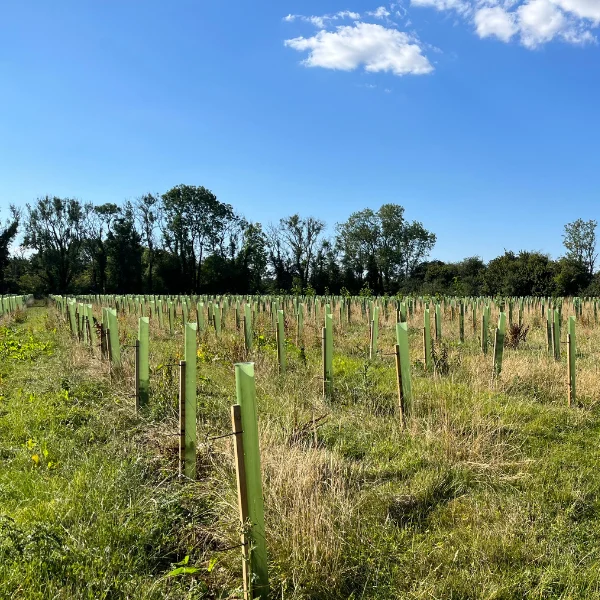
Wiltshire Case Study: Vigilis & Vigilis-Bio Tree Shelters
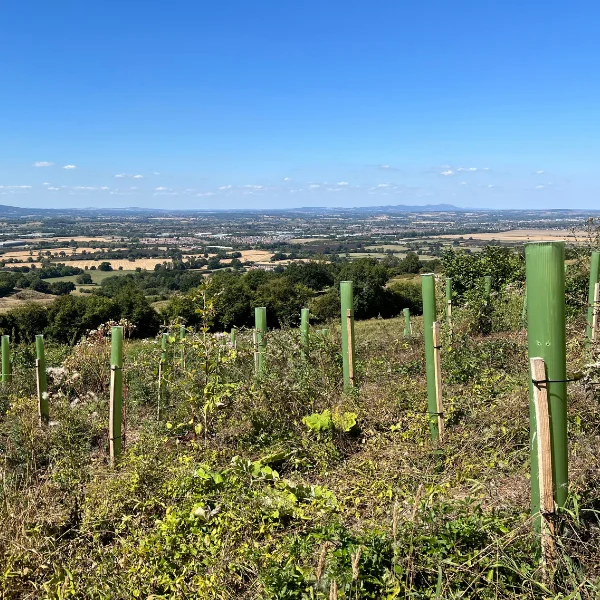
Stonehouse: Standard & Vigilis-Bio Tree Shelters
Cotswolds Case Study: Vigilis & Vigilis-Bio
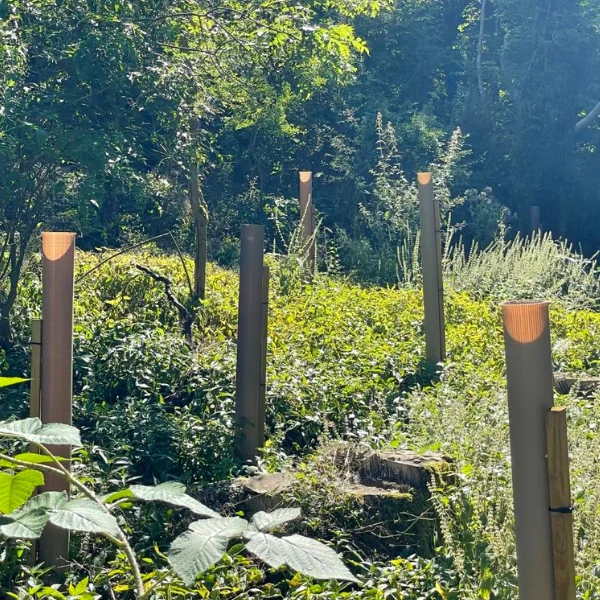
Gloucestershire: Standard & Vigilis-Bio Tree Shelters
Frequently Asked Questions
By the time the shelter has reached the end of its functional life, the material has become brittle and breaks down into small pieces resembling leaf litter in colour and behaviour.
Yes. The material contains no heavy metals, no BPA, no PFAS and no toxic residues. It is approved for use near reservoirs and water-utility planting schemes after independent due-diligence review.
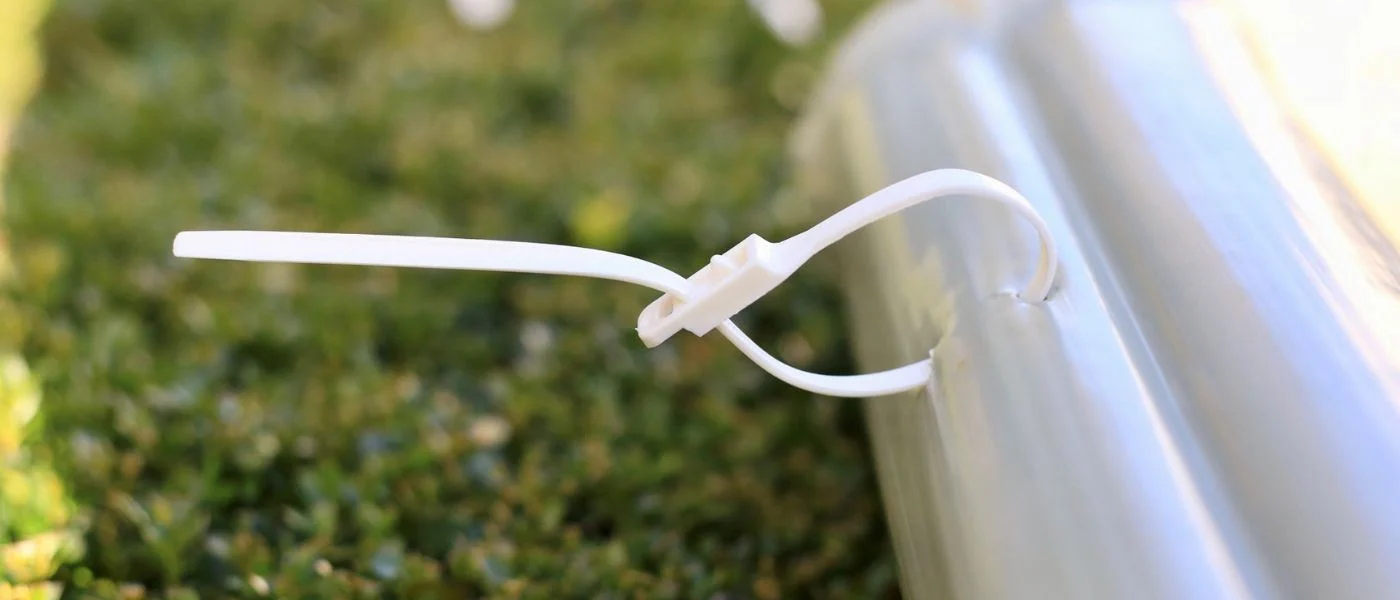
Yes. The bio cable tie uses the same patented biopolymer as the shelter, with a thicker locking mechanism engineered to remain strong for the full 5-year functional life. Pre-fitted as standard on the Bio range.
The upfront cost is higher than a conventional polypropylene shelter, but across the project lifecycle — once retrieval and disposal labour are factored in — the bio shelter is often more cost-effective. Rising plastic input costs and rising labour costs are tilting the balance further each year.
Industrially compostable materials need ~60 °C to break down, which means retrieval and transport to a compost facility. Cardboard alternatives biodegrade but do not provide reliable mechanical protection through the establishment period. Vigilis Bio remains strong and flexible for the full 5 years of functional life, then degrades naturally in normal soil temperatures (~20 °C) — engineered to do the job of a conventional shelter first.
Yes. The mesh guard uses the same patented biopolymer and the same UV stabiliser package as the solid shelter, so functional life and biodegradation behaviour are aligned.
Explore the full Vigilis Bio range or speak to our team about specifying biodegradable shelters for your next project.